

 русский
 Deutsch
 عربى
Two gaskets sold as PTFE can behave nothing alike on the same flange. One is virgin polytetrafluoroethylene at roughly 2.15 g/cm3; the other is modified PTFE, where 1 to 3 percent of a perfluorinated comonomer sits inside the polymer chain. On a 180 C caustic line the difference appears on the second heat-up, when the virgin part has already flowed out of the joint and the modified part has not.
Buyers who specify only the material family, and not the grade, are the ones who end up with repeat leaks, retorque callouts and warranty arguments. This guide covers what modification actually changes, where the creep numbers land, how fillers shift the picture, and what to place on a purchase order so the joint you designed is the joint you receive.
What a Modified PTFE Gasket Actually Is
A modified PTFE gasket is cut or molded from a PTFE resin that has been copolymerised with a small amount of a perfluorinated modifier, most commonly perfluoropropyl vinyl ether (PPVE), producing a denser structure with markedly lower creep while keeping the chemical inertness of the base polymer.
Modified PTFE, also written M-PTFE, is a granular PTFE resin in which 1 to 3 weight percent of the tetrafluoroethylene backbone has been replaced by a perfluorinated comonomer. The carbon-fluorine backbone is unchanged, so chemical resistance stays close to universal, but the chains pack more tightly, giving a less porous part that resists cold flow and can be welded.
Three consequences matter once the part reaches a flange. Lower creep means the gasket holds bolt load through thermal cycling. Lower porosity means reduced permeation on light gases such as hydrogen and helium. Weldability means large sealing frames and one-piece rings can be fabricated without adhesive joints that fail first.
Virgin PTFE
- Density about 2.14 to 2.16 g/cm3
- Visible porosity at the cut edge
- Creep index 100, the baseline
- Not weldable, adhesive joints only
Modified PTFE
- Density about 2.16 to 2.19 g/cm3
- Denser surface, lower permeation
- Creep index around 45
- Weldable, suited to large frames
The grade also changes how the gasket is made. Modified resin is compression molded into sheet or rings, or molded into near-net rings and then machined, and it cuts cleanly when skived. That matters for procurement: a 3 mm modified sheet cut into rings on site is not the same product as a molded ring with a controlled density gradient.
Creep and Cold Flow: Why Most Modified PTFE Gasket Failures Are Mechanical
The largest single cause of PTFE gasket leaks is loss of bolt load, not chemical attack, and modified resin only slows that loss rather than eliminating it. Unfilled PTFE keeps deforming under sustained compression, so a joint that sealed at start-up can be running on a fraction of its original stress a few thermal cycles later.
The ranking is the useful part. Three points follow from it:
- An unfilled modified gasket still creeps at roughly 45 percent of the virgin rate, which improves a joint but does not make it load-stable at 200 C.
- Adding filler to a modified resin pushes the index below 30, which is where most hot oil, steam and high-pressure gas joints belong.
- Expanded PTFE sits in the middle but wins on conformability, which is why it is often the better answer on pitted or slightly warped flange faces.
Creep is measured in millimetres of lost thickness, but it is paid for in retorque hours. A joint that retains 70 percent of its bolt load after 1000 hours costs nothing extra; one that retains 30 percent costs a shutdown.
Filler Options and How They Change Gasket Behaviour
Fillers trade away part of the universality of PTFE in exchange for mechanical stability, and the correct loading depends on which failure mode you are fighting. The table below is the short version of what each common filler does to a modified PTFE gasket.
| Filler | Typical loading | What it improves | Where it hurts |
| None, modified resin | 0 percent | Chemical universality, low porosity, weldability | Creep still limits high-temperature joints |
| Glass fiber | 15 to 25 percent | Compressive strength and creep resistance | Abrasive to flange faces, weak against strong alkali |
| Carbon and graphite | 15 to 25 percent | Load bearing, thermal conductivity, low friction | Electrically conductive, can affect media purity |
| Bronze | 40 to 60 percent | Highest pressure resistance, heat dissipation | Not for aggressive media, heavy and costly |
| Barium sulfate | 20 to 30 percent | Creep resistance while keeping chemical resistance | Lower mechanical strength than glass grades |
Two rules of thumb settle most site arguments. For aggressive chemical service where nothing else is certain, unfilled modified PTFE or a barium sulfate grade is the safe pick. For hot oil, steam and high-pressure gas, a glass or carbon grade will hold load far better, provided the media does not attack the filler itself. If the base resin decision is still open, this side-by-side review of virgin and filled PTFE material modifications shows where each option wins before fillers enter the picture.
Matching the Gasket Grade to Real Service Conditions
Grade selection should start from the failure mode you are trying to prevent, not from a materials chart. Four figures frame most modified PTFE gasket decisions before any drawing is issued.
- Fix the service envelope first. Record continuous temperature, maximum pressure, media concentration and any steam-out cycle. A gasket that sees 260 C steam-out needs a different grade from one that sees 120 C brine.
- Decide whether the joint is load-critical. If the flange cannot be retorqued during a campaign, specify filler. If the joint is opened every shutdown, unfilled modified PTFE is usually enough.
- Check the flange face condition. A warped or pitted face asks for a thicker, more conformable gasket or expanded sheet, not for a harder filled grade that will bridge the damage.
- Ask for the gasket test data. Request compression, recovery and stress relaxation figures, ideally to EN 13555, so the joint can be calculated instead of guessed.
Installation and Torque Practice for Modified PTFE Gaskets
Published torque figures for PTFE are starting points rather than instructions, because the sealing stress depends on gasket area, bolt lubrication and flange stiffness. Three practices decide whether a modified gasket reaches its expected service life.
- Control compression. A PTFE gasket is normally compressed to about 25 to 40 percent of its thickness at assembly. Beyond that the material yields and the joint loses load faster than a correctly compressed one.
- Match the flange finish. A turned finish of roughly 3.2 to 6.3 micrometre Ra gives enough bite without tearing the gasket surface on assembly.
- Retorque once, hot. A single retorque after the first thermal cycle recovers most of the initial relaxation, especially on large diameter flanges with long bolt paths.
A modified PTFE gasket does not need more torque. It needs the torque you specified to still be there in six months, and that is decided by grade, flange finish and one hot retorque.
Ordering Checklist for Modified PTFE Gaskets
A purchase order that says only PTFE gasket, 3 mm will be filled with whatever sits on the shelf. Six lines prevent that, and they take less time to write than one leak investigation.
- Grade name: modified PTFE, unfilled or with the stated filler percentage
- Form: molded ring, skived sheet, envelope gasket or expanded sheet
- Dimensions with inside diameter, outside diameter and thickness tolerances
- Service conditions: continuous temperature, pressure and the media in contact
- Compression limit and any bolt-up specification agreed with the flange engineer
- Documentation: batch traceability, resin lot certificate and gasket test data
Zhejiang Juxiang Fluoroplastics Co., Ltd produces modified PTFE sheet, molded rings and filled grades within the same fluoropolymer family, which lets a mixed flange schedule be sourced from one production route instead of three. The three product routes below cover most requests that arrive with a grade already specified.
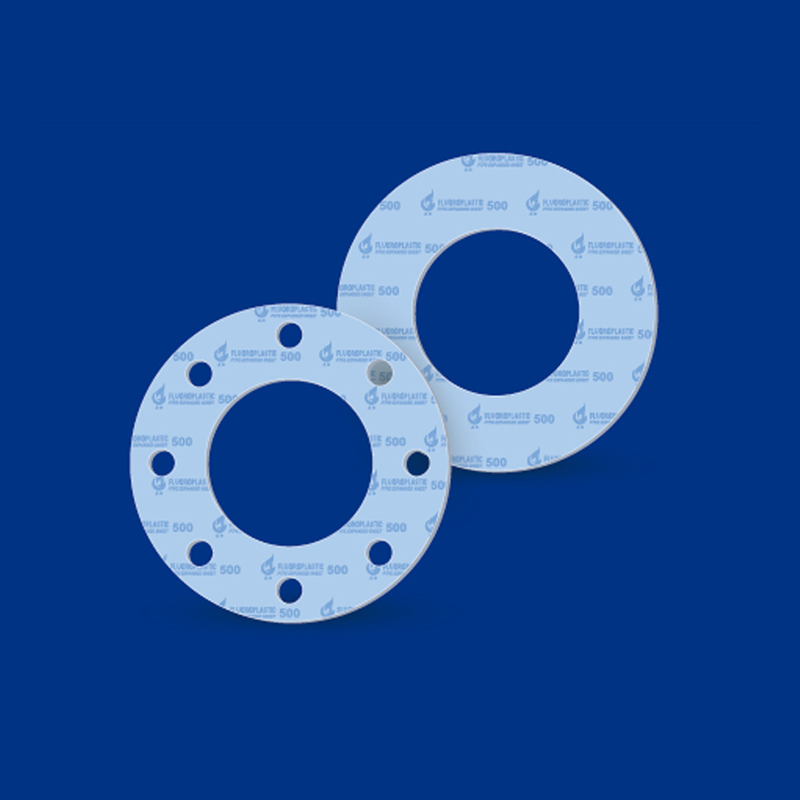 Modified PTFE Gasket in Eight Filled GradesOffers eight filled-PTFE grades and sheet or machined ring formats for flange sealing where grade, load, and media are already specified.View Product →
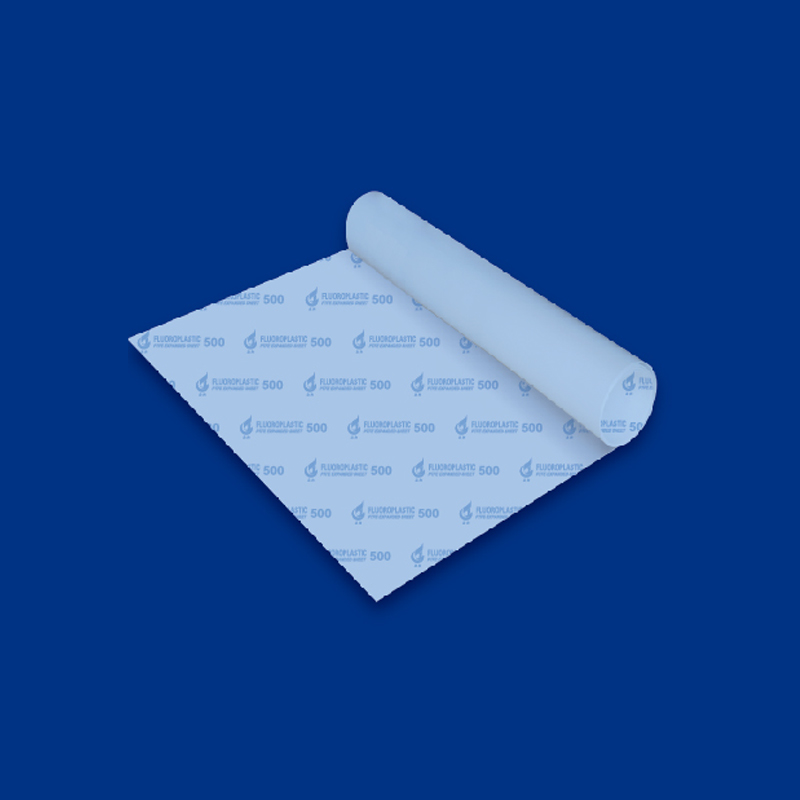 Modified PTFE Sheet Grades and Machined FormatsPresents eight filled sheet grades plus cut or machined gaskets, rings, pads, and profiles, letting one material route supply varied sealing and wear parts.View Product →
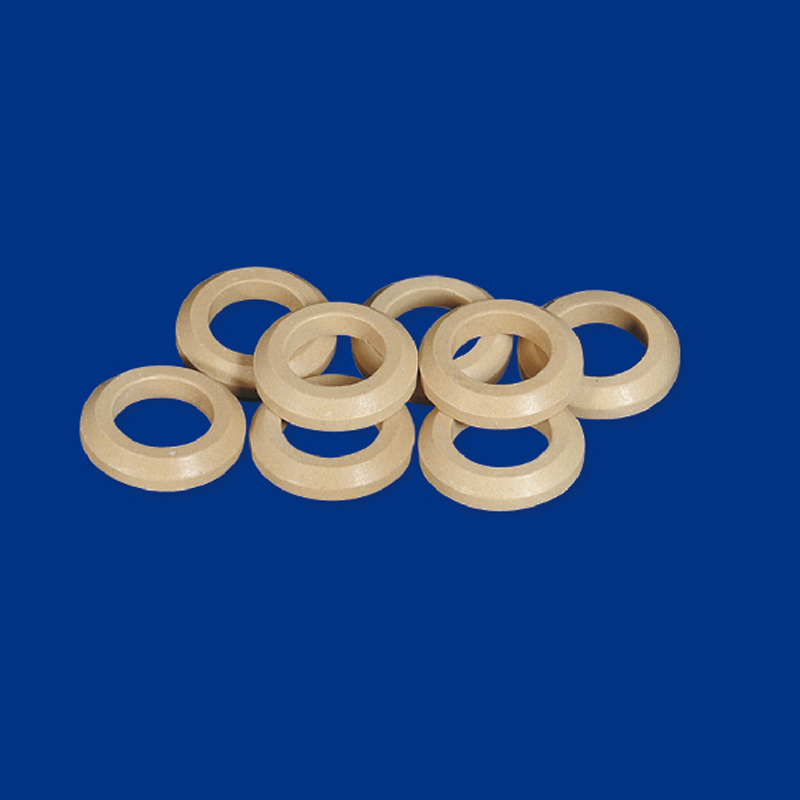 PHBA-Filled PTFE Rod, Tube, Sheet, and ComponentsPHBA-filled PTFE stock and machined parts improve creep, hardness, and wear for high-temperature bearings, seals, rings, and gaskets while keeping PTFE chemical resistance.View Product →
Frequently Asked Questions on Modified PTFE Gaskets
Is modified PTFE better than filled PTFE for gaskets?
Neither grade is better in general, because they solve different problems. Unfilled modified PTFE keeps near-universal chemical resistance and is the right answer when the media is aggressive or unknown. Filled grades hold bolt load far better and belong in hot oil, steam and high-pressure gas service where mechanical stability, not chemistry, is the limiting factor.
What torque should a modified PTFE gasket be tightened to?
There is no universal torque value. Tightening follows the required gasket seating stress, commonly 25 to 35 MPa for PTFE-based sheets, combined with bolt size, bolt lubrication and flange stiffness. Request gasket constants to EN 13555, calculate bolt load, then apply one hot retorque after the first thermal cycle.
Can a modified PTFE gasket be reused after inspection?
Only on non-critical joints where the gasket is still flat, undamaged and free of permanent set. PTFE takes a compression set during service, so a reused part seals at a lower stress than a new one and is more likely to weep after the next thermal cycle. Replacement is the standard practice after any steam-out.
How can I confirm the grade on delivery?
Check density, which usually sits at 2.16 to 2.19 g/cm3 for modified material against 2.14 to 2.16 for virgin resin, inspect the cut edge for porosity, and ask for the resin lot certificate. Fabricated frames that show welded seams rather than adhesive joints are another reliable indicator of modified sheet.