

 русский
 Deutsch
 عربى
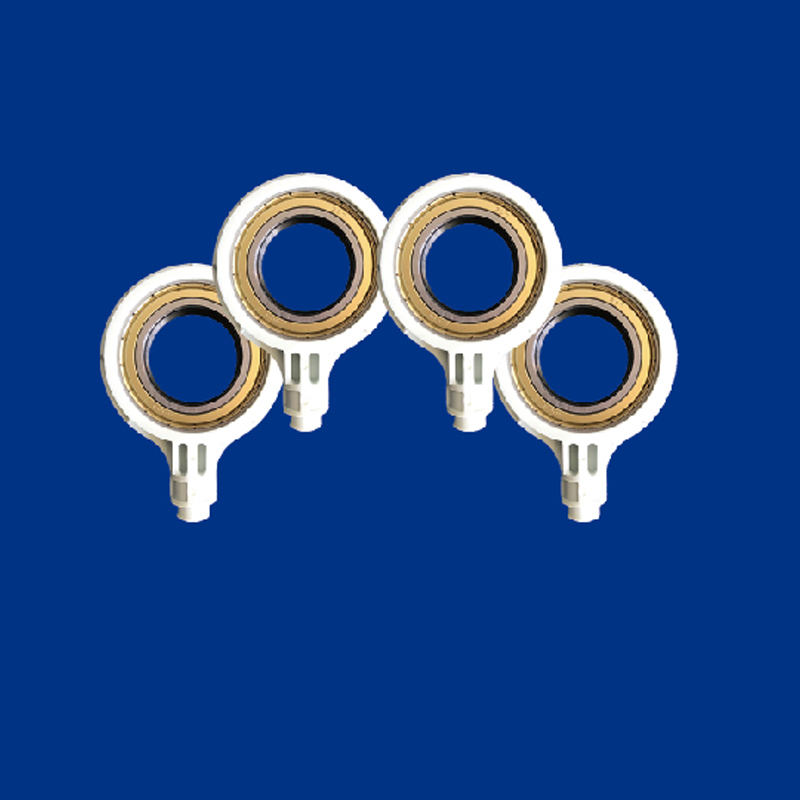



Gansu Juxiang Fluoroplastics Technology Co.,Ltd. is a PVDF Products manufacturer operating two production bases in Zhejiang and Gansu, China. We injection mold and machine PVDF components to customer drawings and samples, and supply them within a wider fluoroplastic range that also covers PTFE, PFA, FEP, PCTFE, PEEK and PI. The parts we build sit in chemical fluid handling, electrical and electronic assemblies and mechanical drives, where a component must keep its shape, resist chemical attack and hold its electrical behaviour over a long service life.
What Our PVDF Range Covers
PVDF is the structural member of our fluoroplastic family. Where PTFE is chosen for inertness and low friction, PVDF carries load: it holds a thread, absorbs impact, resists abrasion and keeps its dimensions under moderate heat. That makes it the working choice for pump and valve internals, pipe fittings, insulators, bobbins and cable components that also have to survive outdoor exposure.
Production runs on two routes — injection molding for repeatable shaped parts, and machining from PVDF stock for prototypes, low volumes and tight-tolerance work. Both routes are documented against the same drawing basis, so a machined prototype can move into molded production without redefining the part. Our PVDF injection molding products cover the molded side of that range.
| Product form | Typical parts | Application fit | Confirmed at quotation |
|---|---|---|---|
| Injection molded components | Pump and valve bodies, impellers, fittings, filter housings, bobbins, insulators | Repeatable shaped parts in chemical, electrical and automotive assemblies | Resin grade and colour, wall section, gate position, shrinkage allowance, tooling ownership |
| Machined components from PVDF stock | Seal rings, bushings, gears, bearings, backing rings, fixtures | Prototype, low-volume and tight-tolerance work; replacement parts | Stock size, machining allowance, critical dimensions, surface finish, stress relief |
| Cable and electrical components | Cable jacket, heat-shrink tube, capacitor media, connector bodies | Electrical insulation and outdoor cable protection | Wall concentricity, dielectric requirement, temperature class, length and packing |
| Fluid-handling parts | Pipe fittings, valve seats, diaphragms, packing rings, tank-mouth components | Chemical, electrochemical and water treatment service | Media list with concentration, operating temperature and pressure, connection standard |
| Semi-finished shapes | Rod, tube and sheet for in-house machining | Prototyping, maintenance spares, small batch production | Diameter and wall, length, tolerance class, quantity per size |
Material Behaviour That Shapes the Part
PVDF is a semi-crystalline fluoropolymer with roughly 68% crystallinity, 59% fluorine content and a molecular weight in the 0.25–1 million range. The crystalline phase gives it the highest mechanical strength and abrasion resistance among the common fluoroplastics, plus creep resistance that unfilled PTFE does not offer. Service temperature runs from −40 °C to 150 °C.
- Resistance at room temperature to acids, alkalis, strong oxidisers and halogens
- Ageing, ozone, UV and radiation resistance, so outdoor and radiation-adjacent service is workable
- Stable dielectric properties with high volume resistivity across frequency and temperature
- Non-flammable, translucent in natural grade, machinable and suitable for hot-gas welded fabrication
Two limits belong in the design conversation. PVDF is attacked by ketones, esters, amines and strong polar solvents, and by hot concentrated alkalis, so the media list decides whether the resin is right at all. Under sustained load, creep still develops above roughly 60 °C, which means wall section and support geometry are set from the working temperature rather than from room-temperature data.
Where PVDF Parts Fit
Electrical and electronic assemblies
PVDF serves as conductor insulation, cable jacket, heat-shrink tube, capacitor dielectric and printed circuit board material. Its combination of dielectric strength and mechanical toughness suits connectors and bobbins that are handled during assembly and then exposed to weather or cleaning agents in service.
Chemical and electrochemical service
Valves, pumps, pipe fittings, packing rings, linings, electrolysis diaphragm plates and filtering membranes are established PVDF applications. Components hold pressure and resist attack from acids, alkalis and oxidisers at moderate temperature, which is why the grade and the media list are fixed together before a quotation is issued.
Machinery and fluid handling
Gears, bearings, wear pads and sliding components use PVDF for abrasion resistance and dimensional stability under load. Where a part needs a fully fluorinated surface rather than PVDF's mechanical strength, we supply PFA rod and tube from the same fluoroplastic product range.
Configuration Options We Settle Before Production
- Resin grade: homopolymer where stiffness, strength and the top of the temperature range matter; copolymer where low-temperature impact and flexibility take priority
- Compounding: carbon, glass or graphite loadings when stiffness, electrical conductivity or wear behaviour has to shift from the base resin
- Colour and identification: natural translucent, black or a specified colour, with part marking where traceability is required
- Tool design: gate location, ejection, draft and shrinkage allowance agreed against the drawing before steel is cut
- Machining: stock size, allowance, tolerance class and surface finish, with stress relief for thick sections and close-tolerance rings
- Cleanliness and packing: cleaning regime, individual bagging and sealing-face protection for parts that cannot be reworked after installation
Quality, Documentation and Delivery
Molding parameters are monitored in real time during production, and finished parts are checked against the drawing's critical dimensions before packing. Orders are scheduled across the Zhejiang and Gansu bases so that repeat volumes and one-off machined items can run in parallel without competing for the same capacity.
Each shipment carries the documentation agreed at order stage — material grade record, dimensional report for specified characteristics, and handling or installation guidance where the part is sensitive to torque, temperature or contamination. Customization runs from drawing or sample through to production, and inquiries are answered within 12 working hours.
Information We Use to Configure Your Solution
- 2D drawing or 3D model with critical dimensions, tolerances and datum scheme
- Resin grade if already fixed, or the full media list with concentrations and any cleaning chemicals
- Operating temperature range, pressure, and whether the load is continuous or cyclic
- Quantity for first article, annual volume and expected call-offs
- Surface finish, cleanliness level and any conductivity requirement
- Documentation, inspection and packing requirements, plus the date the parts are needed on site
Customer Questions
Which PVDF forms does Juxiang supply?
We supply injection molded PVDF components to drawing and machined parts from PVDF rod, tube and sheet, including seal rings, bushings, gears, fittings, insulators and cable components. Prototype quantities and production volumes are quoted on the same drawing basis, so a design can be validated in machined form before tooling is committed.
What temperature and chemical limits apply to PVDF?
Continuous service runs from −40 °C to 150 °C. Chemical resistance to acids, alkalis, strong oxidisers and halogens is good at room temperature, but ketones, esters, amines, strong polar solvents and hot concentrated alkalis fall outside the normal envelope. We confirm the grade against the actual media list rather than a generic resistance chart.
What do you need to quote a molded PVDF part?
A drawing or 3D model with tolerances, the resin grade or service media, operating temperature and pressure, annual quantity, and any inspection or packing requirement. With those inputs we return a configuration covering material, tooling approach, critical dimensions and delivery scope.
How does PVDF compare with PTFE for a structural part?
PVDF is stronger, far more abrasion resistant and able to hold a thread or a press fit, which suits pump internals, gears and load-bearing insulators. PTFE and PFA remain the better choice for the widest chemical and temperature envelope or for the lowest friction. Where a part needs both, we often pair a PVDF structural body with a PTFE or PFA sealing element.