

 русский
 Deutsch
 عربى
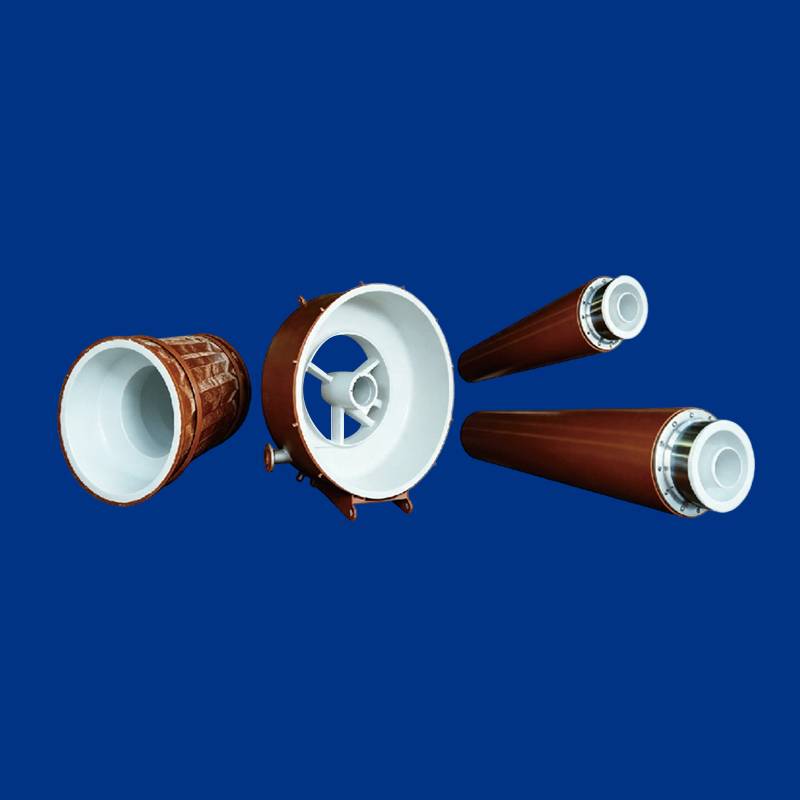



Gansu Juxiang Fluoroplastics Technology Co.,Ltd. is a fluoroplastic manufacturer in China producing fluoro carbon resin coatings alongside a wider range of PTFE, PFA, FEP, PCTFE, PEEK, PI and PVDF materials and machined components. Coating supply is backed by two production bases, in Zhejiang and Gansu, and by in-house resin and processing know-how rather than a bought-in trading line.
As a Fluoro Carbon Resin Coatings manufacturer, we supply PTFE, FEP and PFA systems in aqueous and solvent-borne (oily) form, built as one-coat or two-coat layers according to the duty the surface has to perform. Resin selection, film build and application route are set around the substrate, the part geometry and the working conditions the coated surface will meet.
Our Position in Fluoro Carbon Resin Coatings
Coating is the surface-engineering side of the same fluoropolymer business that produces our sheets, tubes, seals, films and machined parts. That matters in practice: a coating specification is only as good as the resin grade behind it and the sintering discipline applied to it, and both are controlled here rather than assembled from third-party stock.
We work from the working point outward — service temperature, chemical exposure, friction or release requirement, electrical duty and the substrate the film must bond to. The result is a coating system defined by resin family, coat count, carrier type and film build, not a single catalogue reference applied to every part.
The Coating Systems We Supply
Three fluoropolymer families cover the majority of industrial coating duties. Each behaves differently at temperature, in film formation and in chemical barrier, so the choice is driven by the process condition rather than by preference.
| Coating system | Service temperature | Film character after sintering | Supplied forms | Typical fit |
|---|---|---|---|---|
| PTFE | Up to 290 °C / 550 °F, the highest of the three | One-coat or two-coat; lowest friction coefficient of the range | Aqueous and oily (solvent-borne) | Release surfaces, low-friction contact faces, general chemical duty |
| FEP | Below PTFE | Becomes flexible during sintering and forms a non-porous film | Aqueous and oily (solvent-borne) | Non-stick and corrosion resistance where the PTFE temperature ceiling is not required |
| PFA | 260 °C / 500 °F continuous | Non-porous film; a chemical-resistant grade raises film build by up to 1300 µm | Standard and chemical-resistant (thicker build) grades | Combined non-stick and heat resistance with aggressive chemical exposure |
PTFE coatings
PTFE is the high-temperature option and the lowest-friction surface in the range. It is supplied as a one-coat system where release or slip is the main requirement, and as a two-coat system where a thicker, more continuous barrier is needed against chemical attack.
FEP coatings
FEP sinters into a flexible, non-porous film with strong non-stick, chemical and corrosion resistance. Its heat resistance sits below PTFE, which makes it the practical choice for parts that see moderate temperature but demand a pore-free surface.
PFA coatings
PFA carries the non-stick and thermal performance of PTFE together with the non-porous film formation of FEP, and is used continuously at 260 °C / 500 °F. For chemical-resistant duty, a dedicated grade increases the film build by up to 1300 µm to extend barrier life.
Application Fit Across Process Industries
Fluoro carbon resin coatings are specified where a metal surface must stop sticking, stop corroding or stop conducting, without changing the base part. The range maps onto the industries we already serve with solid fluoropolymer components.
- Chemical and petrochemical: vessel internals, pipe and fitting bores, valve bodies, pump housings, flange faces and tank-mouth sealing surfaces exposed to acids, alkalis and solvents.
- Food, pharmaceutical and polymer processing: moulds, rollers, chutes, hoppers and heat-sealing bars where release and cleanability govern output.
- Semiconductor and electronics: wet-bench hardware, wafer-handling contacts and insulation layers requiring high-purity, non-contaminating surfaces.
- Automotive and automation: pistons, guide surfaces, cable and drag-chain protection where dry-running slip and wear resistance replace lubricants.
- Energy and environmental plant: heat-exchanger parts, filtration hardware and ducting in flue-gas and wastewater service.
Coated parts are frequently specified alongside solid fluoropolymer items from the same supply — PTFE Film for release and insulation layers, PFA Backed Glass Fiber Sheet for composite structures, and FEP, PFA Extrusion Tube for lined fluid paths.
Substrate, Part Geometry and Masking
Coating performance is decided as much by the substrate as by the resin. Carbon steel, stainless steel, aluminium, copper alloys and glass-fibre composites are all coatable, but each brings its own preparation route and its own limits on sintering temperature. Light alloys and polymer-based substrates must be checked against the sinter profile before the resin is fixed.
Geometry controls coverage. Sharp edges, blind holes, deep threads and close-tolerance mating faces need either a defined film build or deliberate masking, and both are agreed on the drawing before production.
- Substrate alloy, condition and any prior surface treatment
- Surfaces to be coated and surfaces to be masked — threads, bores, seal grooves, datum faces
- Edge radii and corner preparation to avoid thin, discontinuous film
- Thermal expansion mismatch between coating and base metal across the service cycle
- Post-coating operations: machining, assembly, welding or bolting that could damage the film
Specifications and Acceptance Criteria
Every coating order is released against a written specification. Film build, adhesion, continuity and surface finish are the four characteristics that decide whether a coated part survives its service life, and each is fixed numerically before the first part is run.
- Film build: nominal and minimum thickness per surface, measured at defined points on the part
- Adhesion: test method and acceptance level agreed with the drawing
- Continuity: holiday-free coverage on barrier-critical surfaces, with inspection method stated
- Surface finish: roughness target where slip, release or sealing contact depends on it
- Appearance and colour: reference sample retained for batch comparison
- Compliance route: the documentation set the part must satisfy — food contact, pharmaceutical, semiconductor cleanliness — is defined at enquiry stage so the correct resin grade is selected
Information We Use to Configure Your Solution
A workable coating proposal needs the working point, the part and the acceptance rule. The list below is what we ask for; where a value is still open, we agree the assumption in writing so the quotation and the finished part stay aligned.
- Part drawing or sample, with material grade and current surface condition
- Maximum continuous service temperature, peak excursions and thermal cycling pattern
- Chemical exposure list with concentration and contact duration
- Function of the coating: release, low friction, corrosion barrier, electrical insulation or a combination
- Abrasion, pressure and mechanical load on the coated surface
- Required film build and any maximum thickness limited by fit or tolerance
- Masked areas and post-coating assembly sequence
- Quantity, batch size and delivery schedule
- Inspection and acceptance method, plus the documentation package required
Documentation, Packaging and Delivery Scope
Customisation is our core service, and coated parts are produced to the customer's drawing or sample rather than to a fixed catalogue list. Production parameters are monitored through the run, and each batch is released against the agreed acceptance plan with the record set that was fixed at order stage.
- Resin system, grade and coat count recorded per batch
- Measured film build at the defined inspection points
- Adhesion and continuity inspection results
- Handling, storage and installation guidance issued with the shipment
- Protective packing for coated faces, threads and sealing surfaces, with parts separated to prevent transit abrasion
Technical support continues after delivery: material selection, process analysis and troubleshooting for parts already in service are handled by the same team that set the original specification.
Frequently Asked Questions
Which coating should be specified for continuous service near 260 °C with chemical exposure?
PFA is normally the correct answer. It is used continuously at 260 °C / 500 °F, sinters into a non-porous film, and is available in a chemical-resistant grade that raises the film build by up to 1300 µm for longer barrier life. PTFE remains the choice when the temperature ceiling of 290 °C / 550 °F is the deciding factor and the lowest possible friction is required.
What is the practical difference between one-coat and two-coat PTFE?
A one-coat system applies a single resin layer over the prepared substrate; it is thinner and suits release or low-friction duties where a full barrier is secondary. A two-coat system adds a primer and a topcoat, giving a thicker, more continuous film with better resistance to chemical permeation and mechanical wear. Both are available in aqueous and oily form.
Can you produce coated parts to our drawing and masking scheme?
Yes. Customisation is our core service, and parts are developed and produced strictly to customer drawings or samples. Send the drawing with masked areas, threads and mating faces marked, the film build required on each surface, the service conditions and the acceptance method, and the coating specification is built around those inputs.
Why does a non-porous film matter in FEP and PFA coatings?
Both resins coalesce into a pore-free film during sintering, so the underlying metal is fully isolated from the process medium. That is what makes them suitable for corrosion barriers on chemical equipment and for high-purity surfaces in semiconductor and pharmaceutical hardware, where porosity would allow attack at the substrate or release of contamination into the process.