

 русский
 Deutsch
 عربى
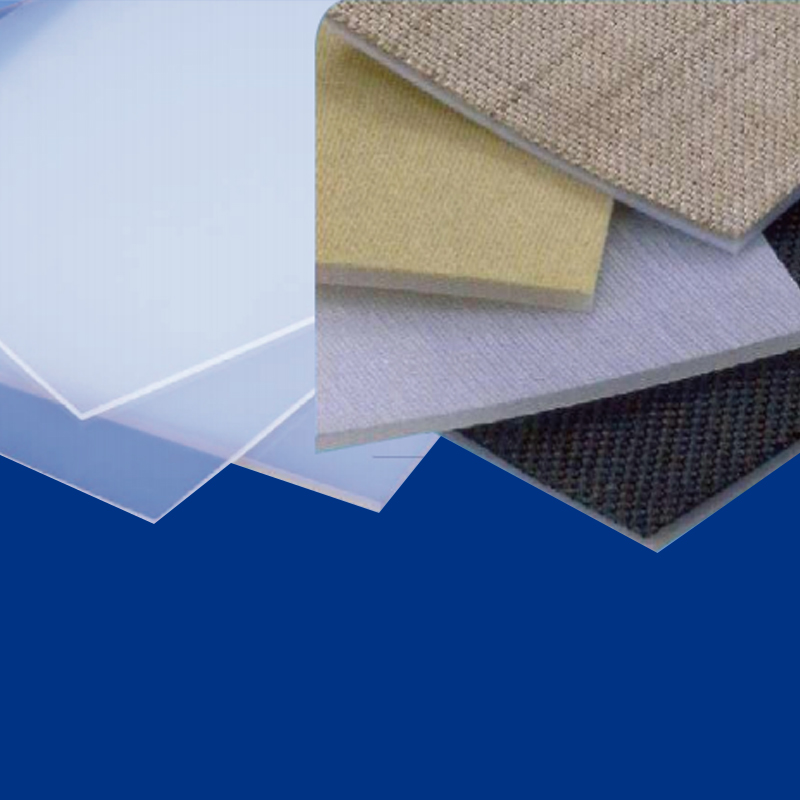



We are a PFA Backed Glass Fiber Sheet manufacturer supplying composite panels that pair a melt-processable perfluoroalkoxy (PFA) surface with glass fiber reinforcement. The construction is specified where a lining or structural panel has to resist aggressive chemistry while remaining rigid enough to span tank walls, duct sections and equipment frames without continuous backing.
Production runs across two bases in China — Zhejiang and Gansu — with the Yumen, Gansu plant operating as a joint venture of Zhejiang Jiaxiang Fluoroplastics and Gansu Juhua New Materials (Juhua Group). That site produces PTFE sodium-treated plate and PTFE/PFA glass fiber composite plate alongside electronic film, sealing and semiconductor protection lines, so a lining specification and its gasket, sealing frame and machined detail can be scheduled through one production flow.
Product Range and Where Each Form Fits
The composite family is supplied as stock sheet, cut-to-size panels and finished components. Selection usually starts from the fluid side of the panel and the mounting method on the structural side.
| Product form | Construction | Where it fits |
|---|---|---|
| PFA backed glass fiber sheet | PFA face over woven glass fiber reinforcement | Tank and vessel linings, duct and scrubber internals, fluid equipment panels |
| M-PTFE / PFA backed composite sheet | Modified PTFE or PFA surface on glass fiber backing | Chemical storage, tanker interiors, sealing faces under higher bolt load |
| Sodium-treated PTFE plate | Etched PTFE surface prepared for adhesive bonding | Lining of steel and FRP structures where the sheet is bonded rather than mechanically fixed |
| Cut gaskets and sealing frames | Composite sheet machined to profile | Flange, manway and nozzle sealing on lined vessels and pipework |
| Machined inserts and covers | Composite stock machined to drawing | Wet bench components, fluid modules, medical and pharmaceutical equipment housings |
Process and Application Fit
PFA retains the chemical resistance and low extractables of a perfluoropolymer while being melt-processable, so the process-facing surface can be produced as a continuous, weldable skin rather than a skived or sintered one. The glass fiber side carries mechanical load and holds dimensional stability across large spans. Where the panel must bond to steel or FRP, we supply sodium-treated surfaces instead of, or in combination with, the PFA face.
- Chemical and petrochemical tank interiors, sumps and tanker compartments
- Electronic-chemical and semiconductor wet process equipment, where low contamination matters
- Fluid handling modules, pipe lining and pump components
- Medical and pharmaceutical fluid equipment requiring inert contact surfaces
- Hydrogen energy systems and high-purity gas or liquid circuits
- Ductwork, scrubber internals and exhaust handling in corrosive service
Critical Specifications We Confirm
Sheet build is defined by the duty, not by a single stock thickness. We confirm the following against the lining design and the installation method before releasing a production order.
- Overall thickness and PFA face thickness, set by chemical exposure and permeation allowance
- Reinforcement style and layup of the glass fiber backing, matched to span and support spacing
- Panel dimensions, flatness and cut tolerance for the intended fixing pattern
- Surface condition — gloss, matte or treated — for bonding, sealing or cleanroom contact
- Service temperature and thermal cycling range of the assembly
- Chemical exposure list, including concentration and any intermittent cleaning agents
- Edge preparation, weld prep and joint detail for butt-welded or overlap-welded lining seams
- Electrical insulation requirements where the panel also acts as a dielectric barrier
Configuration and Fabrication Support
We machine and cut composite stock to drawing, including gasket profiles, sealing frames and inserts, and we prepare edges for welding or bonding. Where a project mixes materials, we align the composite panel with the gasket and machined parts so that contact surfaces, thicknesses and tolerances are consistent across the assembly.
- Cut-to-size panels, strips and profiled blanks from the same production batch
- Machined gaskets, sealing frames and cover plates to drawing or sample
- Surface treatment for adhesive bonding to steel, FRP or concrete structures
- Batch-matched supply of sheet, gasket and machined detail for one vessel or line
- Protective packing for flat panels to preserve flatness and surface condition in transit
Quality Assurance and Acceptance
Each batch is checked for dimensional accuracy, surface continuity and reinforcement integrity before packing, and the inspection record travels with the shipment. Where a project requires it, we agree the acceptance criteria at order stage so that incoming inspection at the destination matches what was measured at our works.
- Dimensional and thickness inspection reports per batch
- Visual and surface continuity inspection of the process-facing side
- Material batch identification and traceability on packing and labels
- Pre-production sample panels for bonding or welding trials before full release
- Documentation package agreed per order, including drawings and handling guidance
Information We Use to Configure Your Solution
A workable proposal needs the duty, the geometry and the installation method. The matrix below shows what each input changes in the configuration.
| Project input | What we do with it |
|---|---|
| Chemical exposure list, concentration and temperature | Select PFA, modified PTFE or combined surface build and set face thickness |
| Equipment type, drawing or sketch with dimensions | Define panel size, cut pattern and edge preparation |
| Support spacing and mechanical load | Fix reinforcement layup and overall thickness |
| Fixing method — bonded, bolted or welded | Choose sodium-treated, plain or weldable surface condition |
| Sealing arrangement and bolt load | Match gasket grade, thickness and compression behaviour |
| Quantity, batch grouping and delivery sequence | Plan production runs so one vessel or line is supplied from matched batches |
| Inspection and documentation requirements | Set the acceptance record and test scope before production |
Related Products from Our Fluoroplastic Range
Composite panels are usually ordered alongside sealing and machined items for the same equipment. Our Modified PTFE Sheet covers gasket and sealing stock, large integrated molded PTFE sealing frames and gaskets serve vessel and manway closures, and PFA rod and tube completes fluid-side assemblies in the same material family.
Frequently Asked Questions
How does PFA backed sheet differ from PTFE backed sheet?
PFA is melt-processable, so the process-facing skin can be produced as a continuous weldable surface with low extractables, which suits semiconductor, electronic-chemical and high-purity fluid equipment. Modified PTFE backed sheet offers greater stiffness and creep resistance under sustained bolt load and is often the more economical choice for large chemical tank linings. We supply both and can combine them where a vessel needs a weldable fluid side and a stiffer structural side.
Can you supply panels, gaskets and machined parts from one batch?
Yes. When a project covers a vessel lining plus its flange and manway gaskets, we group the items in one production run so thickness, surface condition and material batch stay consistent across the assembly. Drawings or samples define the machined profiles.
What determines the sheet thickness for a lining?
Thickness is built from the PFA face thickness plus the reinforcement layup. Chemical permeation, service temperature, support spacing and the fixing method all move the number, so we set the build against the lining design rather than quoting a single stock thickness for every duty.
How is the sheet prepared for bonding to a steel tank?
Bonded linings use a sodium-treated surface on the structural side to give the adhesive a receptive substrate. We agree the treatment, the surface protection during transit and the handling sequence with the installer, and can supply trial panels so the bonding procedure is validated before the full lining is released.