

 русский
 Deutsch
 عربى
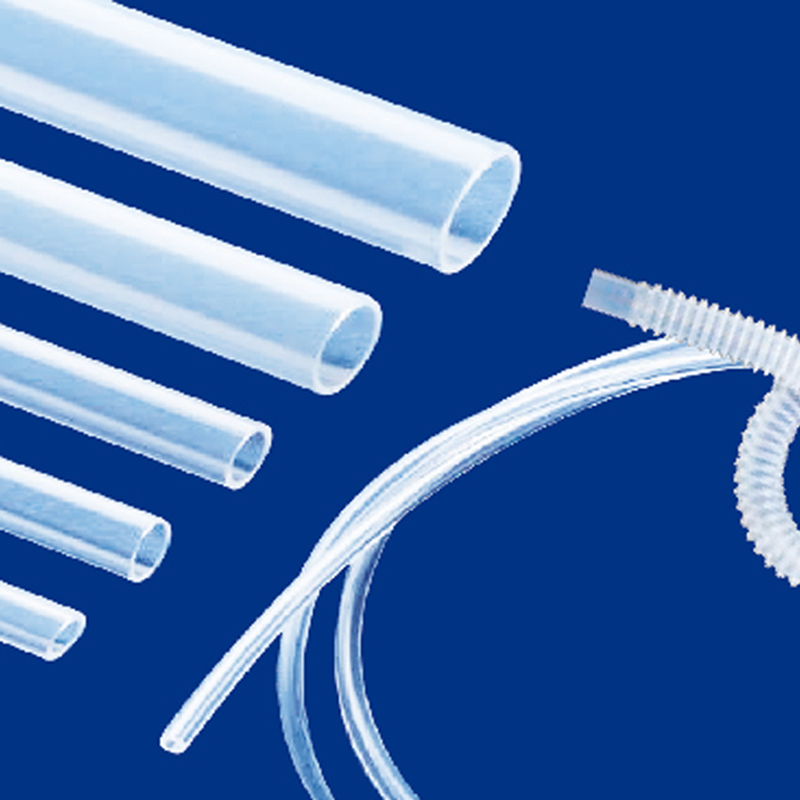
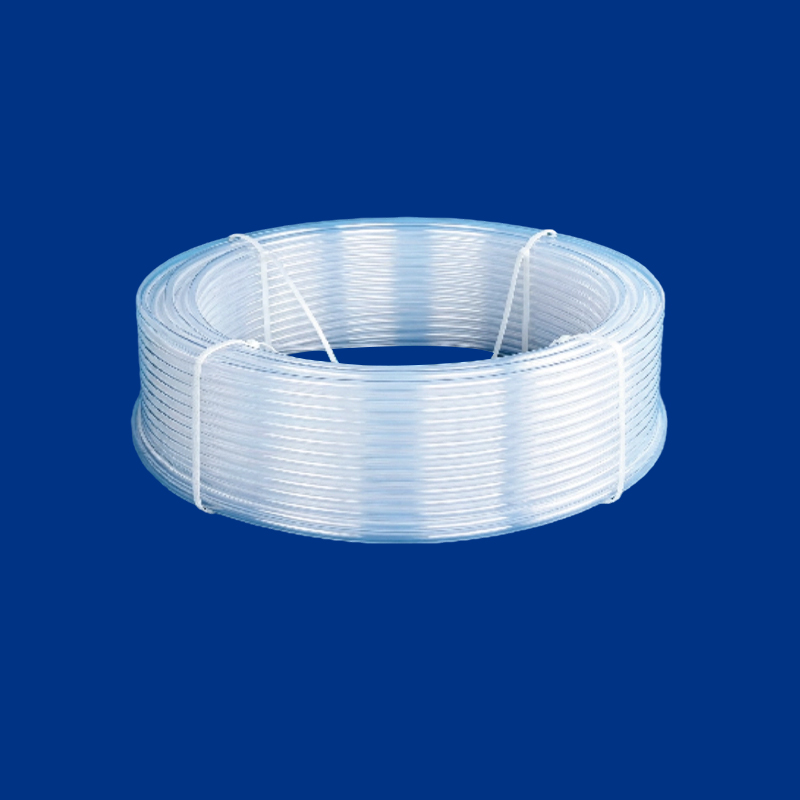




Gansu Juxiang Fluoroplastics Technology Co.,Ltd. produces FEP and PFA extrusion tube at our Yumen, Gansu base, with a second production base in Zhejiang running behind the same order book. As a FEP, PFA Extrusion Tube manufacturer we supply electric-grade and general-purpose tube in coils, spools, straight lengths and cut pieces, from 1.7 mm to 260 mm outside diameter.
The tube serves cable insulation and sheathing, optical fiber protection, electrical components, chemical liquid and gas lines, heat exchangers and liquid dosing equipment. Because we also mold and machine PFA rod, tube and connectors, a complete fluid or cable assembly can be specified from one source instead of being assembled across several.
Range, Resin Grades and Product Form
FEP and PFA are melt-processable fluoropolymers, so the tube is produced by extrusion rather than compression molding. We run natural resin and resin compounded with additives where a colour or a specific end-use property is required, and electric-grade tube is separated from general tube at the specification stage rather than after production.
- Electric-grade tube — dielectric strength specified against wall thickness, for cable insulation, sheathing and electrical components.
- General tube — mechanical and chemical duty where dielectric values are not the governing requirement.
- Form of supply — coil, spool, straight length or cut piece, with coil length and packing fixed per order.
- Size — 1.7 mm to 260 mm outside diameter, bore from 1.3 mm, inch designations from 1/8 in to 2 in.
- Colour and compound — natural, pigmented, or additive-modified resin.
- End condition — cut square to length, with further end finishing agreed at order stage.
Tube is quoted alongside our PFA rod and tube and PFA connectors and special joints, so bore, wall and termination are matched before the material reaches the line.
FEP or PFA: Resin Choice Follows the Working Point
The two resins overlap in chemical and electrical behaviour but not in thermal ceiling. FEP is rated from -200 °C to +200 °C; PFA is rated from -200 °C to +260 °C. Above roughly 200 °C, or where the wetted path must stay as inert as PTFE, PFA is the correct selection; below that, FEP covers the same electrical duty with easier processing.
| Property | FEP tube | PFA tube |
|---|---|---|
| Service temperature | -200 °C to +200 °C | -200 °C to +260 °C |
| Processing route | Melt extrusion, heat-shrinkable variants | Melt extrusion, heat-shrinkable variants |
| Dielectric constant (approx.) | 2.1 | 2.1 |
| Appearance | Transparent, slight haze in heavy wall | Transparent |
| Chemical resistance | Excellent against acids, bases and solvents | Excellent, closer to PTFE |
| Extractables and purity | Standard | Lower extractables, preferred for high-purity lines |
| Typical tube duty | Cable insulation and jacket, optical fiber, electrical components, heat exchangers | High-purity chemical lines, semiconductor wet process, high-temperature fluid handling |
Both grades are transparent, chemically resistant and non-wetting, which is why the same tube appears in cable jacketing and in chemical transfer lines. Selection turns on temperature, purity and mechanical handling rather than chemical compatibility alone.
Dimensional Range and Wall Build
The size chart is built on outside diameter and inside diameter pairs, because the bore governs flow and the wall governs stiffness, pressure capability and dielectric strength. Inch sizes follow the same logic, from 1/8 in through 2 in.
| Nominal size | Outside diameter (mm) | Inside diameter (mm) | Wall (mm) |
|---|---|---|---|
| 1/8 in | 3.17 | 1.58 | 0.80 |
| 1/4 in | 6.35 | 3.96 | 1.20 |
| 3/8 in | 9.53 | 6.35 | 1.59 |
| 1/2 in | 12.70 | 9.53 | 1.59 |
| 3/4 in | 19.05 | 15.85 | 1.60 |
| 1 in | 25.40 | 22.22 | 1.59 |
| 1-1/2 in | 38.10 | 34.10 | 2.00 |
| 2 in | 50.00 | 45.80 | 2.10 |
| 4 × 2.5 | 4.0 | 2.5 | 0.75 |
| 6 × 4 | 6.0 | 4.0 | 1.00 |
| 10 × 8 | 10.0 | 8.0 | 1.00 |
| 16 × 13 | 16.0 | 13.0 | 1.50 |
| 25 × 22 | 25.0 | 22.0 | 1.50 |
| 40 × 36 | 40.0 | 36.0 | 2.00 |
| 60 × 54 | 60.0 | 54.0 | 3.00 |
| 100 × 90 | 100.0 | 90.0 | 5.00 |
| 260 × 258 | 260.0 | 258.0 | 1.00 |
The upper end of the range is supported by new extrusion equipment now in trial production, which takes the maximum outside diameter to 260 mm. Intermediate sizes, non-standard wall builds and tighter concentricity requirements are produced to drawing, with the OD/ID pair and its tolerance confirmed before the order is released.
Application Fit Across Cable, Fluid and Thermal Duty
- Cable insulation and sheath — low dielectric loss and high-temperature survival suit data, control, coaxial and aerospace cable constructions.
- Optical fiber protection — a smooth, non-stick bore and a transparent wall that allows visual inspection of the fiber bundle.
- Electrical and electronic components — insulating sleeves, spacers and covers where anti-sticking and dielectric strength both matter.
- Chemical liquid and gas transfer — an inert wetted path for aggressive media in dosing, sampling and pilot lines.
- Heat exchangers — thin-wall tube that resists fouling and chemical attack in corrosive service.
- Liquid dosimeters and metering — consistent bore for repeatable volume delivery without wetting or contamination.
- Semiconductor wet process — PFA tube for high-purity chemical distribution where extractables must stay low.
- Medical and laboratory fluid handling — inert, smooth-bore lines for reagent and sample transfer.
Extrusion Control, Inspection and Acceptance
Wall concentricity, bore roundness and surface quality are controlled at the die and confirmed after cooling, because an off-centre wall reduces both pressure capability and dielectric performance. Mechanical and electrical values are verified against the grade specified for the order.
- Tensile strength — minimum 20 MPa for both electric and general tube.
- Elongation at break — minimum 200%.
- Dielectric strength, electric tube — 30 MV/m at 0.2 mm wall, 25 MV/m at 0.4 mm and above, 24 MV/m at 0.5 mm and above.
- Dimensions — outside diameter, inside diameter and wall checked against the released dimension sheet.
- Appearance — freedom from gels, die lines, bubbles and contamination, inspected on the finished length.
- Packing — coil, spool or straight length identified to the order and the line item.
Acceptance criteria are fixed at order stage, so dimensional limits, mechanical values, dielectric strength where specified, appearance and packing are inspected against one agreed list rather than a general standard.
Information We Use to Configure Your Solution
A quotation is only as precise as the working point behind it. We reply to inquiries within 12 working hours and confirm the configuration before pricing, using the following inputs.
- Resin and grade — FEP or PFA, electric or general, natural or additive-modified.
- Dimensions — outside diameter, inside diameter and wall, with the tolerance band that applies.
- Length and form — coil, spool, straight length or cut piece, and the coil or piece length required.
- Service conditions — continuous temperature, medium, pressure and minimum bend radius.
- Electrical requirement — dielectric strength or insulation resistance where the tube is part of a cable or component.
- End finishing and assembly — square cut, chamfer, or connection to PFA fittings and joints.
- Cleanliness and packing — handling class, bagging, labelling and export packing.
- Quantity, delivery schedule and documentation required for acceptance.
Where a drawing or a physical sample exists, we work from it directly and confirm the dimension sheet back to you before production. Repeat orders run against the same released specification.
Frequently Asked Questions
What separates electric-grade from general FEP and PFA tube?
Electric-grade tube carries a specified dielectric strength that varies with wall thickness — 30 MV/m at 0.2 mm, 25 MV/m at 0.4 mm and above, 24 MV/m at 0.5 mm and above. Tensile strength of at least 20 MPa and elongation of at least 200% apply to both grades. General tube is supplied against mechanical and chemical duty where no dielectric value is called up.
Can you produce sizes outside the standard chart?
Yes. Intermediate outside and inside diameters, non-standard wall builds and tighter concentricity are produced to drawing. The OD/ID pair, tolerance and inspection basis are confirmed before release, and the maximum outside diameter currently reaches 260 mm on new extrusion equipment in trial production.
Which resin suits a chemical transfer line running at 230 °C?
PFA. FEP is rated to +200 °C and would be outside its continuous ceiling at that working point, while PFA is rated to +260 °C and also gives lower extractables for high-purity duty. Pressure, bend radius and the termination method should be confirmed with the dimension sheet, since they set the wall build.
How is the tube packed and documented for export?
Coil, spool, straight length and cut-piece formats are all available, with coil length, labelling and packing agreed at order stage. Shipment documentation follows the destination and the agreed commercial terms, and the released dimension sheet travels with the order so incoming inspection matches what was produced.
Related Products and Categories
Our portfolio also includes Products for applications with different operating ranges, interfaces or integration requirements.