

 русский
 Deutsch
 عربى
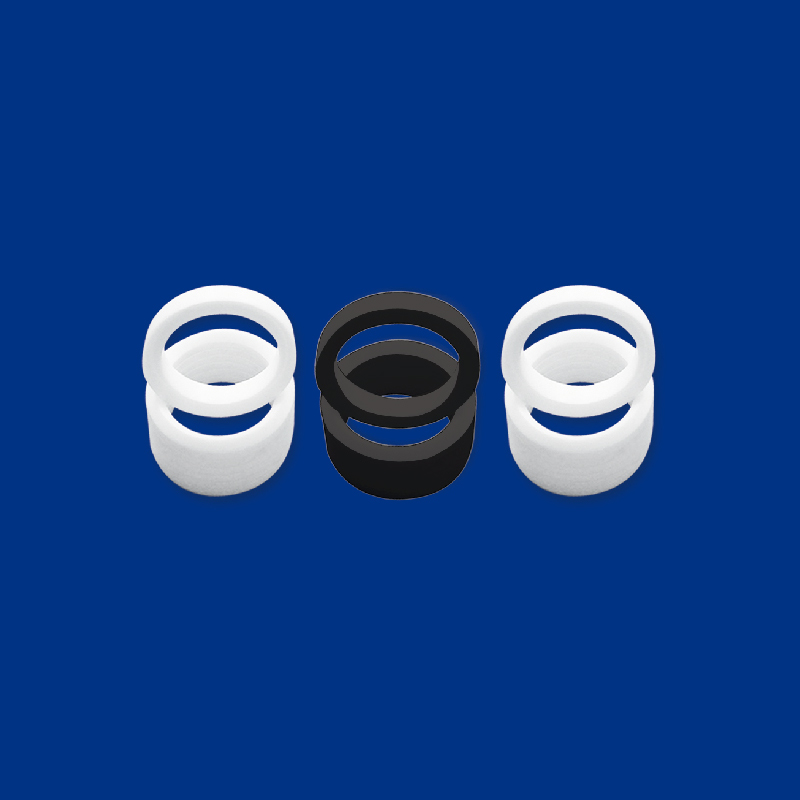



Gansu Juxiang Fluoroplastics Technology Co.,Ltd. is a PTFE Ball Valve Seat And Valve Stem Sealing Gasket manufacturer molding these components from granular PTFE resin at our Yumen, Gansu base in China, within a wider fluoroplastic sealing range that also covers flange gaskets, filled PTFE stock shapes and universal seals. The two parts sit at the wear points of a ball valve: the seat rings that support the ball and close the bore, and the stem gaskets that seal the operating shaft against line pressure and atmosphere.
We produce them as molded parts to drawing. Standard seat and stem formats cover nominal bores from DN15 to DN150, and non-standard outside diameters, wall sections, seat heights and stem profiles are molded for specific valve bodies. A seat is a pressure-retaining part and a low-friction bearing surface at the same time, so resin grade, molding cycle and finished dimensions are handled as one specification rather than three separate ones.
At a glance: compression-molded seat rings and stem sealing gaskets, DN15–DN150 standard, custom geometries to drawing, granular PTFE as the base grade, filled compounds where the duty calls for them, first-article samples and dimensional records before series production.
Seats and Stem Gaskets We Mold
Seat rings are molded as closed rings with the bore, sealing face and back face formed in the tool, so the sealing surface does not depend on a secondary machining pass. Stem gaskets are molded to the profile the gland and stem shoulder require, with height controlled to the compression the sealing set needs.
- Ball valve seats for soft-seated floating and trunnion ball valves, with the bore, outside diameter and height matched to the body recess and cavity.
- Valve stem sealing gaskets sized to the stem diameter and to the gland, bonnet or packing recess that carries them.
- Companion sealing parts from the same material family: Modified PTFE Gasket for body-to-bonnet joints, Filled PTFE Tube, Rod for seats machined from stock to a profile, and PTFE Universal Seal for auxiliary sealing points on the same valve.
Keeping seats, stem gaskets and body gaskets in one supply chain matters on a valve assembly line: the three parts see the same medium and the same temperature, and a material change on one of them usually has to be reflected on the others.
Material Basis and Service Conditions
Seats and stem gaskets in this range are molded from PTFE granular resin. The resin is preformed, sintered and cooled on a controlled cycle so the part reaches full density without internal voids that would open a leak path under pressure cycling. Molded properties for the grade we run:
- Apparent density: 2.10–2.30 g/cm³
- Tensile strength: ≥14.0 MPa minimum
- Elongation at break: ≥140% minimum
Those figures describe the material, not the seat. What a seat does in service is set by the combination of line pressure, temperature, medium, cycling frequency and the surface finish of the ball it runs against. PTFE covers a wide range of aggressive media and keeps operating torque low, but its compression set and thermal expansion have to be designed into seat height and stem gasket preload rather than corrected after installation.
We size each part around the working point:
- Pressure class, unseating pressure and whether the valve isolates or regulates.
- Temperature range, including steam-out, clean-in-place and start-up excursions.
- Medium, concentration and any suspended solids or crystallising tendency.
- Cycle count, actuation speed and whether the valve is manual or actuated.
- Ball diameter, roundness and surface finish, and the torque budget at the operator.
Molded Size Range
The standard molded seat and stem gasket set covers DN15 to DN150. The dimensions below are the nominal seat and stem gasket sizes we mold; the same nominal bore is also produced with alternate seat outside diameters and stem profiles to suit specific valve models.
| Nominal bore DN | Seat OD (mm) | Seat ID (mm) | Seat height (mm) | Stem gasket OD (mm) | Stem gasket ID (mm) | Stem gasket height (mm) |
|---|---|---|---|---|---|---|
| 15 | 24 | 15 | 5 | 20 | 12 | 4 |
| 20 | 32 | 20 | 5 | 20 | 12 | 4 |
| 25 | 36 | 25 | 5.5 | 24 | 16 | 5 |
| 32 | 44 | 32 | 5.5 | 24 | 16 | 5 |
| 40 | 54 | 40 | 6 | 30 | 20 | 5 |
| 50 | 64 | 50 | 6.5 | 34 | 24 | 5 |
| 65 | 95 | 65 | 14 | 38 | 28 | 5 |
| 80 | 105 | 80 | 14 | 38 | 28 | 5 |
| 100 | 132 | 100 | 16 | 48 | 32 | 6 |
| 150 | 190 | 150 | 22 | 50 | 38 | 6 |
For DN80 an alternate seat of 115 mm outside diameter, 80 mm inside diameter and 16 mm height is also molded. Sizes outside the table, larger bore valves, seat rings with relief grooves and stem gaskets with non-standard shoulder heights are made to drawing.
Configuration and Valve Integration
Configuration starts from the valve, not from a catalogue number. We confirm the seat cross-section, the sealing lip or chamfer that guides the ball, the back-face radius that beds against the body, and the clearance that lets the seat float and re-seat under pressure. On the stem side, gasket height, bore and shoulder geometry are matched to stem finish and gland take-up so the seal beds without being over-compressed.
- Seat bore and outside diameter fitted to the body recess, with concentricity held across the sealing face.
- Seat height set to the available cavity and to the squeeze required at assembly.
- Stem gasket profile as a flat ring, shouldered ring or chamfered ring, with height tolerance tied to gland adjustment.
- Edge treatment: deburred sealing edges, radiused back face, no molding flash across the sealing path.
- Material option: granular PTFE for the standard range, filled PTFE compounds where wear resistance or pressure-velocity duty requires them.
- Identification: size, batch and drawing revision on the unit pack.
Because the seat and the ball form a matched pair, we also work from the ball specification when a customer is re-seating an existing valve: bore diameter, seat contact width and ball finish determine whether a standard seat can be used or a new tool is needed.
Quality Control, Acceptance and Delivery Scope
Each molding batch runs to a recorded cycle, and parts are checked against the approved drawing before packing: bore, outside diameter, height, concentricity and the visual condition of the sealing faces. Where a valve maker needs a fit check, we mold first-article samples from the production tool and submit them with the dimensional record before the series run.
Delivery scope covers the molded parts, batch identification and the drawing revision they were produced to. Parts are bagged by size and batch, boxed for export and labelled so they can be booked into a valve assembly line without re-checking identity. Replacement quantities run on the same tooling and the same drawing revision as the original order.
Information We Use to Configure Your Solution
A workable quotation needs the valve, not only the size. This is the information we use to fix tooling, material grade and price:
- Valve type, nominal bore, pressure class and face-to-face standard.
- Seat drawing, or a worn sample with the failure mode noted.
- Ball diameter and surface finish, and whether the valve is floating or trunnion mounted.
- Medium, concentration, temperature range and any steam or clean-in-place cycle.
- Operating torque limit and actuator type.
- Stem diameter, gland or bonnet recess dimensions and stem surface finish.
- Annual quantity, batch size and packing preference.
- Acceptance requirements: dimensional report, first-article sample, material grade statement.
Frequently Asked Questions
Which sizes of PTFE ball valve seats and stem gaskets do you mold?
Standard molded seats and stem gaskets cover DN15 to DN150, with seat outside diameters from 24 mm to 190 mm and stem gaskets from 20 mm to 50 mm outside diameter. Larger bores, alternate seat diameters such as the 115 mm seat for DN80, and non-standard stem profiles are molded to drawing.
Can you produce a seat from a sample instead of a drawing?
Yes. We measure the sample, record the wear pattern and prepare a drawing for approval before cutting the tool. That route is common for imported valves where the original seat drawing is not released, and it also lets us correct a seat height that has been running too tight in the cavity.
Do you supply filled PTFE seats as well as granular PTFE seats?
The standard range is molded from granular PTFE resin. Where the duty calls for lower wear, higher pressure-velocity capability or reduced deformation under load, we mold filled PTFE compounds or machine seats from filled PTFE stock. We confirm which grade suits the medium and cycle profile before quoting.
How is the stem gasket matched to the stem and gland?
The gasket bore follows the stem diameter, the outside diameter follows the recess, and the height is set to the compression the gland take-up produces. Stem surface finish and the amount of gland adjustment available both affect the result, so we ask for those two details together with the recess dimensions rather than the gasket size alone.