

 русский
 Deutsch
 عربى



Spring-Energized Sealing Built Around Fluoropolymer Jackets
Gansu Juxiang Fluoroplastics Technology Co.,Ltd. is a PTFE Universal Seal manufacturer in China, producing from two bases in Zhejiang and Gansu. The universal seal range pairs a machined PTFE or UHMW-PE jacket with a metal energizer spring, so the sealing lip keeps its load at low pressure, takes up wear and minor hardware misalignment, and runs without the stick-slip, shelf ageing and rubber shedding of an elastomer O-ring.
Every seal is produced to the customer's groove drawing or sample. Jacket compound, spring material, cross-section and lip geometry are fixed against the actual bore, rod, pressure and media, which makes the part a drop-in sealing element for pumps, valves, cylinders, swivel joints and end-face connections where rubber cannot hold temperature, chemical attack or cleanability requirements.
Construction: filled PTFE or UHMW-PE jacket · 316L stainless steel energizer as standard · Hastelloy C276 for strongly corrosive duty · service window from −269 °C to 260 °C depending on compound.
The PTFE Universal Seal Range
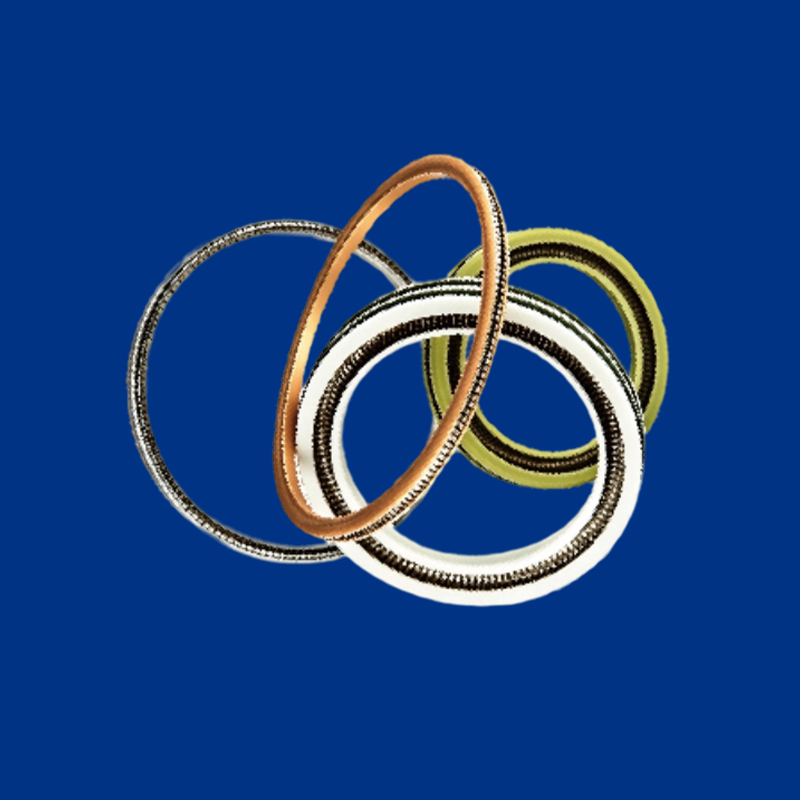
Four jacket compounds cover the bulk of spring-energized sealing work we quote. Each is machined from our own filled PTFE tube, rod or moulded blank, then assembled with the energizer matched to the groove load.
| Jacket compound | Service temperature | Energizer | Where it fits | Behaviour to design around |
|---|---|---|---|---|
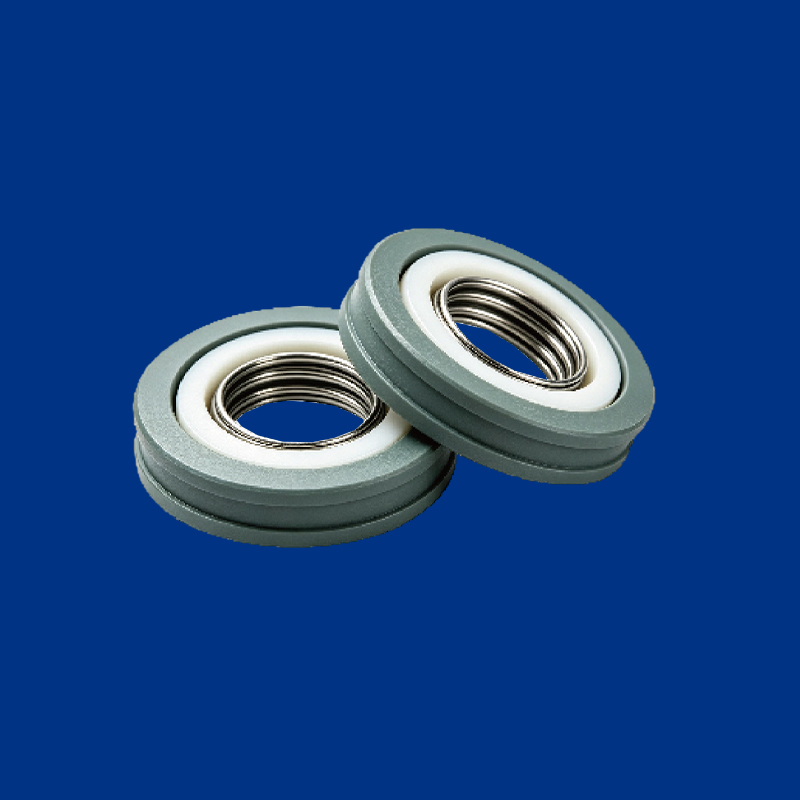
| Glass fibre / bronze powder filled PTFE | −200 °C to 240 °C | 316L; Hastelloy C276 optional | High-pressure hydraulic and pneumatic rod and piston seals, general chemical duty | Grey-green matte; high wear resistance, good thermal conductivity, strong extrusion resistance, dimensionally stable |
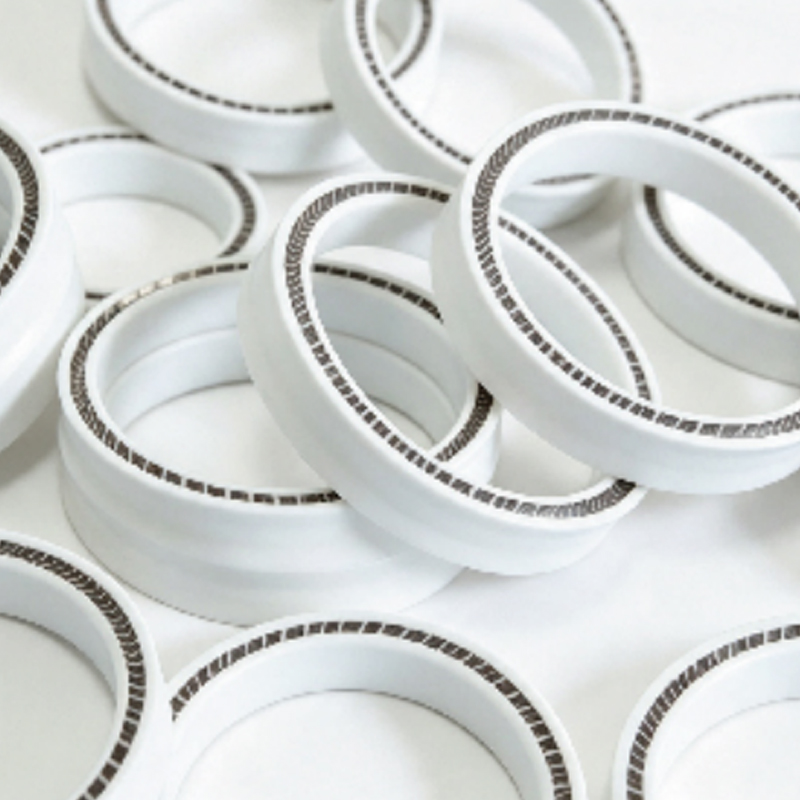
| Virgin food-grade PTFE | −200 °C to 260 °C | 316L | Food, pharmaceutical, drinking water and high-purity media systems | No leaching, non-sticking, acid and solvent resistant, repeated autoclave cycles, no rubber ageing or particle shedding |
| UHMW-PE | −269 °C to 80 °C | 316L; Hastelloy optional for low-temperature duty | Cryogenic valves, LNG and low-temperature actuators | No brittle fracture at ultra-low temperature, high toughness, low friction, no precipitation; excluded above 80 °C and in strong concentrated acids or oxidizers |
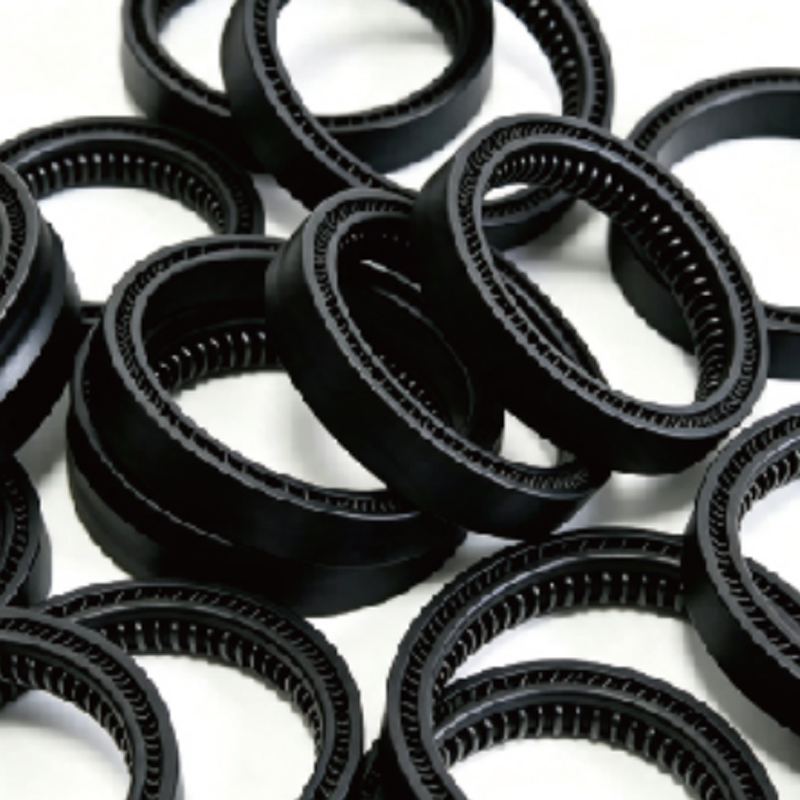
| Carbon fibre filled PTFE | −200 °C to 260 °C | 316L | High-wear reciprocating and rotating shaft duty outside clean-media service | Black; ultra-high wear and creep resistance, self-lubricating, acid, alkali and solvent resistant; not for food, pharmaceutical or drinking water lines because of carbon powder release |
Jacket blanks come from our Filled PTFE Tube,Rod line, which keeps compound and batch consistent between prototype and series delivery.
Where Universal Seals Fit in the Line
The spring-energized construction suits sealing points that combine low lip load with high chemical or thermal demand — the cases where an elastomer hardens, swells or cold-flows and a plain PTFE ring loses contact pressure.
- Reciprocating rods and pistons in dosing pumps, diaphragm pumps, hydraulic cylinders and pneumatic actuators, including dry-running and oil-free duty.
- Rotary shafts and swivel joints on mixers, rotary unions and valve stems, where low friction torque and no stick-slip matter.
- Static end-face and flange joints under thermal cycling, complementing our Modified PTFE Gasket range where a gasket rather than a groove seal is the right format.
- Cryogenic service in LNG, industrial gas and cold-box valves, using the UHMW-PE jacket down to −269 °C.
- Clean and sterile duty in food, beverage, pharmaceutical and semiconductor wet-process equipment, with virgin PTFE jackets and steam-in-place cycling.
- Aggressive media in chemical dosing, solvent transfer and acid lines, with Hastelloy C276 energizers where 316L would corrode.
Seals are frequently specified alongside our PTFE Piston Ring and guide elements, so a complete non-metallic sealing set can be supplied from one drawing package.
Specifications That Decide the Seal
Universal seals are groove-defined parts. The jacket compound sets chemical and temperature capability, but the hardware geometry sets whether the seal survives. We work from the following data rather than from a nominal size alone.
- Groove geometry: groove width, depth, bottom radius and corner break, plus bore or rod diameter and the resulting seal cross-section.
- Extrusion gap: diametral clearance at pressure and temperature, which drives whether a filled compound is required over virgin PTFE.
- Hardware finish and alignment: surface roughness of the sliding surface, concentricity, ovality and lead-in chamfer.
- Pressure profile: continuous and peak pressure, single- or double-acting arrangement, pressure cycles per hour.
- Motion: reciprocating or rotating, stroke length, speed and duty cycle, including dry-running periods.
- Media: fluid or gas, concentration, presence of abrasive particles, steam or high-pressure water, and vacuum.
- Thermal history: operating and excursion temperatures, cycling rate, and whether steam or autoclave sterilisation is used.
- Cleanliness class: food contact, pharmaceutical, drinking water or semiconductor requirements that exclude carbon and bronze fillers.
Engineering Support from Drawing to First Article
Our technical team reviews the customer's groove drawing or worn sample before machining, checking compound choice against media and temperature, spring material against corrosion risk, and cross-section against the available groove volume. Where a drawing is incomplete, we propose a geometry and return it for approval.
Because formulation, machining and quality control sit inside the same organisation across the Zhejiang and Gansu bases, prototype seals and production batches follow the same compound and process route. That continuity is what keeps lip load and interference stable from the first article to repeat orders.
- Material matching for combined chemical, thermal and wear conditions.
- Spring style and spring rate selected for the seating load the groove needs.
- Machining of non-standard diameters, thin sections and large sealing frames.
- Prototype and sample seals for bench testing before series release.
- Installation guidance covering chamfers, lubrication, sizing and handling.
Quality Records, Installation and Spares
Each batch is checked dimensionally on jacket outside and inside diameter, cross-section and lip form, with the energizer fit verified before packing. Documentation covering material batch, measured dimensions and installation guidance travels with the shipment, and seals are packed to protect the lip from deformation in transit.
- Inspect the groove and chamfer before fitting; a raised edge will shave the jacket during installation.
- Fit with the correct sizing sleeve or cone, never with a sharp pick or screwdriver.
- Lubricate with a medium compatible with both the jacket compound and the process fluid.
- Replace seals as sets, and keep spare seals in their original packaging away from heat and load.
- Report the working point of any failed seal — pressure, temperature, cycles and media — so the compound or geometry can be re-matched.
Information We Use to Configure Your Solution
A quotation is prepared against the working point, not against a size list. The following inputs let us return a defined seal rather than a range of options.
- Groove drawing, seal cross-section, bore or rod diameter, and quantity per machine and per year.
- Hardware material, surface finish, clearance and whether the seal is single- or double-acting.
- Media, concentration, temperature range and any cleaning or sterilisation cycle.
- Pressure, speed, stroke and cycle count, plus vacuum or dry-running conditions.
- Cleanliness or food-contact requirement, and whether carbon or bronze fillers are excluded.
- Spring material preference, drawing number, marking and packaging requirements.
- Delivery destination and required documentation for incoming inspection.
Customer Questions
How does a PTFE universal seal differ from an O-ring?
The jacket is a machined fluoropolymer body and the energizer is a metal spring rather than an elastic rubber core. The spring supplies the seating load, so the seal keeps contact at low pressure, compensates for wear and hardware run-out, and does not harden, swell or shed rubber particles. It also allows the low-friction, chemically inert PTFE jacket to be used in dynamic duty.
Which jacket compound should be used for food and pharmaceutical lines?
Virgin food-grade PTFE with a 316L spring, operating from −200 °C to 260 °C and tolerant of repeated autoclave cycles. It contains no leaching additives and does not stick or shed. Carbon fibre filled PTFE is excluded from these lines because of carbon powder release, and glass fibre or bronze filled grades are chosen only where the process permits them.
Can you supply seals to our own groove drawing?
Yes. Custom machining to drawings or samples is our standard route. We confirm the groove dimensions, clearance and surface finish against the compound and spring selected, then produce a first article for approval before series production. Hastelloy C276 energizers are available where 316L is not corrosion-resistant enough.
What is the lowest temperature the range covers?
−269 °C with the UHMW-PE jacket, which is intended for cryogenic valves and low-temperature actuators and must not be used above 80 °C or in strong concentrated acids and oxidizers. Filled PTFE jackets cover −200 °C upward, with the upper limit set by the compound — 240 °C for glass fibre and bronze filled, 260 °C for virgin and carbon filled grades.