

 русский
 Deutsch
 عربى
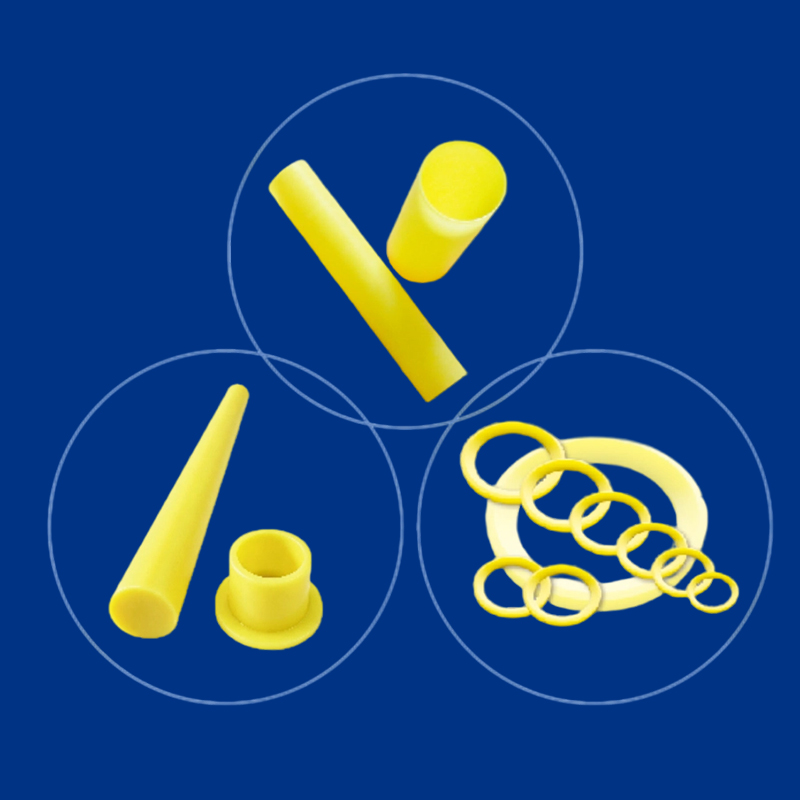


Gansu Juxiang Fluoroplastics Technology Co.,Ltd. manufactures DEVLON ball valve seats and the fluoroplastic sealing parts that work with them. From our plant in Yumen City, Gansu, and a second production base in Zhejiang operated through our joint venture with Zhejiang Jiaxiang Fluoroplastics and Gansu Juhua New Materials, we machine PTFE, PFA, FEP, PCTFE, PEEK, PI, PVDF and UHMW-PE into seats, gaskets, seals and custom components for valve, pump, chemical, semiconductor and energy equipment.
The DEVLON Ball Valve Seat range addresses a specific failure mode in soft-seated ball valves: the seat ring slowly losing contact stress as the polymer creeps under sustained compression, line pressure and thermal cycling. DEVLON is a fluorine-containing material with better creep resistance and corrosion resistance than pure PTFE, and it is widely used in valve sealing, particularly in ball valve seats.
- Seats machined to customer drawings, 3D models or physical samples
- Seat rings, stem sealing gaskets and thrust washers supplied as a matched set
- Alternative grades in filled PTFE, PEEK and PI where the duty demands them
- Dimensional records and material documentation issued with the shipment
Where the Seat Sits in the Valve
Every seat we produce is a custom part, so the range is defined by the valves our customers build rather than by a fixed size list. That covers floating-ball seats with a single spherical sealing face, trunnion-mounted seats with an O-ring groove and anti-extrusion step, seat inserts for cartridge designs, and the stem sealing gaskets and thrust washers that complete the sealing stack.
The seat is normally the highest-loaded polymer part in a ball valve. It carries the spring or line-pressure preload that pushes it against the ball, and it has to keep that contact band intact without extruding into the clearance gap between ball and body. Material choice and seat geometry are therefore decided together, not separately.
The DEVLON Ball Valve Seat Range We Supply
As a DEVLON Ball Valve Seat manufacturer we machine the full sealing set for a valve body, which keeps the seat, stem seal and body seal consistent in material batch and fit.
- Floating-ball seat rings — single-piece rings with a machined spherical face matched to the ball radius and a controlled contact band width.
- Trunnion-mounted seats — heavier cross-sections with an O-ring groove for the secondary elastomer seal and an anti-extrusion lip on the low-pressure side.
- Seat inserts and carriers — thin-section seats for cartridge and top-entry designs where the seat is retained in a metal carrier.
- Stem sealing gaskets and thrust washers — the same material family, machined to the stem and bonnet dimensions.
- Matched sealing sets — ball seat, stem seal and body gasket produced as one kit for valve assembly and field spares.
- Material alternatives — filled PTFE products for general chemical duty and PEEK products for higher pressure, temperature or cycling.
Why DEVLON Holds Sealing Stress Better Than Virgin PTFE
Virgin PTFE seals well on first assembly, then relaxes. Under a constant seat load it cold-flows away from the contact band, so the valve that passed a shell test at the factory can weep after a few hundred thermal or pressure cycles. DEVLON's improved creep resistance keeps the seat geometry and the seating force closer to the values set at assembly.
| Seat material | Creep and cold flow | Chemical resistance | Typical seat duty |
|---|---|---|---|
| Virgin PTFE | Highest relaxation under sustained load | Broad, near-universal | Low pressure, low cycle count, purity-driven service |
| Filled PTFE (glass, carbon, bronze) | Reduced flow and better wear, filler dependent | Slightly narrower than virgin PTFE | General chemical and hydrocarbon valves |
| DEVLON fluorine-containing compound | Improved creep resistance and dimensional stability | Retains fluorine-based corrosion resistance | Ball valve seats under higher pressure or higher cycle counts |
| PEEK | High stiffness, low creep, good wear | Resists many media; attacked by some strong acids and halogenated compounds | High pressure, high temperature, abrasive or high-cycle seats |
Matching the Seat to the Line Duty
Seat selection starts with the working point, not the material name. A seat that performs in a dry gas line at moderate pressure behaves differently in wet chlorine, hot caustic or a slurry that abrades the ball face. We review the following with you before the first part is machined.
- Media and concentration — determines whether the fluorine-containing compound, a filled grade or PEEK is the correct starting point, and which elastomer suits the secondary seal.
- Continuous and excursion temperatures — sets the polymer grade and the clearance allowance between seat and pocket.
- Pressure class and design pressure — drives seat cross-section, anti-extrusion geometry and the retention method.
- Ball specification — diameter tolerance, sphericity, surface finish and ball material all affect leakage performance at the seat contact band.
- Cycle frequency and actuation — high-cycle automated valves need a tougher grade and a wider wear allowance than manually operated isolation valves.
- Solids and abrasives — where the medium carries particles, seat geometry and material are adjusted to resist scoring rather than to chase the lowest friction.
Configuration and Machining Control
Seats are machined from stock shapes or moulded blanks, then finished to the drawing. The parameters below are agreed at order stage and recorded on the inspection plan.
- Seat outside and inside diameter, overall thickness and pocket fit
- Spherical radius and contact band width matched to the ball
- Seat face flatness, surface finish and edge break
- O-ring groove dimensions, anti-extrusion lip and vent grooves
- Retention features, keyways and orientation marks
- Machining sequence and fixturing where flatness of the sealing face is critical
- Part marking, cleaning and individual protection for transit
Inspection, Documentation and Delivery Scope
Production runs are monitored against the agreed parameters, and finished seats are checked against the drawing before packing. Where a valve OEM requires a first-article report, the dimensional results and material batch references are prepared for that submission.
- Dimensional inspection of sealing face, groove and pocket dimensions
- Visual inspection of the sealing face for tool marks, contamination and edge damage
- Material batch traceability from stock shape to finished seat
- Documentation pack and handling guidance issued with the shipment
- Seats packed to protect the sealing face, with matched sets kept together
Engineering Support From Drawing to Delivery
Our technical team works one-to-one on requirement alignment, material matching and process analysis, and can review a seat design before tooling is committed. With two production bases we schedule work across Zhejiang and Gansu to keep repeat orders stable, and our export team handles the documentation for shipments that already reach more than 30 countries.
For valve makers and distributors who need the wider sealing stack, the same engineering support covers the rest of our fluoroplastic product range, from gaskets and guide tapes to piston rings and universal seals.
Information We Use to Configure Your Solution
A complete enquiry lets us quote a seat that fits the valve first time. The matrix below shows what each input changes in the design.
| Project input | What we need | How it shapes the seat |
|---|---|---|
| Valve type and size | Floating or trunnion, bore, ball diameter | Seat ring diameter, spherical radius, contact band |
| Pressure class | Design and test pressure, class rating | Cross-section, anti-extrusion geometry, material grade |
| Media | Fluid, concentration, solids content | Polymer selection and secondary seal elastomer |
| Temperature | Continuous range plus excursions | Grade limits and clearance allowance |
| Ball data | Diameter tolerance, sphericity, finish, material | Contact band width and leakage expectation |
| Seat pocket | Drawing, 3D model or sample | OD, thickness, grooves, retention features |
| Acceptance | Test pressure, leakage class, documentation set | Inspection plan and records issued with the parts |
| Order scope | Quantities, spare seat sets, packaging, marking | Production scheduling and delivery packaging |
Questions We Answer Most Often
What makes DEVLON suitable for a ball valve seat?
DEVLON is a fluorine-containing material with better creep resistance and corrosion resistance than pure PTFE. In a ball valve the seat is compressed continuously by the preload and by line pressure, so the material must resist cold flow while keeping chemical resistance. DEVLON holds its shape and seating force longer, which is why it is widely used in valve sealing and especially in ball valve seats.
Can you machine seats to our drawing or from a sample?
Yes. Custom manufacturing is our core service. We work from a 2D drawing, a 3D model or a physical sample, and we can review the seat geometry, material grade and secondary seal arrangement with your engineering team before production. Where a sample is supplied, we confirm the critical dimensions with you before machining.
What do you need to quote a DEVLON ball valve seat?
Send the valve type and size, pressure class, media, temperature range, ball specification, the seat pocket drawing or sample, the acceptance criteria and the order quantity. With those inputs we can select the material grade, propose the seat geometry and prepare a quotation. Inquiries are answered within 12 working hours.
Do you supply spare seats and matched sealing sets?
We produce ball seats, stem sealing gaskets and body seals as individual parts or as matched sets from the same material batch. For distributors and valve OEMs, repeat orders are machined to the original drawing and inspection plan so a replacement seat fits the valve it was designed for.