

 русский
 Deutsch
 عربى
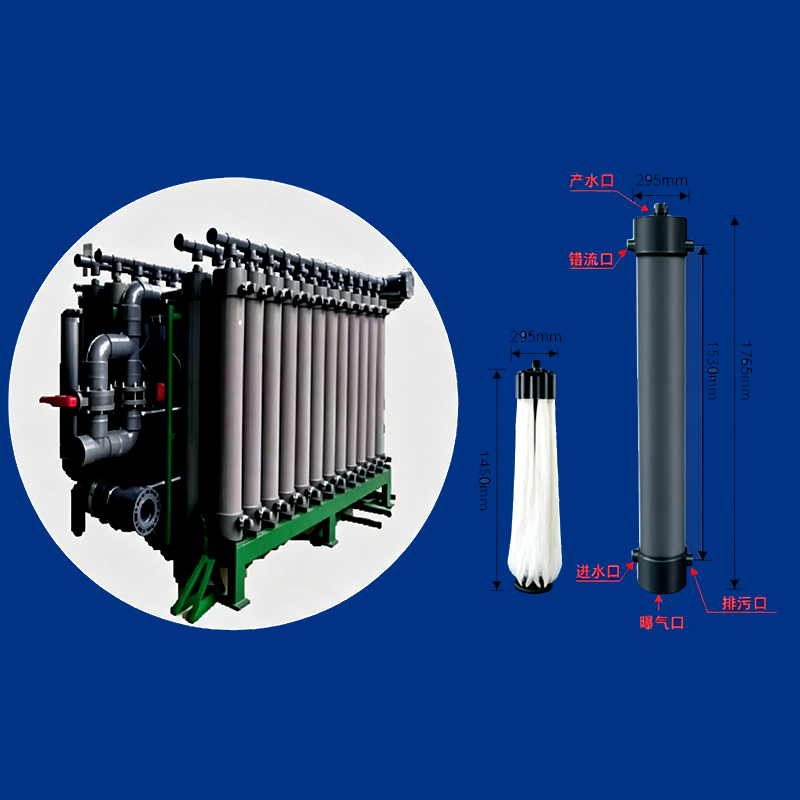
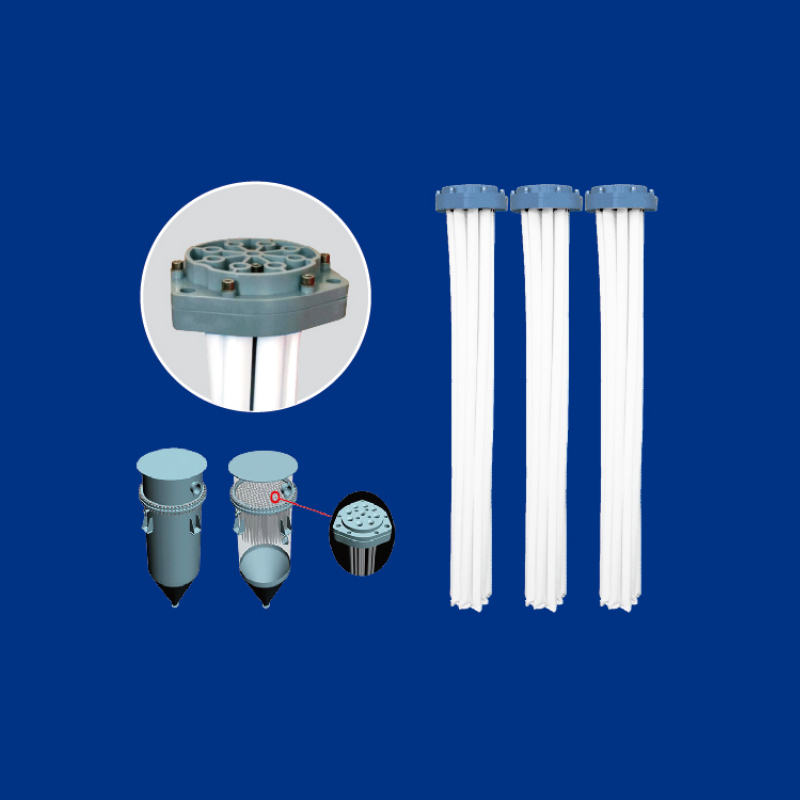
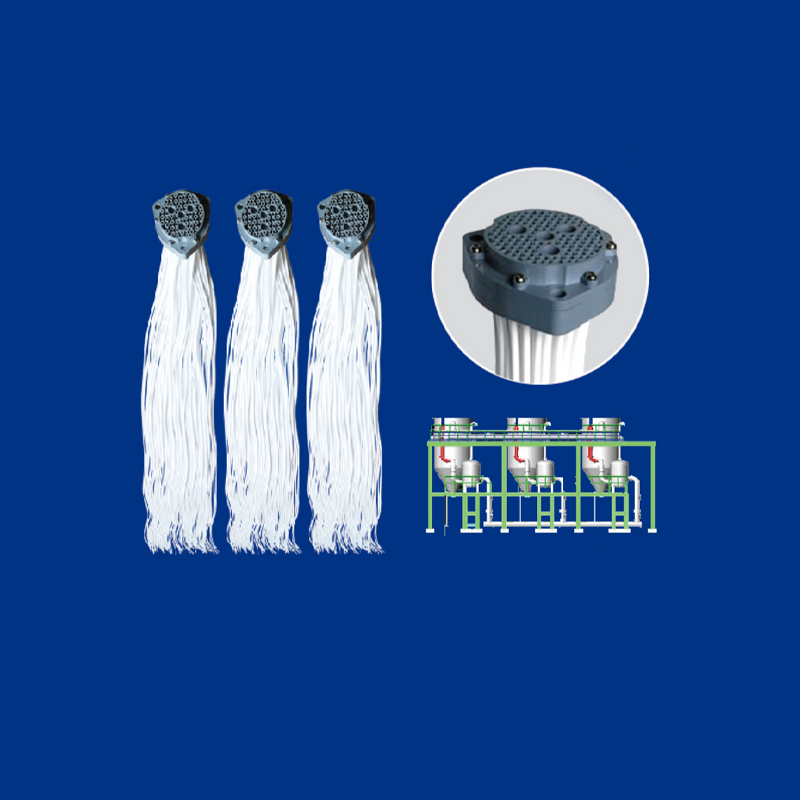


Gansu Juxiang Fluoroplastics Technology Co.,Ltd. builds ePTFE hollow fiber membrane (tube) modules for industrial water treatment and brine refining at our fluoroplastic base in Yumen City, Gansu Province. We are a joint venture of Zhejiang Jiaxiang Fluoroplastics Co., Ltd. and Gansu Juhua New Materials Co., Ltd. of the Juhua Group, with production in both Zhejiang and Gansu. Our portfolio covers PTFE, PFA, FEP, PCTFE, PEEK, PI and PVDF materials and machined components, and the membrane line extends that material capability into separation duty. As an ePTFE Hollow Fiber Membrane (Tube) Module manufacturer we supply both cased module assemblies and individual membrane elements, sized around the water chemistry and production target of each project.
Module Assemblies and Membrane Elements in the Range
Two product forms cover the range. NM-603, NM-604 and NM-605 are cased modules with DN32 inlet and outlet connections, a 1765 mm shell and 1450 mm membrane tubes, offered at three filtration areas so a skid can be assembled from a common element footprint. NM-601 and NM-602 are tubular elements for brine duty, one with an internal liner pipe and one keel-free.
| Model | Product form | Membrane geometry | Filtration area | Primary duty |
|---|---|---|---|---|
| NM-603 | Cased module, DN32 in/out | ePTFE tube 1.5 × 0.5 mm, 1450 mm length | 7.5 m² | Compact wastewater and reuse trains |
| NM-604 | Cased module, DN32 in/out | ePTFE tube 1.5 × 0.5 mm, 1450 mm length | 15 m² | General industrial wastewater duty |
| NM-605 | Cased module, DN32 in/out | ePTFE tube 1.5 × 0.5 mm, 1450 mm length | 20 m² | High-capacity skids with limited footprint |
| NM-601 | Tubular element with liner pipe | OD 16 ±0.3 mm, ID 14.4 ±0.3 mm, 1580 ±5 mm | 0.72 m² per group | Chlor-alkali ionic membrane brine refining |
| NM-602 | Keel-free tubular element | OD 6 ±0.2 mm, ID 4 ±0.2 mm, 1680 ±5 mm | 1.60 m² per group | Chlor-alkali brine refining, low-energy layout |
Area, not housing count, is the sizing unit. A duty needing 60 m² can be met with four 15 m² modules or three 20 m² modules, and the choice follows available footprint, turndown and cleaning strategy rather than a fixed catalogue position.
Where the Modules Fit in the Process
The cased modules are built for streams that are difficult for conventional media: high suspended solids, high COD, oily or metal-bearing water. Positive-pressure operation keeps the permeate side simple and avoids the vacuum equipment that submerged systems require.
- Heavy metal removal from electroplating rinse and batch wastewater
- Shield machine and tunnelling site wastewater with high solids load
- Metal waste acid filtration and acid recovery loops
- Oilfield produced water for reinjection service
- Seawater desalination pretreatment and PCB sludge reduction
- Chlor-alkali brine refining on NM-601 and NM-602 elements
For brine duty the keel-free NM-602 removes the need for pretreatment and circulation, which reduces pumping energy and allows a tighter plot for new chlor-alkali projects. Both brine elements are specified against a filtrate target of SS below 0.5 ppm at a brine flow of 0.5–0.6 m³/(m²·h).
Operating Envelope and Critical Specifications
Design margins are set by the membrane, not by the housing, so the working point is fixed early in the project. The figures below apply across the module range.
- Nominal pore size: 0.2 μm, uniformly distributed through the wall
- pH range: 0 to 14, covering caustic and acidic cleaning cycles
- Operating temperature: below 50 °C
- Operating pressure: below 0.3 MPa; permeate production 0.1–0.3 MPa
- Gas backpressure: below 0.2 MPa
- Filtration mode: permeate drawn under positive pressure
Suggested flux depends on the feed. Municipal water runs 500–600 L/(m²·h), river water 200–300 L/(m²·h), wastewater 50–100 L/(m²·h) and MBR duty 40–50 L/(m²·h). We size the module count from the lower end of the relevant band so that fouling between cleaning cycles does not force an early shutdown.
Construction and Configuration Choices
The membrane is expanded PTFE: a microporous fibril network that keeps the chemical inertness and thermal stability of PTFE while adding the permeability that separation duty needs. Pore opening rate on the brine elements runs 65–85%, with the 0.2 μm aperture held uniformly across the wall.
- Liner pipe inside the element where mechanical support is required (NM-601)
- Keel-free construction where lower energy and a simpler train are preferred (NM-602)
- Element count per housing, series or parallel arrangement, and inlet/outlet orientation
- Permeate header and cleaning connection layout to suit the skid
- Connection standard matched to the mating pipework on site
Where a module manifold lands on a flanged header, our expanded PTFE reinforced flange gaskets are produced from the same material family, so the wetted sealing path stays consistent with the membrane circuit.
Skid Integration and Control Interface
Modules are supplied as pressure-duty components, and the surrounding train is coordinated with the project's skid builder or with our own engineering team. Feed pump curve, backwash sequence and cleaning regime are agreed against the flux we have selected, not left to commissioning.
- Feed, backwash and air-scour sequences with defined flow and duration
- Pressure transmitters across the module and on the permeate header
- Permeate and backwash flow measurement for flux verification
- Turbidity or suspended solids monitoring on feed and filtrate
- Interlocks on high differential pressure, over-pressure and over-temperature
Because the modules run below 0.3 MPa and below 50 °C, standard low-pressure instrumentation and PVC or lined carbon steel pipework are usually adequate, which keeps the balance of plant cost proportionate to the membrane area.
Quality Control, Acceptance and Documentation
Each production batch is checked dimensionally against the drawing, inspected for fibre damage and potting defects, and flow-tested so that the delivered area matches the quoted area. Membrane integrity is verified before packing, and the test method is agreed with the project at order stage.
- Dimensional record for tube diameter, length and shell height
- Visual and integrity inspection of every element
- Permeate flow verification at the specified working point
- Material and batch traceability for the ePTFE membrane
- Operating instructions, cleaning guidance and installation notes
Modules are packed for export with the shell protected against deformation and the connections capped. Our wider fluoroplastic product range is produced under the same in-house material and process control, which is why membrane, gasket and machined parts for one project can be coordinated through a single technical contact.
Information We Use to Configure Your Solution
A workable proposal needs the duty, not just the model number. We confirm the following before issuing a configuration and quotation.
- Feed analysis: suspended solids, COD, oil and grease, pH, temperature, metal content
- Target permeate quality and required flow, with daily and seasonal variation
- Operating hours, cleaning interval expectation and available cleaning chemicals
- Available feed pressure and whether a backwash or air-scour supply exists
- Footprint, orientation and connection standard at the skid interface
- Project stage, delivery schedule and required documentation language
- For brine duty: required filtrate SS, brine flow per group and layout constraints
Frequently Asked Questions
What distinguishes NM-601 from NM-602?
NM-601 is a liner-supported element with an outside diameter of 16 mm and an inside diameter of 14.4 mm, used where the element needs internal mechanical support. NM-602 is keel-free, 6 mm outside diameter, and is chosen where the project wants to avoid pretreatment and circulation, cutting filtration energy and plot space.
Can the cased modules handle high-solids, high-COD wastewater?
Yes. The 0.2 μm ePTFE wall and positive-pressure operation suit streams such as electroplating wastewater, tunnelling site water and metal waste acid. Flux is set at 50–100 L/(m²·h) for wastewater so that solids loading between cleaning cycles stays within the module's capacity.
Do you supply complete filtration skids or only the membrane modules?
We supply cased modules and tubular elements, and we work with the project's skid integrator on pump selection, backwash sequence and instrumentation. Where the project requires it, our engineering team coordinates the module layout, manifold connections and control interface as one package.
What water data do you need before quoting a module configuration?
Feed suspended solids, COD, oil content, pH, temperature and the required permeate flow are the minimum. From those we set the flux, calculate the membrane area, choose between 7.5, 15 and 20 m² cased modules, and confirm the operating pressure and cleaning regime that the skid must support.
Related Products and Categories
Our portfolio also includes Modified PTFE Gasket for applications with different operating ranges, interfaces or integration requirements.