

 русский
 Deutsch
 عربى



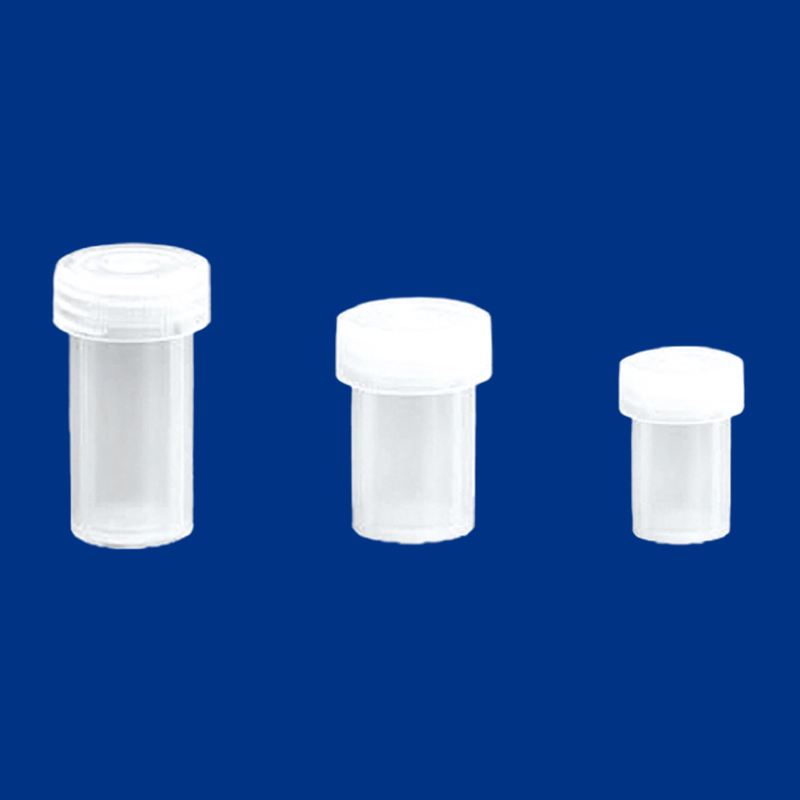



PTFE Laboratory and Process Ware Made to Drawing
As a PTFE Digestion Tube, Beaker, Bottle, Funnel, Container manufacturer, Gansu Juxiang Fluoroplastics Technology Co.,Ltd. produces inert fluoroplastic labware for laboratories, chemical processors and equipment builders. The range sits inside our wider fluoroplastic manufacturing — PTFE, PFA, FEP, PCTFE, PEEK, PI and PVDF stock shapes, seals, films and machined parts — and is produced across our Zhejiang and Gansu bases in China.
Most items in this category are machined to a customer drawing or matched to a supplied sample rather than drawn from a fixed catalogue. Bore, height, rim form, base profile, wall thickness and thread can therefore follow the block, rack, cap or handling system already in service, while the wetted surface stays a single chemically inert material.
Range and Application Fit
Each form in the range answers a different handling problem in acid digestion, reagent storage and wet chemistry. The table below sets out how we configure them and where each one is normally used.
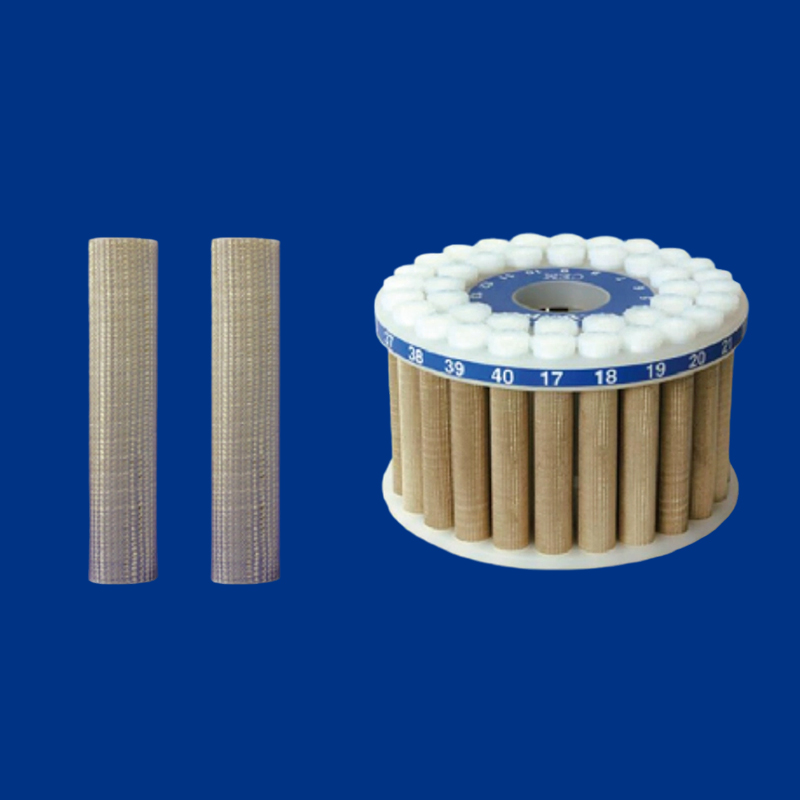
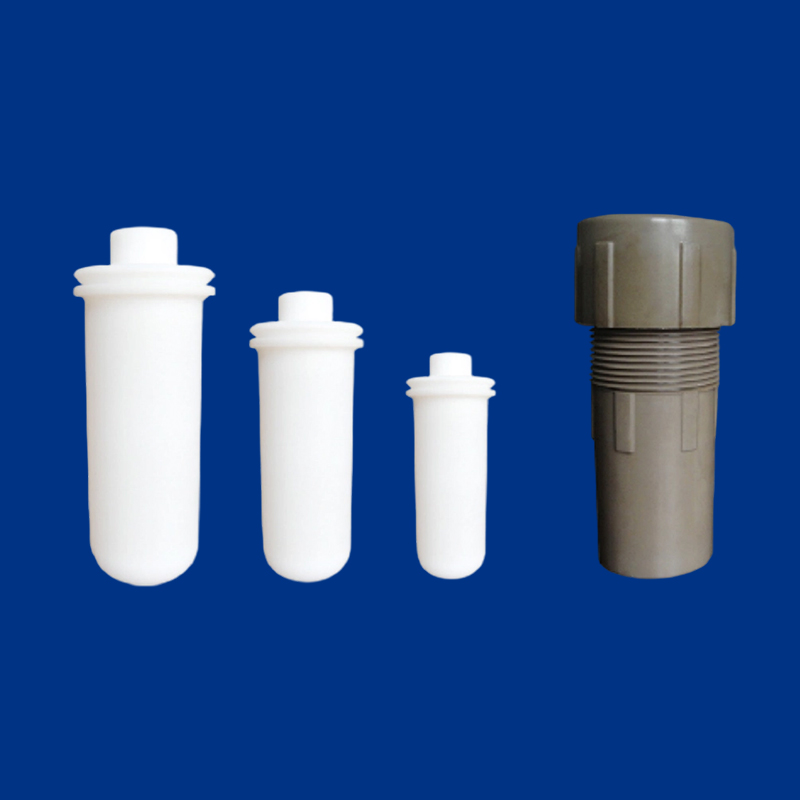
Digestion tubes
Straight or tapered tubes for block digesters and open-vessel acid digestion, machined so the outside diameter, height and rim sit correctly in the heating well. Flat or hemispherical bases are available, and tube threads can be cut to accept existing caps.
Graduated beakers
PTFE beakers are widely used in medicine, chemical processing and education because they resist breakage and can be used from -150 °C to +260 °C. Graduations are positioned to the drawing so the marked volume and the physical capacity remain consistent.
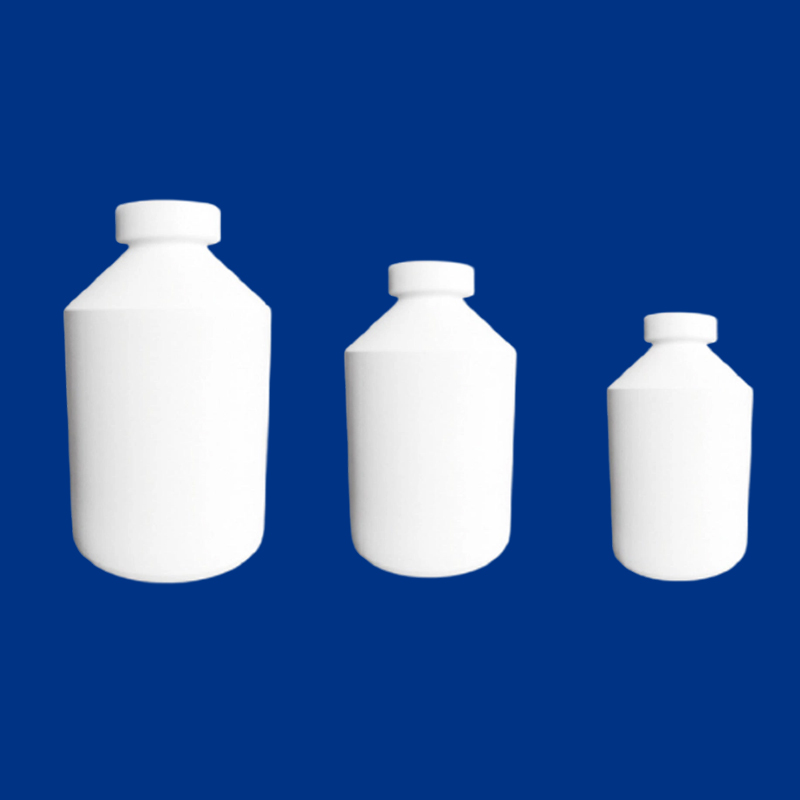
Bottles
Wide-mouth and narrow-mouth bottles for storing and dispensing acids, solvents and high-purity reagents. Neck diameter, thread pitch and sealing face are machined as a set, which matters when the bottle is capped repeatedly or handled by robot.
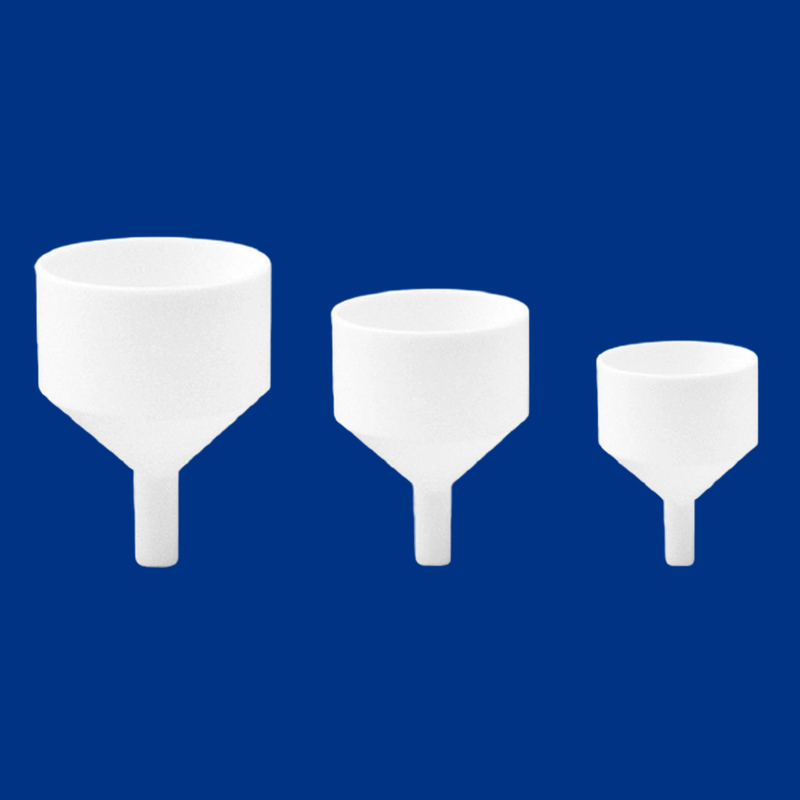
Funnels
Conical and cylindrical funnels with controlled stem bore for filtration and transfer. The non-wetting surface limits hold-up of viscous or aggressive media and simplifies rinsing between batches.
Containers and troughs
Open containers, trays, liners and bath components for wet benches and chemical lines. Where overflow service is required, our PTFE overflow troughs cover single-trough layouts in the same material family.
| Product | Typical configuration | Critical specifications | Where it fits |
|---|---|---|---|
| Digestion tube | Straight or tapered wall, flat or hemispherical base, plain or threaded rim | Outside diameter against well bore, overall height, wall thickness, base flatness, bore concentricity | Block digestion, trace-metal sample preparation, acid dissolution |
| Graduated beaker | Low or tall form, pouring spout, machined or molded graduations | Capacity at stated temperature, graduation position, base flatness, wall uniformity | Medicine, chemical and education laboratories, general sample handling |
| Bottle | Wide or narrow mouth, screw thread, plain or capped | Thread form and pitch, neck diameter, capacity, sealing face squareness | Storage and transfer of acids, solvents and high-purity reagents |
| Funnel | Conical or cylindrical body, straight stem | Cone angle, stem bore and length, rim diameter, wall thickness | Filtration, decanting and low-adhesion transfer |
| Container or trough | Open tank, tray, liner, overflow trough | Internal dimensions, flange flatness, corner radii, drain position | Wet benches, chemical baths, overflow and drip service |
| Custom machined part | Per drawing or sample, single item or batch | Datum dimensions, mating interfaces, surface condition | Replacement of glass or metal parts, OEM equipment integration |
Material Behaviour That Shapes the Design
PTFE supplies the chemical inertness, non-wetting surface and thermal window that define this range. Those same properties bring mechanical limits that we design around at the drawing stage rather than correct after machining.
- Thermal expansion: PTFE moves noticeably more than glass or stainless steel over the -150 °C to +260 °C range, so close-fitting wells and racks need clearance built into the dimensions.
- Creep under load: sustained compression at elevated temperature deforms unsupported walls and flanges; base radius and wall section carry much of the rigidity.
- Low stiffness: thin sections deflect under handling and vacuum, which is why larger containers are specified with ribs, rolled rims or thicker walls.
- Permeation: volatile components pass slowly through PTFE, so long-term storage of aggressive reagents may need a secondary barrier or a shorter holding period.
- Service limits: molten alkali metals, elemental fluorine and certain halogenated media at elevated temperature fall outside the practical range for PTFE labware.
Machining, Cleanliness and Inspection
Parts are machined from PTFE rod, tube or molded blanks on CNC equipment, with stress-relieving and edge control applied where the wall section or sealing face requires it. Threads, graduations and mating diameters are produced from the drawing rather than added afterwards, keeping the marked volume, cap fit and physical capacity aligned.
Inspection scope is agreed with the drawing package and can cover bore, height, wall thickness, base flatness, thread fit and visual acceptance of the wetted surface. Documentation and usage guidance accompany production, and our technical team reviews material selection and process points with the customer before release.
Integration with Digestion and Analysis Workflows
Labware only works when it fits the equipment around it. We take the interface dimensions from the block, rack, autosampler or cap system and machine the tube or bottle to suit, including the clearance needed for thermal expansion during heating and cooling cycles.
- Well and rack fit: outside diameter, height and rim form matched to the heating block and transfer rack.
- Cap and seal interface: thread pitch, engagement length and sealing face squareness set for the closure in use.
- Handling: wall thickness and base radius sized for tongs, grippers or automated transfer.
- Cleaning: smooth internal surfaces and radiused corners that release residue during acid washing.
- Traceability: part marking or batch identification agreed at order stage where the workflow requires it.
For closed high-pressure digestion, PEEK components often carry the structural load while PTFE forms the liner or seal. We produce both material families, so the two can be matched in a single order; our PEEK products cover the structural side of that arrangement.
Information We Use to Configure Your Solution
A workable quotation depends on the working conditions, not only the outline shape. The following inputs let us confirm material, dimensions and inspection scope in one pass.
- Application and chemistry: acids, bases, solvents, oxidisers, trace-metal sensitivity.
- Temperature and pressure cycle, including heating and cooling rates and hold time.
- Working and total volume, plus the fill level the method allows.
- Interface dimensions: well bore and depth, rack pitch, cap thread, autosampler position.
- Drawing or sample, with tolerances on mating and sealing features.
- Quantity per item and expected repeat order pattern.
- Cleaning, packing and identification requirements.
- Documentation and acceptance scope to be supplied with the batch.
Custom Manufacturing, Packaging and Support
Customization is our core service: we develop and produce fluoroplastic parts strictly to drawings or samples, with material selection, mold optimization and process analysis handled in-house. Dual production bases in Zhejiang and Gansu support stable supply, and our export team serves customers in more than 30 countries.
Machined labware is packed to protect sealing faces, threads and graduations in transit, with the packing scope confirmed at order. Inquiries receive a reply within 12 working hours, and post-production documentation and usage guidance support commissioning and repeat orders.
Frequently Asked Questions
Can you match a digestion tube to our existing block or rack?
Yes. Send the well diameter, depth, rim form and any cap thread, or a sample tube. We machine the outside diameter, height and base profile to those dimensions and allow clearance for thermal expansion at your operating temperature.
What temperature range do the beakers and bottles handle?
PTFE labware in this range is used from -150 °C to +260 °C. Continuous service near the upper limit reduces mechanical strength, so we adjust wall thickness and support for methods that hold at high temperature.
Can graduations be placed to our own volume marks?
Graduation positions and the marked capacity are set from the drawing, so the printed or machined scale matches the volume your method actually uses rather than a standard series.
Which material suits high-pressure closed digestion?
PTFE is normally the liner or sealing element because of its chemical resistance and release properties; PEEK carries structural load where pressure and temperature demand it. We produce both, which allows the vessel and liner to be specified together.
Related Products and Categories
Our portfolio also includes Products for applications with different operating ranges, interfaces or integration requirements.