

 русский
 Deutsch
 عربى
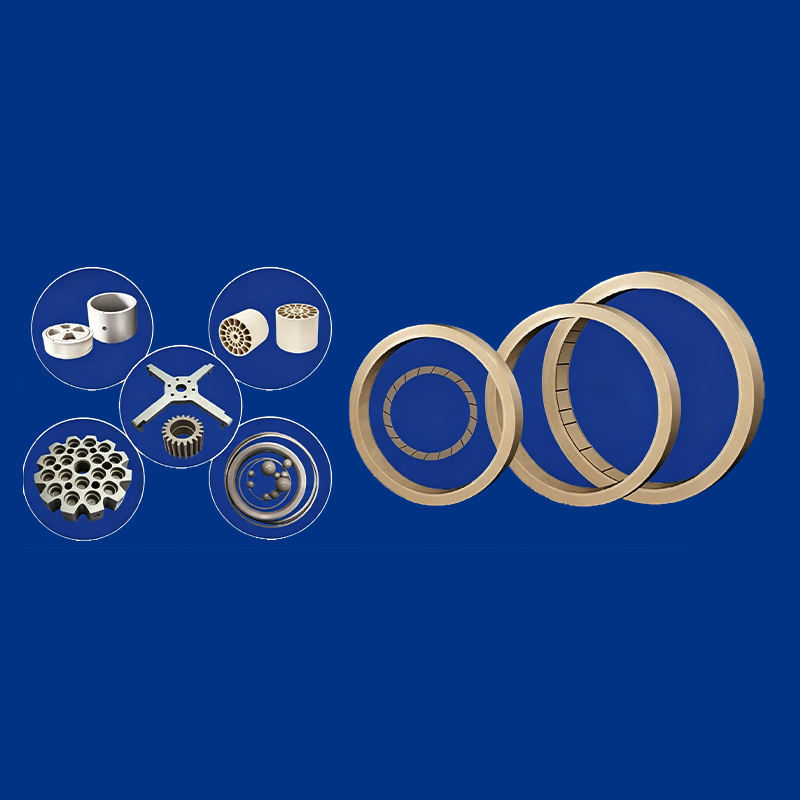



Gansu Juxiang Fluoroplastics Technology Co.,Ltd. is a PEEK Products manufacturer working from two production bases in Zhejiang and Gansu, China. The PEEK line sits alongside our PTFE, PFA, FEP, PCTFE Products, PI Products and PVDF ranges, and covers extruded and moulded stock shapes as well as finished components machined to customer drawings.
PEEK sits at the high-temperature end of that portfolio. Continuous service to 260 °C, high mechanical strength, self-lubricating behaviour, broad chemical resistance, inherent flame retardancy and radiation resistance put it in semiconductor, aerospace, automotive, electronics, medical and food-processing equipment where a softer fluoroplastic would creep, wear or distort.
PEEK Products We Supply
As a PEEK Products manufacturer, we match product configuration to the application, operating limits, interfaces and acceptance criteria defined for each project.
The range is deliberately narrow at grade level and deep at component level: two PEEK grades, supplied as stock shapes and as machined parts, with the material and the machining held inside one organisation. That matters because most PEEK failures trace back to a grade chosen for the wrong duty or a machining process that left stress in the part.
| Product form | Grade | Supply condition | Typical fit |
|---|---|---|---|
| PEEK rod and sheet | Unfilled PEEK | Extruded and moulded stock, natural or black | Bushes, wear pads, insulators, electrical and food-processing machinery parts |
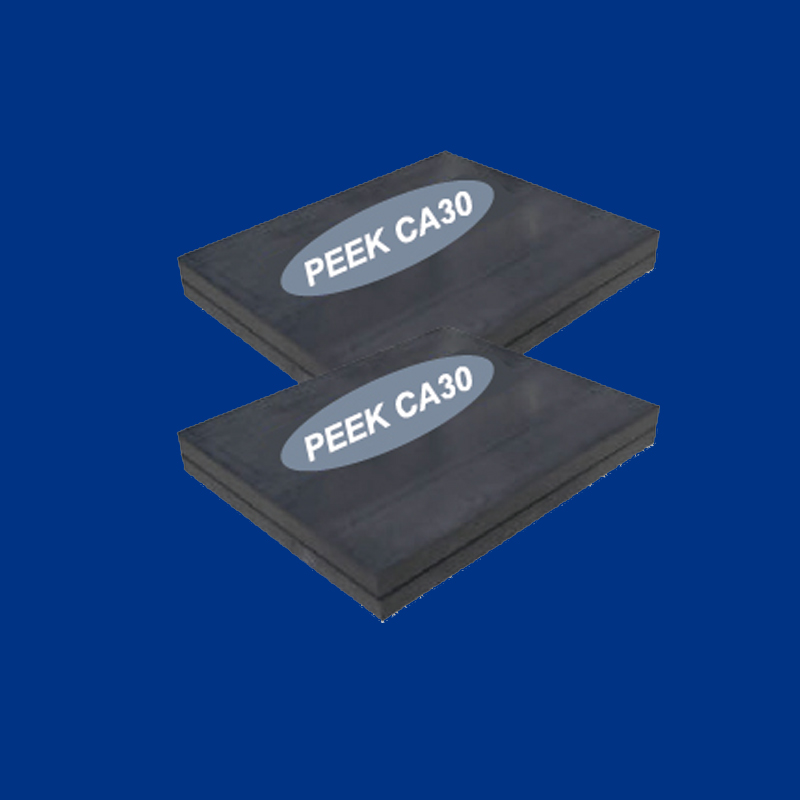
| PEEK CA30 rod and sheet | Reinforced PEEK | Stock with higher stiffness and 315 °C heat deflection temperature | Loaded bushes, thrust washers, structural wear parts, test fixtures |
| Machined PEEK components | Both grades | CNC turning, milling, drilling, polishing to drawing | Seal carriers, bearing cages, valve seats, wafer-handling parts |
| Near-net profiles | Both grades | Extruded or injection-moulded sections | Repeat parts where machining stock would otherwise be wasted |
| Prototype and pilot batches | Both grades | Single parts through pre-production runs | Design validation before tooling or volume commitment |
Rod and sheet are produced across a working range of diameters and thicknesses, and finished parts are machined from the same material lots used for the stock programme. The wider fluoroplastic product range covers the lower-temperature duties where PEEK would be over-specified.
Application Fit by Duty
PEEK earns its cost where temperature, load and chemical exposure arrive together. The mapping below reflects the duties our PEEK grades are most often specified into.
| Sector | Typical part | Duty it must survive |
|---|---|---|
| Semiconductor and electronics | Wafer-handling fixtures, wet-bench bushes, insulating spacers | Repeated acid and solvent exposure, dimensional stability at elevated temperature, low particle generation |
| Aerospace | Bushings, wear pads, cable and harness hardware | Weight reduction against metal, fatigue and creep resistance, continuous heat near 260 °C |
| Automotive and automation | Thrust washers, gearbox bushes, sliding pads, gripper jaws | Oil-free running, high cycle counts, dimensional repeatability over thermal cycling |
| Medical and food processing | Non-metallic components in processing, filling and cleaning lines | Repeated steam and chemical cleaning, machinability to tight fits, no metallic wear debris |
| Pumps, valves and compressors | Wear rings, seal faces, bearing cages, back-up rings | Pressure-velocity loading against a harder counterface, chemical attack, dry-start tolerance |
| Energy and electrical | Insulating bushes, connector bodies, hydrogen-system seals | Dielectric integrity, radiation exposure, low outgassing under vacuum |
Grade Selection and Critical Specifications
Grade choice is settled by the working point, not by a datasheet headline. We review continuous and peak temperature together with the load path, because PEEK loses stiffness well before it reaches its melting point, and a part that is adequate at 23 °C can creep out of tolerance at 180 °C under the same stress.
- Continuous and peak service temperature, including excursions during cleaning or sterilisation
- Pressure-velocity product, sliding speed and whether the duty is dry, lubricated or abrasive
- Counterface material, hardness and surface finish, since PEEK wears the mating surface as well as itself
- Chemical media, concentration and temperature, with attention to strong oxidising acids
- Thermal expansion mismatch against metal housings over the operating range
- Electrical insulation or static dissipation, which drives the choice between unfilled and reinforced grades
| Property | Test standard | PEEK CA30 |
|---|---|---|
| Density | ISO 1183 | 1.4 g/cm³ |
| Water absorption, 25 °C / 24 h | ISO 62 | 0.05 % |
| Melting point | ISO 11357 | 343 °C |
| Heat deflection temperature | ISO 75-1/-2 | 315 °C |
| Continuous use temperature | UL 746B | 260 °C |
| Coefficient of linear thermal expansion | ASTM D696 | 1.5 × 10⁻⁵ /K |
| Tensile strength / modulus, 23 °C | ISO 527 | 125 MPa / 9.3 GPa |
| Tensile elongation, 23 °C | ISO 527 | 2.5 % |
| Flexural strength / modulus, 23 °C | ISO 178 | 271 MPa / 9.1 GPa |
| Compressive strength, 23 °C | ISO 604 | 196 MPa |
| Impact strength, unnotched | ISO 179 | 38 kJ/m² |
| Rockwell hardness | GB 3398.2 | 123 |
| Flammability, 1.5 mm | UL 94 | V-0 |
| Thermal conductivity | ISO 22007 | 0.95 W/(m·K) |
| Surface resistivity | IEC 60093 | 10⁵ Ω |
Unfilled PEEK is quoted at a minimum tensile strength of 97 MPa, minimum elongation of 25 % and a density of 1.26–1.32 g/cm³. The figures above are characteristic indicators for material selection, not acceptance criteria for a finished component; part acceptance is written against the drawing.
Machining, Stress Relief and Dimensional Control
PEEK machines cleanly but not forgivingly. It is notch-sensitive, has low thermal conductivity and holds internal stress from extrusion or moulding, so a part that measures correctly on the bench can move after a week in service. Our process planning addresses that directly.
- Turning, milling, drilling and polishing on CNC equipment, with both dry turning and liquid-cooled CNC routes available depending on geometry and finish
- Long-term high-temperature stress relief applied to profiles so that residual stress in the finished part is kept to a minimum
- Fixturing and support planned for thin walls, long bores and sealing faces to avoid clamping distortion
- Coolant and contamination control for parts destined for semiconductor, medical and food-processing lines
- Deburring and edge finishing specified where a sharp edge would cut an O-ring or generate particles
Quality, Documentation and Acceptance
Acceptance criteria are fixed before production starts: drawing revision, critical dimensions, inspection method, sampling level and any material certification requirement are agreed at order review and carried through to the inspection record. Material is traceable to its lot, and where a project calls for first-article inspection, the report is issued before the batch is released.
- Incoming material checked against grade, colour and lot before release to machining
- In-process and final dimensional inspection against the drawing's critical characteristics
- Documentation package agreed per order, covering material lot, inspection results and packing list
- Protective packing for machined faces, with part marking and labelling to the customer's scheme
Information We Use to Configure Your Solution
A quotation that can be manufactured without a second round of questions starts from a complete data set. This is what we work from when preparing a PEEK configuration and price.
- 2D drawing with tolerances and GD&T, plus a 3D model where one exists
- Annual quantity, batch size and whether the first delivery is a prototype or a production release
- Service temperature range, including peaks and cleaning cycles
- Chemical media, concentration and whether exposure is continuous or intermittent
- Load, sliding speed and counterface material for any wear part
- Electrical requirement — insulation, antistatic or conductive
- Cleaning, sterilisation and packaging constraints, and the delivery destination for documentation and labelling
Frequently Asked Questions
Which PEEK grades and forms can you supply?
We supply unfilled PEEK and PEEK CA30 as extruded and moulded rod and sheet, as near-net profiles, and as finished components machined to drawing. Both grades are available as prototypes, pilot batches and production quantities.
How does PEEK CA30 differ from unfilled PEEK?
PEEK CA30 is the reinforced grade: higher tensile and flexural modulus, a heat deflection temperature of 315 °C and a surface resistivity around 10⁵ Ω. Unfilled PEEK offers greater elongation at break and higher electrical insulation, so it remains the better choice for sealing and insulating parts under moderate load.
Can you machine PEEK parts to our drawings?
Yes. Custom machining is our core service, and parts are produced strictly to customer drawings or samples. We review the drawing for wall thickness, tolerances and stress-relief requirements before quoting, and we raise any feature that would be more economically produced as a near-net profile.
What do you need to quote a PEEK component?
A drawing with tolerances, the annual quantity and batch size, the operating temperature and chemical exposure, and the load or sliding condition for wear parts. With those we can confirm grade, machining route, inspection scope and delivery schedule in the proposal.