

 русский
 Deutsch
 عربى

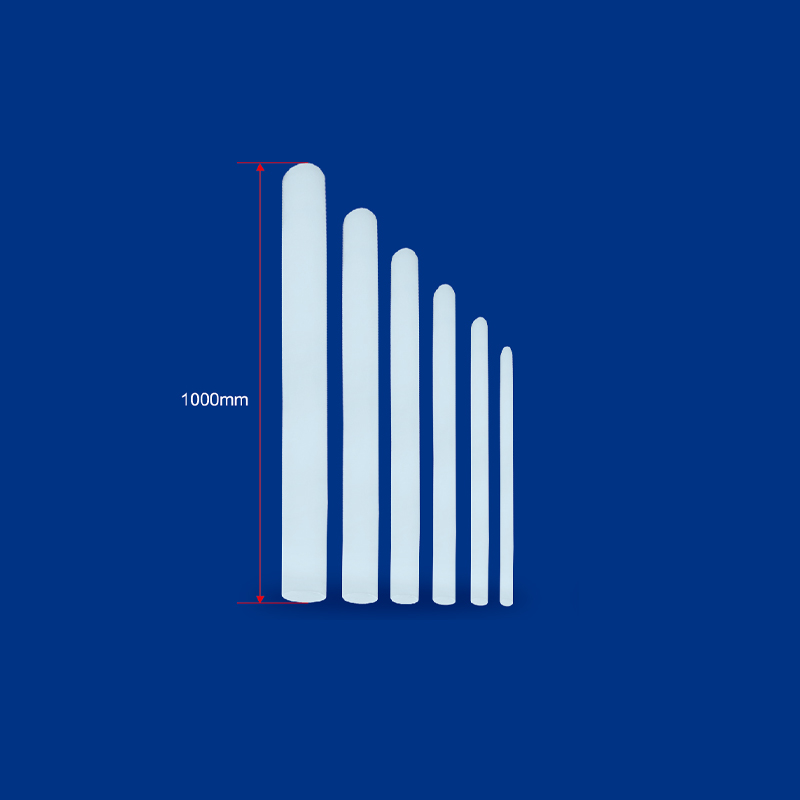



Gansu Juxiang Fluoroplastics Technology Co.,Ltd. produces PFA rod and tube at its Yumen, Gansu production base as part of a fluoroplastic range that also covers PTFE, FEP, PCTFE, PI, PEEK and PVDF in sheet, rod, tube, film and machined-part form. As a PFA Rod, Tube manufacturer we supply molded rod, extruded rod and tube in standard diameters and cut lengths, with special sizes produced to drawing.
The range serves plants that need melt-processable fluoropolymer stock with PTFE-level chemical resistance and a smoother, weldable surface: semiconductor wet processing, high-purity chemical delivery, pump and valve internals, analytical instruments, electrical insulation and general anti-corrosion work. Orders run through two production bases in Zhejiang and Gansu under one technical contact, so prototype quantities and repeat production volumes follow the same specification.
What We Supply in PFA Rod and Tube
Molded rod covers the large diameters, extruded rod covers the small and medium diameters in longer lengths, and tube is supplied as a finished fluid path rather than as machining stock. Diameter and length combinations are confirmed per line item.
| Product form | Diameter range | Supplied length | Process route | Typical use |
|---|---|---|---|---|
| Molded PFA rod | Ø5–500 mm | 50–400 mm | Compression molding | Large seal bodies, bushings, valve components, insulator blanks |
| Extruded PFA rod | Ø5–80 mm | 1000 mm | Extrusion | Machined seals, sleeves, small fittings, prototype parts |
| PFA tube | From Ø20 mm | 50–100 mm, or cut to order | Extrusion and molding | Fluid transfer, sight sections, thermowells, insulating sleeves |
| Special sizes | To drawing | To drawing | Molded, extruded or machined | Non-standard walls, end finishes, tight-tolerance parts |
Where a drawing calls for a wall thickness, end preparation or tolerance band outside the standard table, the item is quoted as a special size and produced by the route that suits it best — molding for heavy sections, extrusion for long small-diameter runs, machining for finished geometry.
PFA as a Material: What It Gives the Application
PFA is a perfluoroalkoxy copolymer: fully fluorinated, chemically inert, and — unlike PTFE — melt-processable. Extrusion, injection molding and welding are all available, which is why PFA appears where a sealed, joint-free fluid path or a smooth bore matters more than raw stiffness.
- Continuous service from -200 °C to +260 °C; the resin stays ductile at cryogenic temperatures and holds useful mechanical strength at the top of the range.
- Resistance to acids, bases, oxidisers and the solvents used in wet chemical processing.
- Smooth, low-friction, anti-stick bore that limits scale build-up and particle retention.
- High dielectric strength and low dielectric loss for insulating sleeves, standoffs and coil formers.
- Weldable and fusion-joinable, so tube can be terminated into fittings and manifolds rather than only compression-fitted.
- Better retention of mechanical properties at elevated temperature than PTFE, with lower creep under sustained load.
Where PFA Rod and Tube Fit
Semiconductor and high-purity fluid systems
Wet bench plumbing, chemical delivery lines, drain and exhaust sections, wafer-handling fixtures and insulating components. Resin grade selection and post-production cleanliness drive the specification here at least as much as dimensional tolerance.
Chemical, pump and valve duty
Dip tubes, sampling lines, pump and valve internals, seal seats and bushings in positions where a filled PTFE compound would introduce a filler the process cannot tolerate. The anti-stick bore also simplifies cleaning and changeover between media.
Electrical and mechanical components
Insulating sleeves, standoffs, coil formers, rollers and guide components, plus low-friction wear parts in wet or chemically aggressive locations. Rod is the usual starting point for these, machined to the finished profile.
Aviation, energy and general industry
Fluid and air lines, insulating and anti-stick components where the temperature range and low weight both count, and general anti-corrosion work across chemical, environmental and medical equipment.
Configuration Options and Machining Notes
Rod is normally bought as machining stock and tube as a finished fluid path, and the two are specified differently. We confirm the following on every line item before production is scheduled.
- Rod: diameter, length, straightness, and the finished wall left after machining from the outside in.
- Tube: outside diameter, wall thickness, concentricity, bore finish, cut squareness and end preparation — plain cut, chamfered, or welded into a fitting.
- Cutting plan: fixed lengths, random lengths, or nested cutting to minimise scrap on high-volume items.
- Documentation: material lot reference, dimensional record, and any declaration the project requires.
- Packaging: individual bagging, cleanroom-compatible packing, or bulk cartons for distributor stock.
Residual stress from molding or extrusion shows up later as dimensional drift after machining. Where a part carries a tight finished tolerance, annealing before finish machining is the usual control, and we agree that process step at quotation stage rather than after the first part is measured.
Working With Our Other Fluoroplastic Lines
PFA rod and tube rarely ship alone. Systems that use them usually need the same resin family in other forms, and keeping those items on one order shortens qualification and simplifies incoming inspection.
- FEP and PFA extrusion tube for thinner walls and continuous lengths where a molded tube is not economic.
- PFA connectors, cable ties and special joints for termination and routing in the same resin family.
- Filled PTFE rod and tube where wear resistance or dimensional stability under load matters more than chemical purity.
- PEEK and PI stock for positions where PFA is at its mechanical limit for strength or stiffness.
Quality, Documentation and Acceptance
Production runs with monitored process parameters, and each lot is checked against the drawing before packing. Post-production documentation and usage guidance travel with the shipment so the receiving inspection has something to work against.
- Incoming resin identification and lot segregation before molding or extrusion.
- In-process monitoring of temperature, pressure and output rate on extruded sections.
- Dimensional inspection against the agreed drawing: diameter, wall, length and straightness.
- Visual inspection for voids, contamination, surface defects and discoloration.
- Documentation package with material lot reference, inspection record and packing list.
- Acceptance criteria agreed before the first production lot, so the first article and the running order are judged the same way.
Information We Use to Configure Your Solution
Quotations move fastest when the following arrive together. For repeat items, the previous order number and any change notes are enough.
- Medium and concentration — what the part contacts, at what temperature and pressure.
- Geometry — rod diameter and length, or tube outside diameter, wall and length, with a drawing where tolerances are tight.
- End finish and any secondary machining, welding or assembly.
- Quantity per order and expected annual volume, so the process route and cutting plan are set correctly.
- Cleanliness, packaging and labelling requirements, including cleanroom handling where relevant.
- Documentation — material certificate, dimensional report, declaration of conformity or third-party inspection.
- Delivery destination and required delivery window.
Frequently Asked Questions
What is the difference between PFA and PTFE rod and tube for our line?
Both are fully fluorinated and chemically comparable. PFA is melt-processable, so it can be extruded, injection molded and welded, and it holds its mechanical properties better at elevated temperature. PTFE is not melt-processable and is normally molded or skived. Choose PFA where a welded, joint-free fluid path, a smoother bore or higher-temperature load capacity is required.
What temperature range do your PFA rod and tube handle?
The range is rated for continuous service from -200 °C to +260 °C. The resin remains ductile at cryogenic temperatures and retains useful strength at the upper end. For cyclic or pressure-loaded duty, we review the actual working point rather than the headline range.
Can you produce non-standard diameters, walls and lengths?
Yes. Special sizes are made to drawing by molding, extrusion or machining depending on the geometry. Send the finished dimensions, the tolerance band and the quantity, and we will confirm the process route and the achievable specification for that item.
What do you need from us to quote a PFA rod or tube item?
Medium, temperature and pressure, the geometry with tolerances, quantity per order and annual volume, end finish, documentation and packaging requirements, and the delivery destination. With those we can return a configuration and price against a defined specification rather than an indicative range.