

 русский
 Deutsch
 عربى
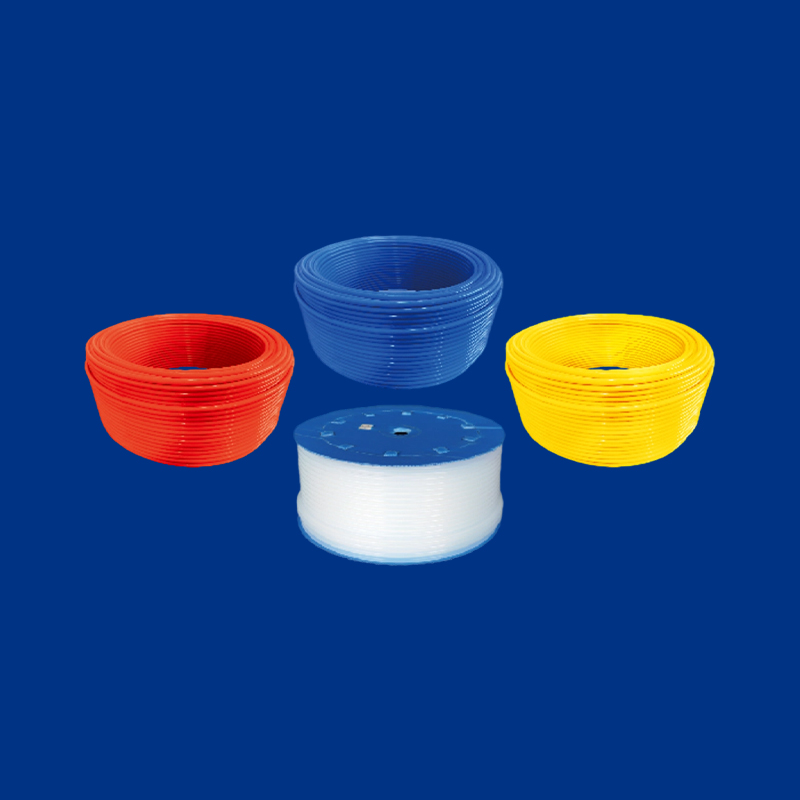


Gansu Juxiang Fluoroplastics Technology Co.,Ltd. produces PTFE extruded tube from dispersion resin compounded with the additive package a duty calls for, formed under high pressure and then sintered. Tube leaves our line opaque or transparent, coiled or straight, and holds chemical inertness, low friction and dielectric strength across a service window of −180 °C to +260 °C.
Bore sizes run from Φ0.8 × 0.4 mm capillary up to Φ100 × 96 mm, alongside a DN15–DN300 pipe series with fixed wall thickness and delivery lengths for lined pipe, heat-exchanger and fluid-transfer work. As a PTFE Extruded Tube manufacturer running production across Zhejiang and Gansu, we build to the working point — medium, temperature, pressure and mating fit — rather than to a stock list alone.
Where Extruded PTFE Tube Fits
The tube is specified where a wetted path has to resist attack, release sticky product and insulate electrically at the same time. Extrusion keeps the bore continuous, so a liner has no seam to open in service and no weld line to rework before installation.
- Cable and wire jacketing — a dielectric sleeve for harness, instrument and control runs exposed to heat and chemical splash.
- Corrosive fluid lining — inner tube for steel or FRP pipe carrying acids, caustics and solvent streams, including hydrochloric acid heat-exchanger service.
- Chemical and pharmaceutical transfer — small-bore lines where the product contact surface must be inert and cleanable.
- Semiconductor and equipment protection — sleeving and protective tube for wiring, cable chains and wet-process fluid lines.
- Machined components — backup rings, guide rings, bushings and insulating sleeves cut from extruded stock.
Extruded Tube Range and Tolerance Bands
Tolerance tightens as the bore closes, because wall uniformity in capillary tube is set by the die and the extrusion pressure rather than by later finishing. The bands below are the ones we hold on standard sizes, measured over the outside diameter and the bore.
| OD × ID (mm) | Tolerance (mm) | Typical duty |
|---|---|---|
| Φ0.8 × 0.4 | ±0.08 | Capillary lines, sensor and instrument protection |
| Φ2 × 1 | ±0.08 | Fine chemical transfer, wire sleeve |
| Φ6 × 4 | ±0.1 | Laboratory and pilot fluid lines |
| Φ12 × 10 | ±0.2 | Process transfer, cable jacketing |
| Φ20 × 18 | ±0.3 | Corrosive fluid lining, heat-exchanger tube |
| Φ30 × 27 | ±0.5 | Pipe liner, machined ring stock |
| Φ50 × 46 | ±1.0 | Heavy lining, tank and vessel internals |
| Φ80 × 76 | ±1.5 | Large-bore lining and sleeve stock |
| Φ100 × 96 | ±1.5 | Maximum standard extrusion, lining and machining |
Intermediate sizes and non-standard wall combinations are produced to drawing. Heavy-wall sections and diameters beyond the standard band are handled as drawing-specific extrusions, with the die and the sintering cycle set for that section rather than borrowed from a neighbouring size.
Pipe Series for Lined Lines and Heat Exchangers
The DN series carries a heavier wall and a fixed delivery length so the tube can be handled, bundled and installed without collapsing. Wall thickness rises with diameter to keep the liner stable under vacuum and thermal cycling.
| DN (mm) | OD (mm) | Wall thickness (mm) | Delivery length (mm) |
|---|---|---|---|
| 15 | 20.5 ±1.0 | 1.65 ±0.20 | 1250 ±25 |
| 25 | 31.5 ±1.0 | 2.20 ±0.30 | 3000 ±25 |
| 50 | 59.1 ±1.5 | 2.20 ±0.30 | 3125 ±25 |
| 100 | 118.0 ±4.0 | 3.25 ±0.30 | 2900 ±25 |
| 200 | 222.0 ±6.5 | 5.30 ±0.40 | 2750 ±25 |
| 300 | 325.0 ±8.7 | 6.00 ±0.50 | 2600 ±25 |
Pipe is supplied straight in the lengths listed, ready for the lining, flanging or welding operations carried out downstream. Where a project needs a different cut length, that is fixed with the order so the extrusion run and the packing plan match the installation sequence.
Virgin PTFE, Filled Compound or Melt-Processable Tube
Extruded virgin PTFE is the default for chemical and electrical duty. Where the tube also carries mechanical load, wears against a mating surface or has to shed heat, a compounded grade or a different fluoropolymer is the better fit.
- Virgin PTFE extruded tube — the widest chemical resistance, the lowest friction and the highest dielectric breakdown in the family. It creeps under sustained compressive load, so it works best as a liner, sleeve or backup element rather than a structural part.
- Filled PTFE tube and rod — glass fibre, carbon, graphite or bronze additions raise compressive strength, cut wear rate and improve thermal conductivity, with some loss of chemical universality.
- FEP and PFA extrusion tube — melt-processable, transparent, weldable and smoother in the bore. PFA sits closer to the PTFE temperature ceiling; FEP is chosen where clarity and weldability matter more than peak temperature.
- PCTFE, PEEK, PI and PVDF — for dimensional stability, mechanical strength or purity requirements beyond what PTFE holds.
Specifications We Fix Before the Die Is Set
An extruded tube is only as good as the numbers agreed before production starts. These are the variables we confirm with each order.
- Bore and outside diameter with the tolerance band, plus the measurement method — pin gauge, air gauge or micrometer over the wall.
- Wall uniformity and concentricity limits where the tube is machined afterwards or has to seal on both surfaces.
- Length, coil or straight form, and the coil core diameter for small-bore tube.
- Resin grade and additive package, including whether the compound must be free of colourant for product-contact duty.
- Optical requirement — opaque or transparent — and the surface condition of the bore.
- Property floor values: tensile strength 20 MPa minimum, elongation at break 200% minimum, dielectric strength 10 kV/mm minimum and volatile content 0.5% maximum.
- Packing, marking and the documentation set that travels with the shipment.
Quality Control and Acceptance
Dimensional inspection runs against the agreed drawing — bore, wall, ovality and length — with results recorded by batch. Sintering is controlled so the wall is fully consolidated, and a translucent or transparent section is a practical indicator of complete fusion in thin walls.
Our extruded tube data sheet carries the property floor values quoted above, and those are the figures we work to when a tube is specified for electrical insulation or chemical containment. Documentation and handling guidance are issued with the delivery as part of our post-production service scope.
Handling, Installation and Service Life
PTFE expands several times more than steel over the same temperature rise and cold-flows under steady compression, so the installation detail matters as much as the tube itself.
- Support lined pipe at closer centres than an equivalent steel line and leave room for axial movement at each end.
- Keep small-bore tube above its minimum bend radius; a kinked capillary will not recover its bore.
- Do not rely on PTFE tube alone as a compressed gasket element — confine it in a groove or use it as a backup ring behind an elastomer seal.
- Treat liners as replaceable: a slip-fit or flanged liner can be renewed without scrapping the host pipe.
Information We Use to Configure Your Solution
Send the following with an enquiry and the quotation comes back with a defined tube rather than a size range.
- Medium, concentration and whether intermittent cleaning or flushing is involved.
- Continuous and peak temperature, plus any thermal cycling in the duty.
- Internal pressure, external pressure or vacuum, and whether the tube is free-standing or confined inside a pipe or housing.
- ID, OD and tolerance, or the mating fitting, flange or compression connection the tube must accept.
- Electrical duty where the tube insulates — voltage class, wall build and any proof voltage.
- Length, form and quantity per release or per year.
- Drawing or sample for parts machined from tube, with the critical dimensions marked.
- Acceptance scope — which dimensions and properties are inspected, and whether an independent test is required.
Packaging, Custom Work and Supply
Small-bore tube travels coiled and sleeved; the DN series travels straight, end-protected and bundled by size. Each coil and bundle is marked with size, batch and quantity so it can be booked into a store without being opened.
Customization is our core service: we develop and produce fluoroplastic parts to drawings or samples, and the two production bases in Zhejiang and Gansu let extrusion and machining be scheduled in parallel for a single project. Enquiries reach our technical team and are answered within 12 working hours.
Questions We Answer Before an Order
What size range of PTFE extruded tube do you produce?
From Φ0.8 × 0.4 mm to Φ100 × 96 mm in the standard series, plus the DN15–DN300 pipe range for lined pipe and heat-exchanger duty. Sizes outside those bands are produced to drawing.
Can the tube be supplied transparent rather than opaque?
Yes. Both forms come off the same extrusion and sintering route; the choice is fixed at order stage because it affects resin selection and the inspection criteria.
What temperature can the tube run at?
Continuous service from −180 °C to +260 °C. Below that the material becomes brittle and above it decomposition begins, so excursions outside the window are reviewed before the tube is specified.
Do you machine finished parts from the tube?
Yes. Backup rings, guide rings, bushings and insulating sleeves are machined from our extruded stock to drawings or samples, and tube and finished part can be quoted together.
Related Products and Categories
Our portfolio also includes Products for applications with different operating ranges, interfaces or integration requirements.