

 русский
 Deutsch
 عربى







Expanded PTFE Joint Tape from a Fluoroplastic Manufacturer
Gansu Juxiang Fluoroplastics Technology Co.,Ltd. is an ePTFE Joint Tape manufacturer and a producer of expanded PTFE sealing materials, working from Yumen in Gansu Province alongside a wider fluoroplastic range that includes PTFE, PFA, FEP, PCTFE, PEEK, PI and PVDF products. The tape is the soft, conformable end of that range: a microporous expanded PTFE jointing material for flanges where a rigid gasket cannot follow the sealing face. We supply oval-section coils, flat rectangular tape and round cord, cut to the width, thickness and coil length a project specifies.
Expansion converts solid PTFE into a fibrillated structure of nodes joined by fine fibers. The material keeps PTFE's chemical inertness and broad service temperature range while gaining compressibility, flexibility and resistance to creep and cold flow under bolt load — the properties that decide whether a wide, pitted or low-load flange stays tight through thermal cycling.
Product Range and Section Options
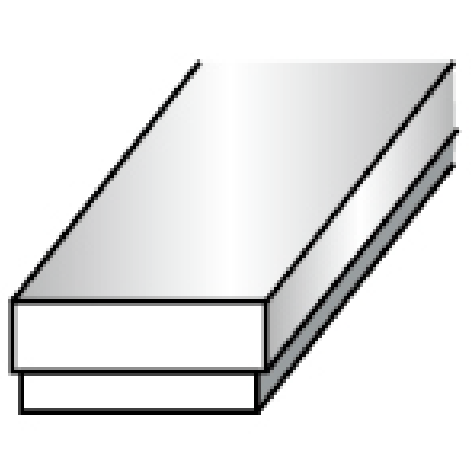
The standard product is an oval-cut joint tape: a rounded rectangular section that compresses into the flange face without the edge lift a flat strip can develop when it is wrapped around a bolt circle. Heavier sections are wound shorter per coil because of the build-up on the core.
| Section thickness (mm) | Width (mm) | Coil length (m) |
|---|---|---|
| 0.5 | 100 | 30 |
| 1.0 | 25 | 15 |
| 1.0 | 50 | 15 |
| 1.0 | 100 | 15 |
| 2.0 | 25 | 10 |
| 2.0 | 50 | 10 |
| 3.0 | 10 | 7 |
| 3.0 | 15 | 7 |
| 3.0 | 30 | 5 |
| 3.0 | 50 | 5 |
Round cord covers groove sealing, corner radii and small manway joints, from 1 mm section at 30 m per coil through 2 mm at 15 m, 3 mm at 7.5 m and 5–7 mm at roughly 4.5–5 m. Sections outside this list, alternative densities, slit widths and longer coils are produced to drawing or sample; we confirm the cross-section drawing and coil build before a batch is released.
Application Fit: Large, Irregular and Delicate Flanges
The tape is chosen where a pre-cut gasket is impractical, too stiff for the joint, or too slow to obtain in a bespoke size. Typical duty includes:
- Large-diameter flanges on reactors, columns, storage tanks, turbo generators and heat exchangers, where the sealing path is long and a made-to-size ring carries a long lead time.
- Glass-lined, enamel-lined and FRP equipment, where seating stress must stay low to protect the lining and the gasket has to conform rather than load the face.
- Pitted, scored, warped or repaired faces that a solid PTFE or spiral-wound gasket cannot follow without excessive bolt load.
- Manways, handholes and inspection covers, including non-circular and interrupted sealing paths that are easier to wrap than to cut.
- Chemical, petrochemical, power and environmental duty where the medium attacks elastomers and the joint sees temperature cycling.
Selection, Jointing and Bolt-Up
Selection variables
Section choice follows the joint, not the catalogue alone. We work through the following with the project data:
- Seating width and bolt load: a wide raised face needs a broader section, while a low bolt load calls for a softer, more compressible tape.
- Face condition: pitting, scoring and warping increase the required conformability and reduce the useful compression reserve.
- Media and temperature: chemical attack is handled by the PTFE matrix; thermal cycling drives creep relaxation and sets the re-torque interval.
- Compression limit: over-compression collapses the microporous structure and thins the seal, so the bolt-up procedure has to respect the section's usable range.
- Pressure or vacuum: vacuum service needs a wider contact band and a joint that cannot draw air at the butt.
- Joint position: the butt or overlap should sit away from the highest-stress zone and be staggered between passes.
Jointing and installation
The tape is installed as a wrapped joint, not as a loose insert. A consistent sequence keeps the seal predictable:
- Clean and dry both faces; remove old gasket residue, scale and oil.
- Cut the end square or at 45°, butt the ends with minimal gap, and keep the joint flat.
- Wrap to the full seating width in one continuous pass where the flange allows it.
- Tighten bolts in a cross or star pattern in two or three stages to the specified torque.
- Re-torque after the first thermal cycle, then at the interval set for the service.
Quality Control, Documentation and Custom Supply
Gansu Juxiang is a joint venture of Zhejiang Jiaxiang Fluoroplastics Co., Ltd. and Gansu Juhua New Materials Co., Ltd. (Juhua Group), established in September 2025 with registered capital of RMB 30 million, with production organised across Zhejiang and Gansu. Custom manufacturing is our core service, so tape and cord are made to customer drawings or samples rather than limited to catalogue sizes.
Each batch follows the agreed section list. Thickness, width, coil length, density and joint integrity are checked against the order, and the inspection items are fixed before production so the sampling plan matches the project's acceptance requirements. Where third-party inspection or a specified test method applies, it is written into the order and the records travel with the shipment.
Information We Use to Configure Your Solution
A workable quotation depends on more than a width and a thickness. These inputs let us select the section, estimate coil quantity and set the inspection plan.
| Project input | What it determines |
|---|---|
| Flange dimensions and bolt data: outside diameter, raised-face width, bolt circle, bolt size and count | Tape width, number of wraps and whether one pass covers the seating face |
| Sealing face material and condition: glass-lined, FRP, machined, pitted or warped | Allowable seating stress and the section softness required |
| Medium, concentration, temperature range and cycling pattern | Material confirmation and any barrier or liner requirement |
| Internal pressure or vacuum | Section thickness and width, plus a bolt-load check |
| Joint method and installation access | Whether tape, cord or a pre-cut ring is the practical form |
| Section drawing: thickness, width, tolerance and coil length | Production drawing and winding specification |
| Quantity, coil labelling and packing format | Packing configuration and delivery schedule |
| Inspection, documentation and third-party requirements | Test plan and the records released with the batch |
Related Sealing Products from Our Range
Where the joint is better served by a finished gasket, our Expanded PTFE Reinforced Flange Gasket uses a reinforced expanded PTFE construction for raised-face and full-face flanges that carry higher bolt load. For threaded pipe connections and instrument fittings, PTFE Thread Seal Tape covers the smaller-bore sealing work that usually accompanies a flange campaign. Both are produced in the same fluoroplastic operation as the joint tape.
Frequently Asked Questions
What sections of ePTFE joint tape can you supply?
Oval-section tape from 0.5 mm × 100 mm to 3 mm × 50 mm, with coil lengths from 30 m down to 5 m as the section grows, plus round cord from 1 mm to 7 mm. Non-standard widths, thicknesses and coil lengths are made to drawing.
Can the tape be used on glass-lined or FRP flanges?
Yes. The expanded structure conforms at low seating stress, which suits glass-lined, enamel-lined and FRP equipment where a rigid gasket or high bolt load risks damaging the lining. We confirm the compression limit and bolt-up procedure for the specific flange.
How should the tape be jointed on a large flange?
Cut the ends square or at 45°, butt them with minimal gap, and place the joint away from the highest-stress area. Tighten in a cross pattern in stages, then re-torque after the first thermal cycle. For cord in a groove, use a dovetail overlap rather than a butt joint.
Do you make non-standard widths and densities?
We do. Custom manufacturing is our core service, so we produce to your drawing or sample, including slit widths, alternative densities and longer coils. Send the section drawing, quantity and inspection requirements and we will confirm the production specification.
Related Products and Categories
Our portfolio also includes Products for applications with different operating ranges, interfaces or integration requirements.