

 русский
 Deutsch
 عربى

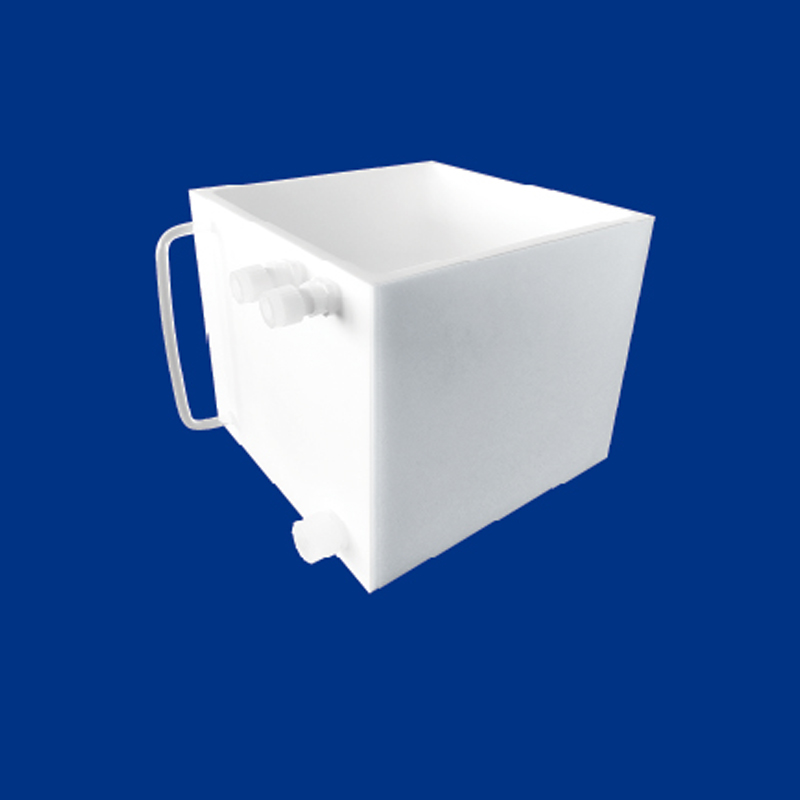
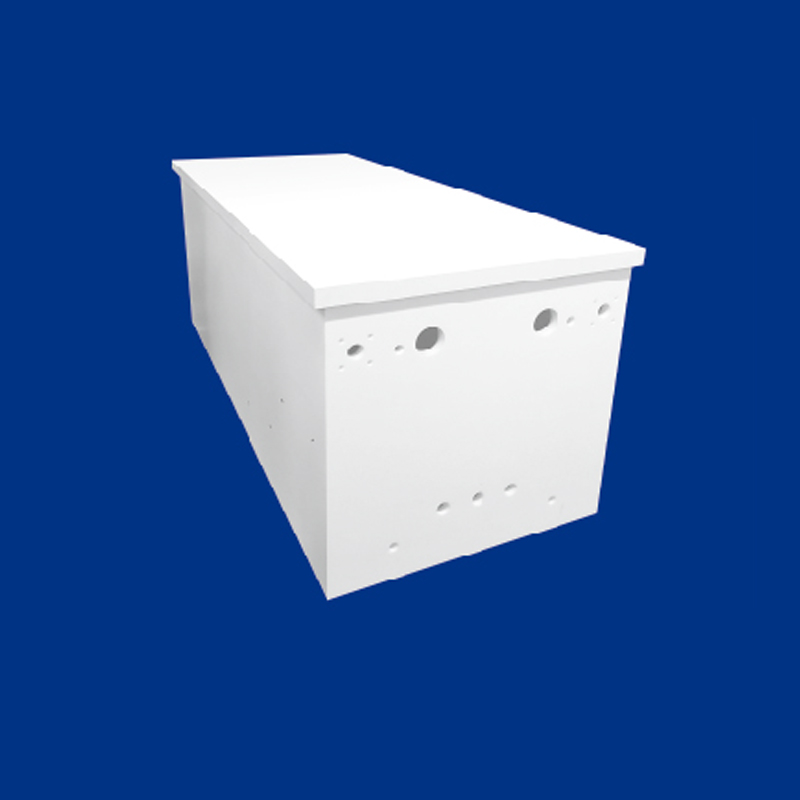
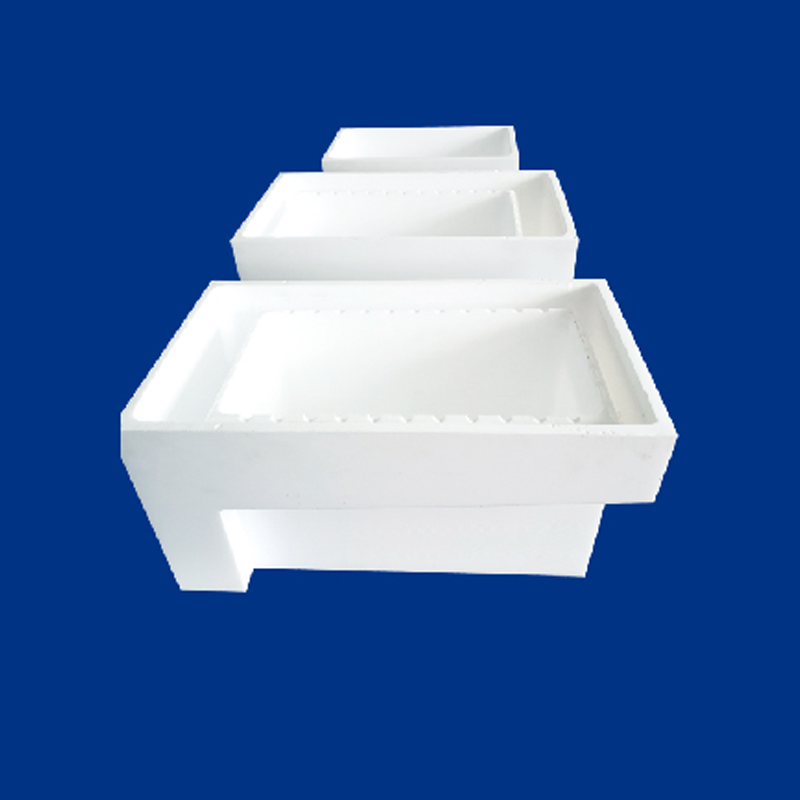

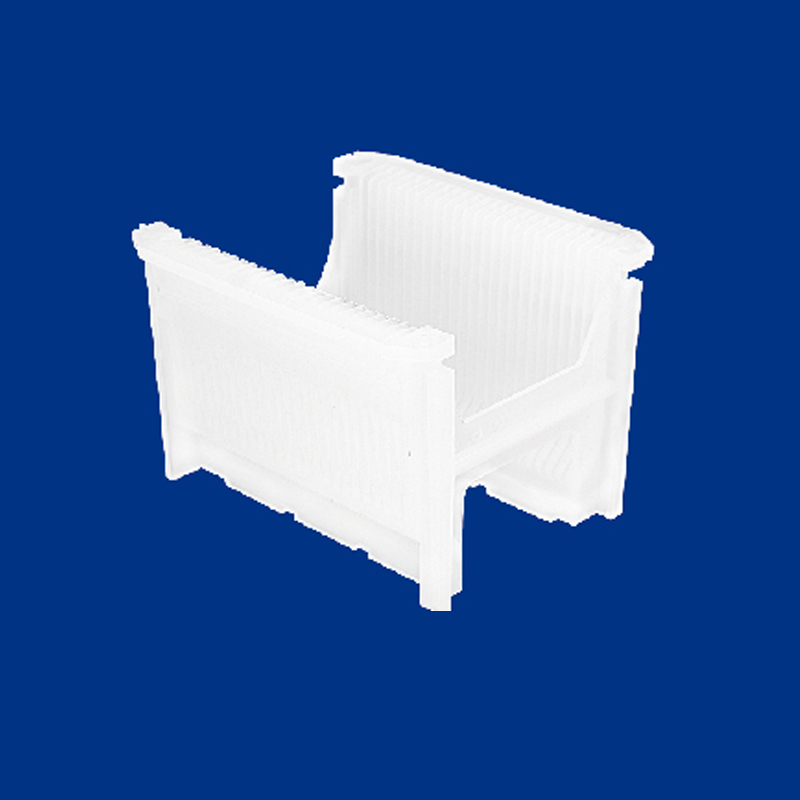
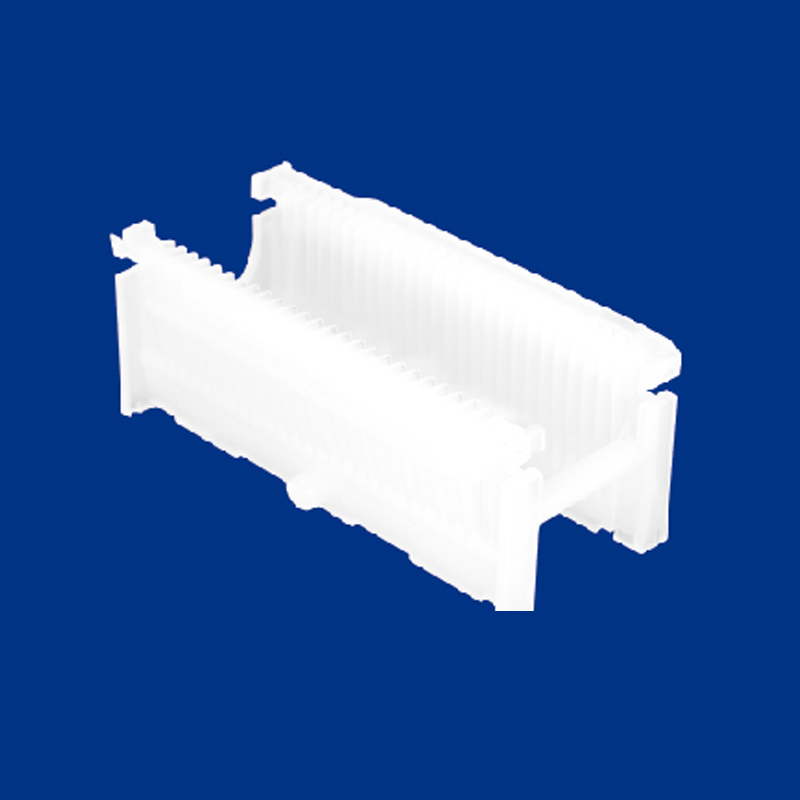
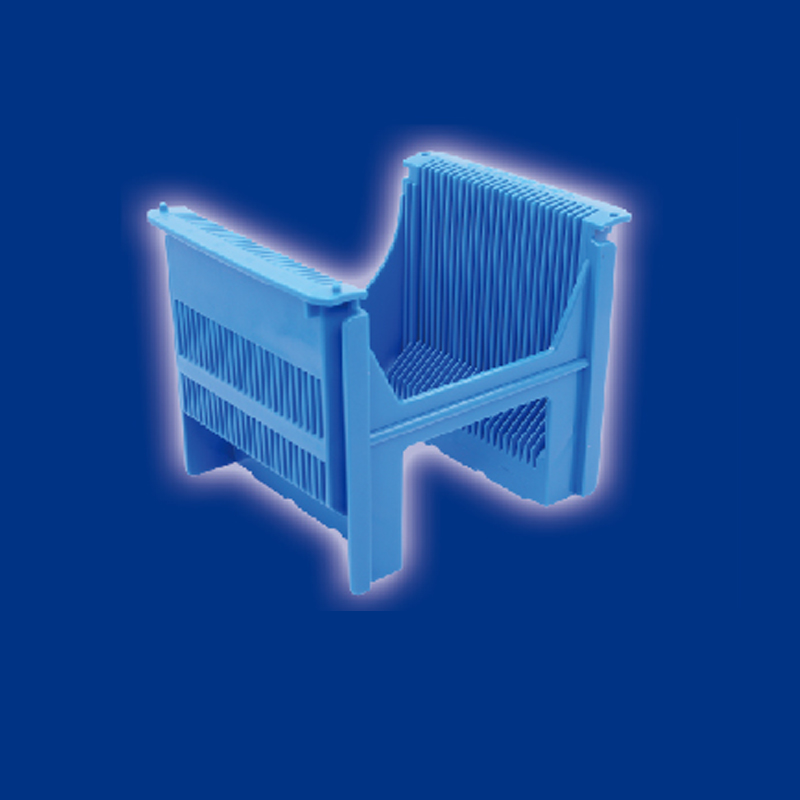
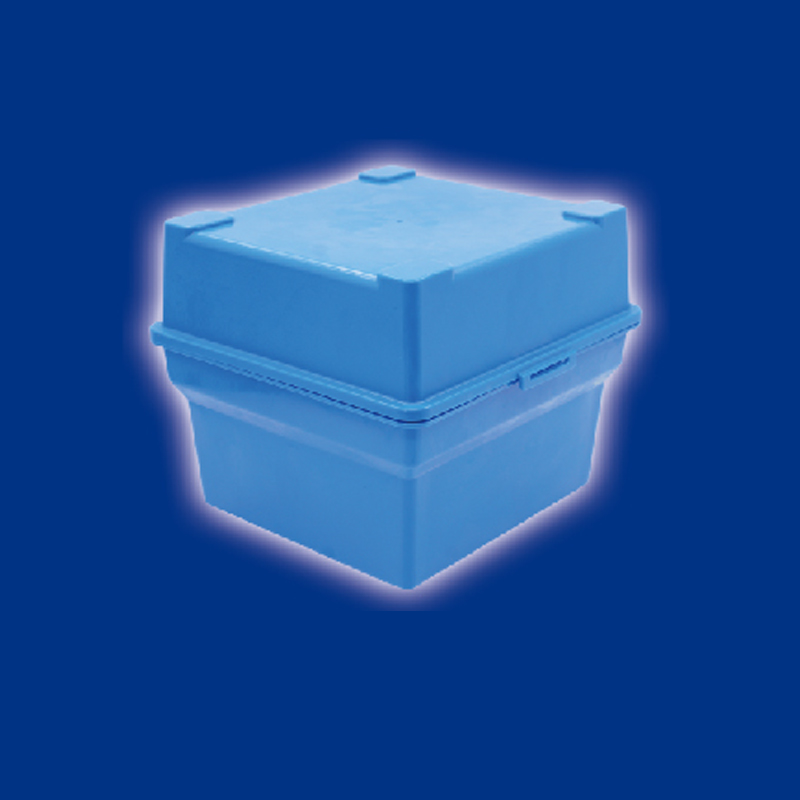




As a PTFE Semiconductor manufacturer, Gansu Juxiang Fluoroplastics Technology Co.,Ltd. machines high-purity fluoroplastic components for wafer fabrication, wet-process tooling and cleanroom equipment builds. We are a joint venture of Zhejiang Jiaxiang Fluoroplastics Co., Ltd. and Gansu Juhua New Materials Co., Ltd., with production bases in Zhejiang and Gansu, and we supply PTFE, PFA, FEP, PCTFE, PEEK and PI parts to drawing or to sample.
PTFE electronic parts in our range are made from qualified PTFE resin by finish machining. That single statement governs how we quote: the resin grade, the semi-finished form it is machined from, and the finishing route are all fixed before a chip is cut, because in semiconductor equipment the polymer is part of the process environment, not just a structural detail.
PTFE Semiconductor Components We Manufacture
The range covers machined parts, films, fluid-handling components and cleanroom cable protection. Each family is produced against a drawing package rather than a catalogue number, so dimensions, surface condition and packaging are set per tool.
| Component family | Typical semiconductor use | Configuration focus |
|---|---|---|
| Machined PTFE parts | Bushings, spacers, inserts, nozzle bodies, fixture pads, lift-pin sleeves | Machined from molded billet, skived sheet or extruded rod; drawing-controlled dimensions and surface finish |
| PTFE Film and skived tape | Dielectric layers, masking, platen and chute liners | Thickness, width, slit tolerance, adhesive or non-adhesive supply |
| Wafer carrier components | Carrier inserts, contact pads, wafer-handling faces | Non-marring contact surfaces, flatness, edge quality, low friction |
| PTFE Dust-free Towing Chain Jacket | Cable carriers on moving axes inside cleanroom tools | Jacket ID/OD, flex radius, wall consistency, abrasion behaviour |
| PFA Rod, Tube and FEP extrusion | High-purity chemical delivery, drain and return lines | Smooth bore, bend radius, end connections, weldability |
| Sealing elements | Flange gaskets, universal seals, encapsulated O-rings, valve seats | Groove fit, compression set, media compatibility, bolt load |
| Large molded frames and gaskets | Chamber doors, tank lids, wet-bench enclosures | Single-piece molding, flatness across the joint face, port layout |
Where the Range Fits on the Line
Semiconductor equipment exposes polymers to aggressive wet chemistry, repeated cleaning cycles and strict particle limits. PTFE brings chemical inertness across a wide temperature band, low extractables, low friction and stable dielectric behaviour, which is why it appears wherever wetted surfaces, sliding contacts and electrical isolation meet.
- Wet cleaning and etch benches: tank liners, splash guards, nozzle bodies, drip trays and sealing frames.
- Chemical delivery: PFA and FEP tubing, connectors and valve-body components where a smooth, low-shedding bore matters.
- Wafer handling: carrier inserts, end-effector pads and guide surfaces that must not scratch or mark a wafer.
- Motion and cabling: dust-free drag chain jackets and protective sleeves on reciprocating axes.
- Electrical and electronic assemblies: PTFE, PCTFE and PI film used for insulation and barrier layers.
Where a part is purely structural, filled grades may be the better answer; where the part touches the wafer or the chemistry, virgin or modified PTFE is normally the starting point. We confirm that choice with you rather than defaulting to one grade across a tool.
Material and Configuration Choices
Our processing materials cover PTFE, PCTFE, PEEK, PI and UPE, plus PFA, FEP and PVDF resins, so a component can be moved between polymers when a specification changes mid-project. Filler selection is where most of the engineering value sits.
- Virgin PTFE: maximum chemical resistance and purity, lowest mechanical strength under load.
- Modified PTFE: improved weldability and lower permeability while retaining near-virgin chemical behaviour.
- Glass-fibre filled: higher stiffness and creep resistance, with a different wear signature against metal.
- Carbon and graphite filled: lower friction and better dimensional stability in dynamic seals.
- PFA and FEP: melt-processable, smooth-surfaced options for tubing and complex fluid paths.
- PCTFE, PEEK and PI: barrier, high-strength and high-temperature roles where PTFE alone is not enough.
Form matters as much as grade. A part machined from molded billet behaves differently from the same geometry cut from skived sheet, particularly in flatness and residual stress, so we specify the semi-finished form alongside the drawing.
Critical Specifications We Machine To
Fluoroplastics are soft, creep-sensitive and thermally expansive. Tolerances that look routine on a metal drawing need a different conversation on PTFE, and we hold that conversation before release.
- Dimensional tolerances and datum scheme, checked against the geometry rather than quoted as a blanket figure.
- Flatness and parallelism on sealing faces, gaskets and carrier pads.
- Concentricity and wall thickness on tubes, sleeves and bushings.
- Surface finish and freedom from machining marks on wetted or wafer-contact faces.
- Edge quality and burr control on thin films, tapes and slit parts.
- Cleanliness, handling and packaging condition agreed at quotation.
Information We Use to Configure Your Solution
A workable proposal needs the working point, not just a shape. The list below is what our technical team reviews before quoting a semiconductor part.
- 2D drawing with revision, 3D model, or a physical sample for reverse engineering.
- Contact medium: acid, solvent, slurry, DI water, cleaning agent, or dry environment.
- Operating temperature range, including cleaning and bake-out peaks.
- Mechanical duty: static seal, sliding contact, threaded joint, or load-bearing insert.
- Mating hardware, groove dimensions and bolt load for sealing parts.
- Quantity per tool, annual volume, and whether a first-article sample is required.
- Documentation, marking and packaging requirements for the receiving line.
Quality Control, Documentation and Delivery
Incoming resin is checked against the agreed grade before release to machining, and in-process inspection follows the drawing's critical characteristics. Final inspection records travel with the shipment, referenced to the drawing revision used in production.
Customization is our core service: we develop and produce fluoroplastic parts strictly to your drawings or samples, and our technical team handles material matching for difficult working conditions. Dual production bases in Zhejiang and Gansu let us schedule volume and prototype work in parallel, and our international sales team manages export documentation for customers across more than 30 countries.
Inquiries are answered within 12 working hours. Send the drawing, the medium and the temperature band, and we will come back with a material recommendation, a manufacturing route and a quotation scope that states exactly what is included.
Frequently Asked Questions
Can you machine PTFE semiconductor parts to our own drawings?
Yes. We work from 2D drawings, 3D models or physical samples, and customization is our core service. Before quoting we review the geometry, the resin grade, the filler system and the handling requirement, then confirm which tolerances are achievable on the specified polymer.
Which materials do you recommend for wet-process components?
Virgin or modified PTFE is the usual starting point for wetted parts because of its chemical resistance and low extractables. PFA and FEP are selected where a smooth melt-processed bore or a welded fluid path is needed, and PCTFE, PEEK or PI come in when barrier performance, strength or temperature resistance exceeds what PTFE can deliver.
How is a semiconductor part order documented?
Production follows the released drawing revision, and the inspection plan is agreed at quotation. Shipments are referenced to that revision, with the material grade and inspection record matched to the parts supplied so the receiving line can file them against the tool.
What is the fastest way to get a usable quotation?
Send the drawing or sample together with the contact medium, the operating temperature range, the mechanical duty and the quantity per tool. That combination lets us select the grade, the semi-finished form and the machining route in one pass, and we reply within 12 working hours.