

 русский
 Deutsch
 عربى

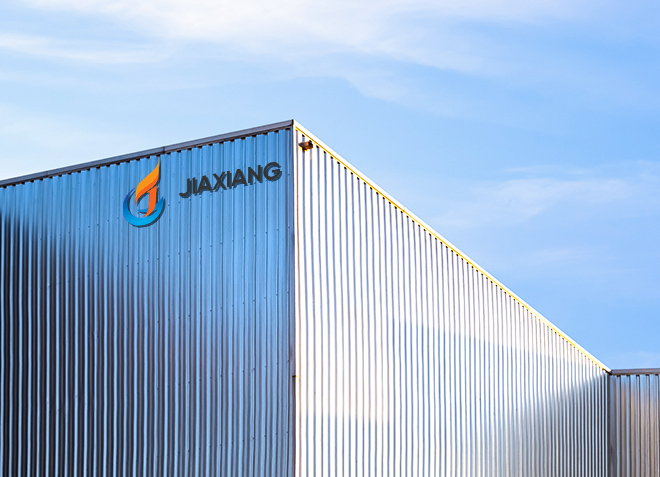



Gansu Juxiang Fluoroplastics Technology Co.,Ltd. produces PCTFE components within a wider fluoroplastic and high-performance engineering plastics programme, from two production bases in Zhejiang and Gansu. The Yumen plant in Gansu is a joint venture of Zhejiang Jiaxiang Fluoroplastics Co., Ltd. and Gansu Juhua New Materials Co., Ltd. of the Juhua Group, and PCTFE sits in our high-performance processing material series alongside PTFE, PEEK, PI and UPE.
PCTFE — polychlorotrifluoroethylene, a copolymer carrying 49% fluorine — is the grade we specify when a part must hold compressive load at low temperature, block moisture and gas almost completely, or stay dimensionally fixed through thermal cycling. As a PCTFE Products manufacturer, we supply sealing elements, machined components, barrier film and small fluid-handling parts for cryogenic valve and vessel duty, moisture-sensitive pharmaceutical and electronic packaging, anticorrosive tubing and optical inspection points.
The PCTFE Range We Supply
PCTFE arrives as melt-processable resin and leaves as a finished part matched to a drawing. The range is organised by the duty the part performs, because the same material behaves very differently as a 2 mm gasket and as a 0.1 mm barrier film.
- Sealing elements — gaskets, valve seats, stem seals and vessel closures for high-pressure, low-temperature service, including LNG valve gaskets at −160 °C.
- Machined components — bushes, inserts, sleeves, sight discs and instrument parts cut from PCTFE rod, sheet and tube.
- Barrier film and sheet — moisture and gas barrier layers for hygroscopic drugs, electronic components and sealed instrumentation.
- Tubing and containment parts — anticorrosive, low-permeability sections for fluid transfer and sample containment.
- Moulded and near-net parts — PCTFE is melt-processable, so repeat volumes can move from machining to moulding where geometry and tolerance allow.
Material Data That Drives the Design
These are the figures we work from when a PCTFE part is dimensioned. They define where the material wins against PTFE and where it must be supported by the surrounding hardware.
| Property | Typical value or behaviour | What it means for the part |
|---|---|---|
| Fluorine content | 49% | Chemical resistance with mechanical strength PTFE cannot carry |
| Density | 2.10–2.15 g/cm³ | Part mass and inertia follow directly; relevant to moving seals |
| Tensile strength (min.) | 40 MPa | Supports compressive and structural load in seats and closures |
| Ultimate elongation (min.) | 50% | Ductility retained at low temperature, so seals do not brittle-fracture |
| Moisture vapour transmission | Lowest among plastics | Barrier film, discs and closures for moisture-sensitive contents |
| Gas permeability | Extremely low | Holds dry-gas and vacuum atmospheres in instrument and packaging duty |
| Optical transmission | Infrared, ultraviolet and visible light pass through | Inspection windows, optical spacers and light-path components |
| Low-temperature behaviour | Excellent; LNG valve gaskets at −160 °C | Cryogenic sealing in liquefied gas lines, vessels and cold boxes |
Application Fit by Duty
Matching a PCTFE grade and form to the duty is the first decision in every quotation. The table below shows how we map the common duties to part types.
| Duty | Typical PCTFE part | Selection logic |
|---|---|---|
| Cryogenic sealing | Valve gaskets, seat inserts, vessel closures | Creep resistance and toughness at −160 °C where PTFE would relax under bolt load |
| High-pressure static sealing | Flange, manifold and closure gaskets | Compressive strength and hardness hold the joint through pressure and thermal cycles |
| Moisture barrier | Film, discs, closures, blister sections | Near-zero water vapour transmission protects hygroscopic drugs and components |
| Corrosive fluid handling | Tubing, liners, small vessels | Resistance to inorganic corrosive liquids combined with low permeability |
| Optical and inspection | Windows, sight discs, spacers | Transparency across IR, UV and visible bands with dimensional stability |
| Electrical insulation | Insulators, spacers, supports | High volume resistivity and stable dielectric behaviour over temperature |
Configuration and Processing Options
PCTFE has a narrow processing window and a strong tendency to retain internal stress, so the route from resin to finished part is chosen with the geometry and the thermal history of the assembly in mind.
- Machined or moulded — rod, sheet and tube machining for prototypes, one-off spares and low volume; injection or compression moulding once annual quantities justify tooling.
- Stress relief — annealing after machining or moulding to stabilise dimensions before the part sees thermal cycling in service.
- Sealing geometry — flat gasket, seat insert, lip or chevron profile, each matched to the groove, bolt load and available compression.
- Tolerances and finish — sealing faces, mating diameters and flatness toleranced to the assembly, with surface finish agreed on the drawing.
- Barrier thickness — film gauge set against the target shelf life and the water vapour transmission budget of the package.
- Assembly fit — differential expansion between PCTFE and the metal hardware is accounted for at design stage, not at commissioning.
Quality Control, Acceptance and Documentation
Production parameters are monitored in real time at both bases, and each order is released with the documentation package agreed at quotation. Post-production documentation and usage guidance travel with the shipment so the receiving line can put the part into service without a second round of questions.
- Resin identification and lot retention against the order
- In-process parameter records for moulding and machining stages
- Dimensional inspection report against the supplied drawing
- Visual and functional checks agreed for the specific part
- Material and handling documentation, with usage guidance at handover
- Packing and labelling agreed with the order so parts arrive ready for the receiving line
Information We Use to Configure Your Solution
A PCTFE proposal is only as good as the working point behind it. These are the inputs that let us fix material, form, tolerance and inspection in one pass.
- Drawing or 3D model with tolerances, datums and the features that actually seal
- Working temperature range, including cool-down transients and cryogenic excursions
- Pressure, bolt load or spring energisation, plus the mating surface material and finish
- Media list with concentrations, and any cleaning, purging or sterilisation cycle
- Annual volume and call-off pattern, which decides the machined or moulded route
- Inspection and documentation requirements, including third-party witness points
- Packing, labelling and delivery destination
Complementary Materials in the Same Build
PCTFE rarely travels alone. Where a seal stack or a fluid assembly mixes materials, we supply the adjacent parts from the same fluoroplastic programme so tolerances and documentation stay consistent.
- PEEK Products for wear faces, backup rings and load-bearing bushes where abrasion is the limiting factor.
- PTFE Film for wider chemical and temperature envelopes where barrier performance is secondary.
- Filled PTFE Tube, Rod for compounded sealing and bearing sections machined alongside PCTFE parts.
PCTFE Questions Answered
Why specify PCTFE rather than PTFE for a cryogenic seal?
PCTFE carries markedly higher compressive strength, hardness and creep resistance than PTFE, and its moisture vapour transmission is the lowest among plastics. In LNG valve gaskets at −160 °C it keeps bolt load and dimensions through cool-down, where PTFE would relax and lose contact pressure. PTFE remains the better choice where the chemical or temperature envelope is wider and mechanical load is low.
Can you machine PCTFE parts to our drawing?
Yes. Custom manufacturing to drawings or samples is our core service. We review geometry, tolerance and annual volume, then propose either machining from rod, sheet or tube, or a moulded route where the quantity and shape make tooling worthwhile.
What documentation accompanies a PCTFE order?
Dimensional inspection against the drawing, resin lot identification, in-process parameter records and usage guidance at handover. Any additional acceptance test — functional, pressure or witness inspection — is fixed at quotation so it is built into the route rather than added afterwards.
Which industries receive your PCTFE parts?
Semiconductor and electronics, aerospace, new energy and hydrogen, chemical and petrochemical processing, environmental protection and medical equipment. The common thread is a part that must seal, insulate or block moisture where PTFE alone cannot hold the tolerance or the load.