

 русский
 Deutsch
 عربى
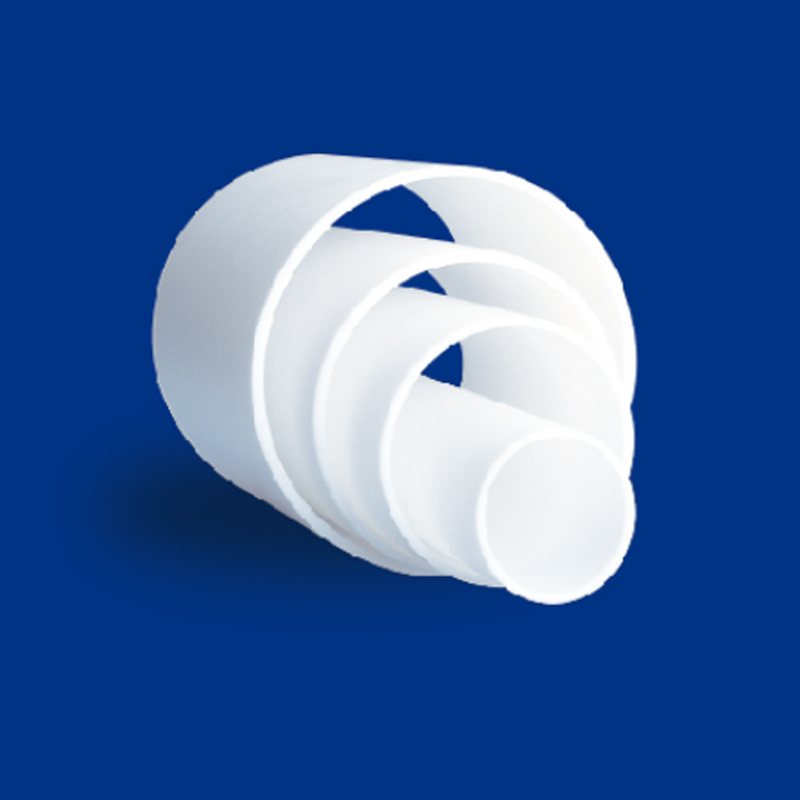



Gansu Juxiang Fluoroplastics Technology Co.,Ltd. is a PTFE Tube manufacturer in China, extruding tube from suspension polytetrafluoroethylene resin at our Yumen, Gansu production base, with a second base in Zhejiang through our parent company Zhejiang Jiaxiang Fluoroplastics. The tube range serves cable jacketing, dielectric insulation and anti-corrosion lining for pipe and equipment, and sits inside a broader fluoroplastic programme that includes PTFE, PFA, FEP, PCTFE, PEEK, PI and PVDF materials.
Our position in this category is as a producer rather than a reseller: resin selection, extrusion, dimensional control, cut-to-length preparation and documentation are handled inside our own operations. Tube is supplied as plain extruded lengths for further fabrication by the customer, or prepared to drawing where the tube becomes a finished sleeve, liner or insulating jacket.
Extruded PTFE Tube: Range and Dimensional Envelope
The standard product is an unfilled, suspension-resin extruded tube with a dense, non-porous wall. PTFE gives the tube its two defining characteristics for this duty — it is anticorrosive and dielectric — which is why the range is used as cable jacketing and as anti-corrosion material for tubes and process lines.
Outside diameters run from 24 mm to 406 mm with wall thickness from 2 mm to 6 mm. Standard minimum length is 4000 mm. Tolerances widen with diameter, as shown below.
| Outside diameter (mm) | OD tolerance (mm) | Wall thickness (mm) | Wall tolerance (mm) |
|---|---|---|---|
| 24 – 29.6 | ±0.65 | 2 | ±0.30 |
| 32 – 50 | ±0.80 | 2 – 5 | ±0.30 to ±0.38 |
| 51 – 82 | ±0.95 | 2 – 4.5 | ±0.30 to ±0.38 |
| 90 – 104 | ±1.10 | 3 – 5 | ±0.30 |
| 129 – 250 | ±1.20 | 3.5 – 5 | ±0.35 to ±0.40 |
| 310 – 406 | ±1.50 | 5 – 6 | ±0.40 to ±0.50 |
Dimensions outside this envelope are quoted against the customer drawing rather than forced into a standard size. Where a project needs a tighter wall tolerance than the table allows, we review the extrusion route and the inspection method before committing to the order.
Where Extruded PTFE Tube Fits
The tube is specified where a metal pipe, sleeve or jacket would corrode, conduct or contaminate. Typical service is chemical and petrochemical fluid handling, semiconductor wet-processing lines, hydrogen and new-energy equipment, automotive and automation hardware, environmental water treatment and medical fluid delivery — the industrial fields our fluoroplastic programme already supplies.
- Cable jacketing: a dielectric sleeve over conductors and cable bundles, including high-temperature and chemically exposed routing.
- Pipe and tube lining: an anti-corrosion barrier between a corrosive medium and the structural pipe behind it.
- Fluid transfer: small-diameter process lines for acids, alkalis and other aggressive media where inertness matters more than pressure rating.
- Mechanical sleeving: low-friction, non-marking sleeves over shafts, rollers and guide elements.
- Electrical insulation: spacers, barriers and insulating jackets in equipment assemblies.
Because the wall is extruded rather than wrapped, the tube holds a continuous cross-section along its length, which matters when the part is slit, flared, threaded onto a fitting or pushed over a cable bundle.
Material Properties That Govern Application Fit
We work to the following property baseline for suspension-resin extruded tube. These values describe the material as supplied and set the expectation for wall integrity during handling, cutting and installation.
- Apparent density: 2.10 – 2.30 g/cm³
- Tensile strength: 18 MPa minimum
- Elongation at break: 230% minimum
Unfilled PTFE is the correct choice for chemical resistance and dielectric duty. Where the tube also has to carry load, resist creep or run against a moving surface, a filled compound is usually the better fit; those grades are produced in our Filled PTFE Tube,Rod range, where glass fibre, carbon, bronze or polymer fillers change the wear and compression behaviour.
For co-extruded or heat-shrinkable constructions, or where a fully melt-processable fluoropolymer is required, the FEP, PFA Extrusion Tube range covers transparent and high-purity tube duties that PTFE cannot meet.
Configuration and Machining Options
Tube orders are configured around the installation, not around a catalogue number. The variables we settle with the customer before production are:
- Resin grade: unfilled suspension PTFE as standard, or a filled compound where wear, creep or thermal conductivity is the limiting factor.
- Dimensions: outside diameter, wall thickness and the tolerance band that the assembly can actually accept.
- Length: full extruded lengths, or cut to a fixed length with a stated tolerance.
- End preparation: square cut, deburred, chamfered or radiused to suit push-on, press-fit or flanged assembly.
- Secondary machining: slots, steps, grooves and reduced sections machined from tube or from PTFE rod where the geometry leaves the extruded envelope.
- Documentation: dimensional records, material identification and packing lists matched to the purchase order.
Our service team supports material selection, mould and tooling optimisation and process analysis at the enquiry stage, so a change of wall thickness or resin grade is evaluated against the working conditions before it reaches the extrusion line.
Quality Control, Documentation and Acceptance
Production parameters are monitored in real time during extrusion, and finished tube is documented before dispatch. Post-production we issue the documentation pack and usage guidance that the customer's receiving and engineering teams need to accept the goods and install them correctly.
- Outside diameter and wall thickness checked against the ordered tolerance band.
- Length and end finish verified against the cut list.
- Visual inspection for surface defects, ovality and handling marks.
- Batch identification carried through packing and shipping documents.
- Protective packing suited to the tube diameter, wall thickness and transport method.
Acceptance criteria are agreed at order stage, so the inspection method and the record format are known before the first length is extruded. Where a project requires certification documentation, it is handled through our certification file and issued with the contract paperwork.
Information We Use to Configure Your Solution
A workable quotation needs the working point, not just a diameter. The list below is what we ask for; where an item is open, we propose a value and state the assumption in the offer.
- Outside diameter, wall thickness and length, with the tolerance that the assembly requires.
- Resin preference: unfilled suspension PTFE or a filled grade, and the reason for the choice.
- Medium, concentration, operating temperature and pressure, including cleaning and sterilisation cycles.
- Installation method: pushed over a cable, inserted as a liner, machined after delivery, or assembled onto a fitting.
- Quantity per order, annual demand and whether the part is a one-off project or a repeat production item.
- End finish, cut-length tolerance and any secondary machining shown on the drawing.
- Documentation, marking, packing and delivery scope, including the destination port or site.
With those inputs we return a configuration, a dimensional proposal and a quotation that reflects the actual extrusion route rather than a generic stock size.
Related Fluoroplastic Products for Complete Assemblies
PTFE tube rarely ships alone. The same fluoroplastic programme covers the rod, sheet, seal and connector items that surround it, which keeps material consistency across a single assembly.
- PFA Rod, Tube for high-purity and transparent fluid paths where PTFE opacity or fabrication limits apply.
- Filled PTFE tube and rod for wear rings, bushings and load-bearing sleeves.
- PTFE rod and skived sheet for machined end fittings, flanges and backing rings.
Supplying tube, rod and machined parts from one production organisation removes the mismatch that appears when a liner and its backing ring come from different compound batches.
Frequently Asked Questions
What sizes of PTFE tube do you extrude?
Outside diameters from 24 mm to 406 mm and wall thickness from 2 mm to 6 mm, with a standard minimum length of 4000 mm. OD tolerance runs from ±0.65 mm on the smallest diameters to ±1.50 mm at 310–406 mm, and wall tolerance from ±0.30 mm to ±0.50 mm. Sizes and tolerances outside this envelope are quoted against the customer drawing.
Is the tube virgin PTFE or a filled compound?
Standard tube is extruded from unfilled suspension PTFE resin and is supplied for anticorrosive and dielectric duty such as cable jacketing and pipe lining. Where the part must resist wear, creep or sustained load, we propose a filled grade from our Filled PTFE Tube,Rod range and confirm the filler against the working conditions.
Can you supply cut lengths and machined ends?
Yes. Tube is supplied in full extruded lengths or cut to a fixed length with a stated tolerance, with ends square cut, deburred, chamfered or radiused. Grooves, steps and reduced sections are machined where the finished part needs geometry that extrusion alone cannot produce.
What do you need to prepare a quotation?
Outside diameter, wall thickness, length and tolerance; resin preference; medium, temperature and pressure; how the tube is installed; order quantity and repeat demand; end finish and any drawing; and the documentation, packing and delivery scope. We reply to enquiries within 12 working hours and confirm any assumption in the written offer.