

 русский
 Deutsch
 عربى
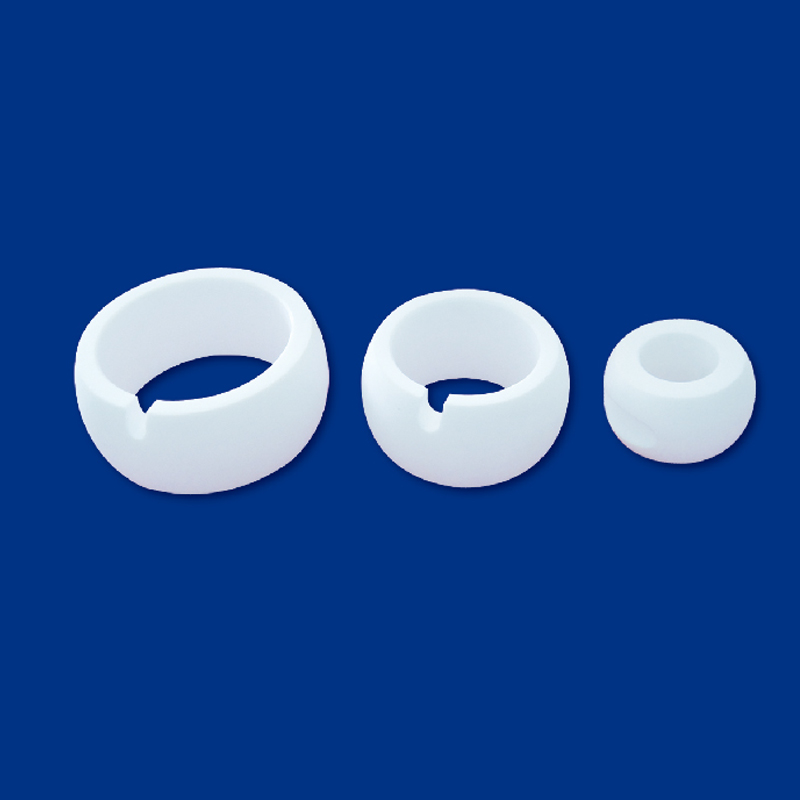

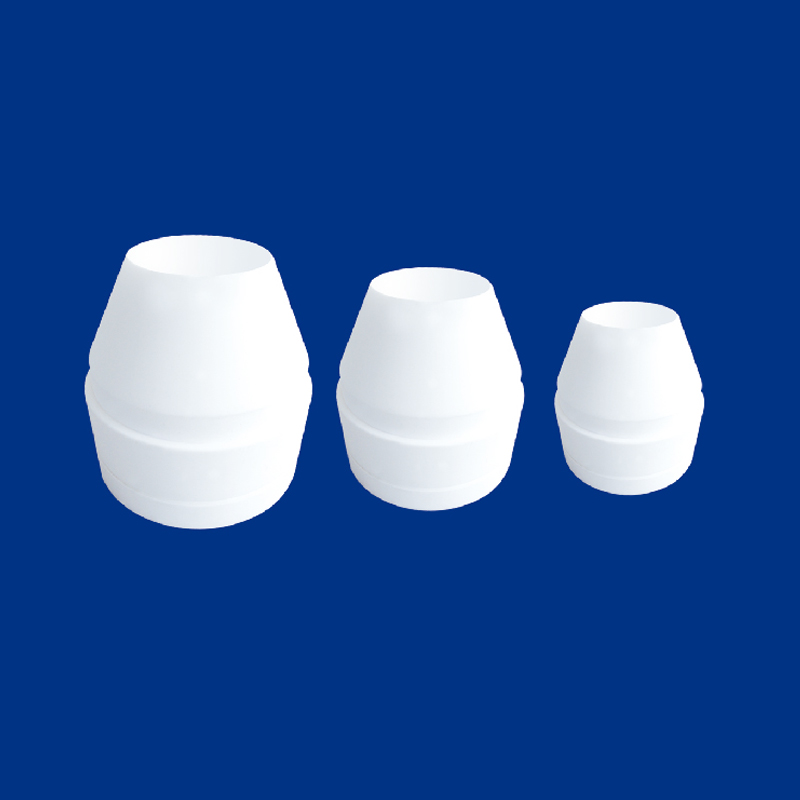



Gansu Juxiang Fluoroplastics Technology Co.,Ltd. manufactures molded and machined PTFE components for printing and dyeing machinery: water-jet loom nozzles, sealing elements, guide and wear tapes, gaskets, tubes and insulation parts. As a PTFE Accessories for Printing and Dyeing Mechanical Equipments manufacturer, we mold the blank and machine the finished profile so the part matches the holder, groove or flange it has to sit in. Production runs across two bases in Zhejiang and Gansu, keeping custom batches and repeat series supply inside one chain.
Typical duty: continuous water-jet weft insertion, hot dye liquor circulation, steam and chemical exposure, and constant sliding contact on guide and transport surfaces.
Built Around the Duty Cycle of Dyeing and Finishing Equipment
Printing and dyeing machinery combines three punishing conditions: pressurized water at the weft insertion point, hot and chemically aggressive dye liquor, and continuous mechanical sliding on guide surfaces. PTFE holds its place in all three because it is chemically inert, non-adhesive, self-lubricating and dimensionally stable across the temperatures these machines run at.
- Weft insertion: the nozzle shapes and accelerates the water jet; a poorly finished orifice marks the fabric and distorts the pick.
- Sealing: backflow water, dye liquor and steam must be held at pump bodies, valve stems, manifolds and flange joints.
- Wear and guidance: tapes and rings carry rollers, chains and tenter components without lubricants that would contaminate cloth.
- Chemical transport: tubes and liners move dye, alkali and finishing agents without swelling or sticking.
Our Range for Printing and Dyeing Machinery
Components are grouped by the function they perform on the machine rather than by resin type, because the same compound may serve a nozzle, a ring and a gasket at different points of the line.
| Product family | Function in the machine | Format we supply | Configuration points |
|---|---|---|---|
| PTFE nozzle | Water-jet weft insertion; protects the yarn from the high-pressure jet | Machined nozzle bodies and inserts | Orifice diameter, taper, exit-face finish, holder thread |
| Filled PTFE tube and rod | Dye liquor and chemical transfer, bushings, roller sleeves | Molded blanks and extruded stock, machined to size | Inside diameter, wall, filler grade, straightness |
| PTFE guide tape | Low-friction surfaces on guide rails, chains and tenter frames | Skived tape, plain or adhesive-backed | Thickness, width, adhesive type, roll length |
| Modified PTFE gasket | Flange and manifold sealing on dye vessels, heat exchangers and pipework | Cut gaskets, sheets, sealing frames | Bore, bolt circle, thickness, compression limit |
| Piston ring, universal seal, O-ring | Pumps, valves and cylinders in dye liquor circulation | Machined rings and seals | Radial wall, free gap, groove clearance, edge condition |
| Thread seal tape | Threaded pipe joints and instrument connections | Tape rolls | Density, width, thickness |
| PFA and FEP extrusion tube | Chemical lines and sight lines where transparency or purity is needed | Extruded tube in coils or straight lengths | Inside diameter, wall tolerance, coil length |
| Insulation jacket pipe, dust-free towing chain jacket | Thermal and mechanical protection of hoses and cable carriers | Machined and sleeved profiles | Inside diameter, wall, length, slot pattern |
| Overflow trough | Dye liquor overflow across the fabric width | Machined PTFE trough sections | Profile, length, flatness, joint detail |
Material Selection: Virgin, Modified and Filled PTFE
We mold the blank first and machine afterwards, which lets wall thickness, filler distribution and finished geometry be controlled together. The compound is chosen against the medium, the load and the sliding speed rather than by habit.
- Virgin PTFE — highest chemical resistance and lowest friction, where purity and non-stick behaviour matter more than wear life.
- Modified PTFE — denser and less porous, with better creep resistance under flange compression; suited to gaskets and sealing frames.
- Glass-fibre filled — higher compressive strength and reduced cold flow for rings and bushes.
- Carbon and graphite filled — improved wear resistance and thermal conductivity for dry-running guide and piston duties.
- Bronze filled — high load capacity where the counterface and lubrication regime allow it.
Filler content changes dimensional behaviour after machining, so the grade is fixed before final tolerances are set on thin-wall tubes and split rings.
Critical Specifications We Machine To
A drawing for these parts usually carries a small number of dimensions that decide whether the component works, and a larger number that only need to be reasonable. We treat them accordingly.
- Nozzle: orifice diameter and taper, exit-face finish, concentricity with the holder thread, and the seating face that sets jet alignment.
- Tube: inside diameter, wall thickness and concentricity, straightness or coil set, cut length.
- Gasket: bore, bolt circle, outside diameter, thickness and compression limit, plus flatness on large sealing frames.
- Ring and seal: radial wall, free gap, groove clearance and edge condition.
- Tape: thickness, width, adhesive type and roll length, with backing peel strength where tape is applied on site.
Line Integration, Installation and Commissioning
Most of these accessories are replacement or upgrade parts, so the interface matters as much as the material. We confirm the mating geometry — thread form, groove width, flange face, holder bore — before machining, and supply first articles for trial fitting on new designs.
- Installation notes covering compression, insertion depth and thread sealing.
- Break-in guidance for dry-running rings and guide tapes.
- Batch identification so a trial part and the production run can be traced together.
- Packaging that protects machined faces and keeps tape rolls and thin-wall tubes from deforming in transit.
Quality Control and Acceptance
Inspection follows the approved drawing: dimensions at the features that control fit and function, visual check for voids, cracks and machining marks, and a material check against the batch record. Post-production documentation and usage guidance travel with the shipment, and the same records carry into repeat orders.
Information We Use to Configure Your Solution
A workable quotation depends on a short but specific set of inputs. Where any of these are open, we raise them before quoting rather than assuming.
- Machine and position — loom model, pump or valve type, roller or tenter station.
- Drawing or sample — with the dimensions that control fit clearly marked.
- Medium — water, dye liquor, alkali, acid, steam or finishing agent, with concentration.
- Operating conditions — temperature, pressure, sliding speed, duty cycle and cleaning regime.
- Quantity — trial quantity, annual volume, batch size and packing preference.
- Acceptance — inspection record, material identification, first-article report.
Frequently Asked Questions
Can you produce nozzles and seals from an existing part instead of a drawing?
Yes. We measure the sample, agree the critical features with you and machine to those agreed values, so a worn original can still become a repeatable specification.
Which PTFE grade suits hot dye liquor at elevated temperature?
Virgin or modified PTFE where chemical resistance and sealing are the priority; filled grades where the same part also carries load or slides. The choice is confirmed against liquor concentration, temperature and pressure.
Do you supply trial batches before series production?
Trial quantities are normal for new nozzle and seal designs. The same tooling, grade and inspection plan then carry into the series run.
What documentation accompanies a shipment?
Dimensional inspection records against the approved drawing, material batch identification, and installation and usage guidance for the parts supplied.