

 русский
 Deutsch
 عربى
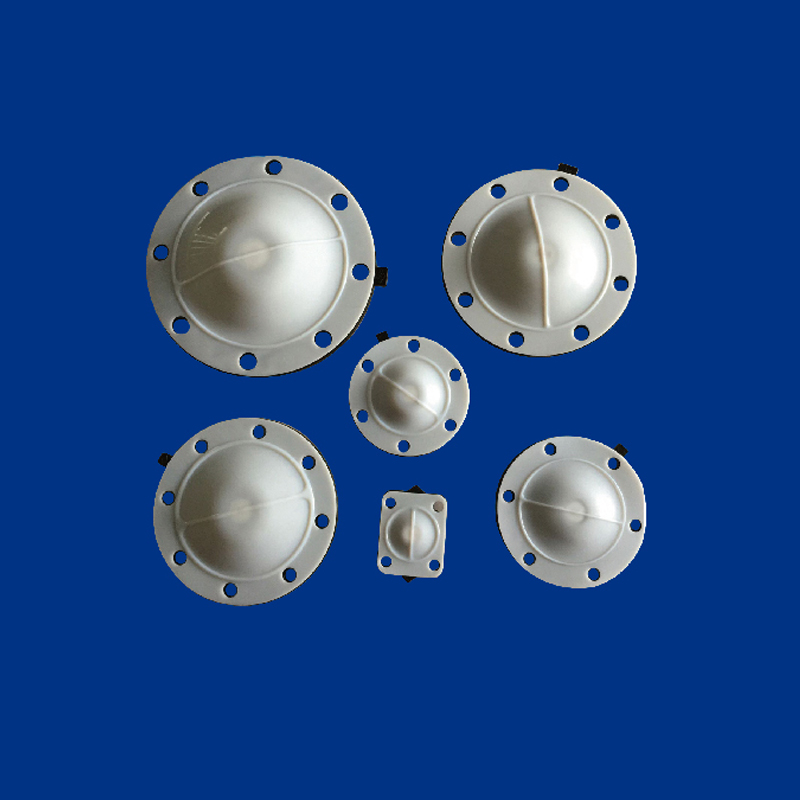
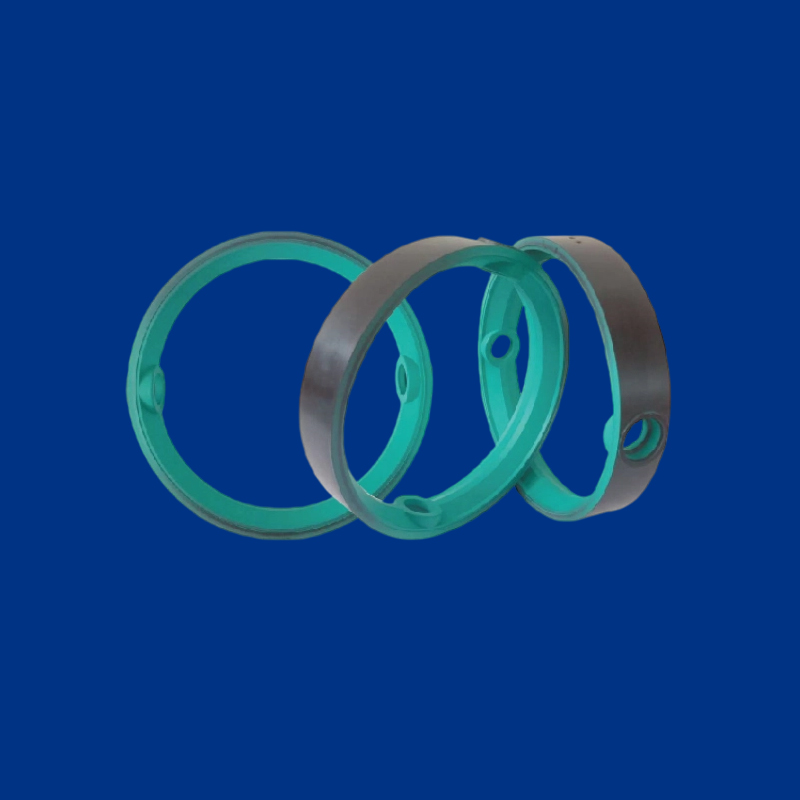
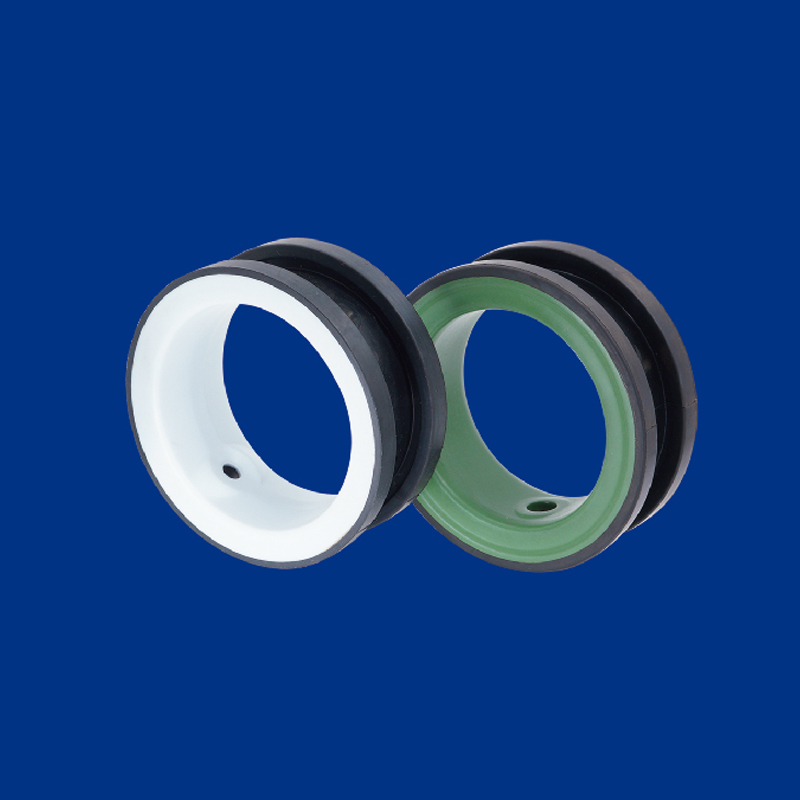


Gansu Juxiang Fluoroplastics Technology Co.,Ltd. manufactures PTFE & Rubber Composite Products manufacturer at production bases in Zhejiang and Gansu. Each component pairs a modified PTFE facing — pressed and secondary composite molded from high-strength, acid- and alkali-resistant, anti-aging resin — with an elastomer element that supplies the elastic recovery a homogeneous PTFE part cannot. The range is built for diaphragm valves, diaphragm pumps and other corrosion-resistant valve and pump sealing positions where chemical resistance and a dependable seal must hold at the same time.
The two materials solve different problems. PTFE takes the wetted side: it resists acids, alkalis, solvents and ageing, and keeps a low-friction, non-contaminating surface. The rubber element stores compression energy, follows flange and seat movement, and closes the leak path when temperature or bolt load shifts. Molding the pair into one component removes an assembly step and the risk of a loose facing migrating in service.
- Chemical duty without a weak face: the PTFE skin stays continuous across the wetted area.
- Sealing at realistic bolt loads: the elastomer core compensates for the creep that limits plain PTFE gaskets.
- Tolerance of movement: thermal cycling, flange rotation and seat travel are absorbed by the resilient layer.
- Longer service interval: the composite resists the ageing and embrittlement that shorten a stiff facing's life.
Range and Application Fit
Our PTFE & Rubber Composite Products cover the sealing and diaphragm positions where a PTFE-only part would be too stiff, too creep-prone or too difficult to seat. Format, facing thickness and elastomer grade are matched to the equipment and the duty rather than sold as a single stock item.
| Composite format | Construction | Typical service position | Selection variables |
|---|---|---|---|
| PTFE-faced rubber-backed gasket | Modified PTFE facing on an elastomer backing | Flange joints on chemical pipework, tank mouths, pump casings | Flange standard, gasket ID/OD, facing thickness, available bolt load |
| Composite diaphragm | PTFE diaphragm face with rubber backing | Diaphragm valves and diaphragm pumps handling acids, alkalis and slurries | Dome profile, stroke, insert layout, media and cycle rate |
| Composite seal ring and seat insert | PTFE sealing face with elastomer energiser | Valve seats, stem seals, pump and valve sealing positions | Seat geometry, interference, backing profile, temperature band |
| Molded composite blank and machined part | Pressed composite molding, finished by machining | Custom seals to drawing, replacement parts, pilot batches | Drawing, tolerance, surface finish, batch quantity |
Adjacent families from the same plant complete a sealing package: Modified PTFE Gasket where a homogeneous PTFE gasket is sufficient, Rubber O-ring for elastomer-only positions, and PTFE Universal Seal for combined lip and O-ring arrangements.
Material and Duty Considerations
Composite performance is decided by the pairing, not by the PTFE alone. A facing that is correct for 98% sulphuric acid at ambient temperature behaves differently in hot caustic with suspended solids, and the elastomer core must survive the same medium without swelling or hardening. We agree the facing grade, filler type and elastomer compound against the media list and the operating envelope supplied with the enquiry.
- Media list: every wetted chemical, concentration, and any suspended solids or entrained gas.
- Temperature: continuous and peak values, plus steam or chemical cleaning cycles.
- Pressure: operating and design pressure, vacuum service, and the number of pressure cycles per shift.
- Mechanics: bolt load available, flange rotation, seat travel and the compression-set limit the joint can accept.
- Purity: extractables, colour and surface finish where semiconductor, medical or food-contact equipment is involved.
- Life target: expected cycles between replacements and the maintenance window the plant can support.
Specifications We Confirm Before Production
Every composite part is released against a confirmed data set, so the drawing, the material callout and the inspection plan agree before the first molding cycle.
- Nominal dimensions, tolerances and critical fit features, with the datum scheme stated on the drawing.
- PTFE facing thickness and the elastomer backing thickness, hardness and bond integrity requirement.
- Sealing-face flatness and surface finish, plus any chamfer or radius needed for seat entry.
- Insert, stud or bonded-fastener layout for diaphragms, including material and pull-out requirement.
- Marking, orientation features and batch identification for traceability on the plant floor.
- Acceptance criteria: dimensional report, visual criteria for facing continuity, and any proof or leak test agreed at order stage.
Manufacturing, Tooling and Quality Control
Modified PTFE resin is pressed and secondary composite molded, then finished by machining where the geometry demands it. Mold design, material selection and process analysis are handled in-house before release, and molding parameters are monitored during the run so that density, facing thickness and bond quality stay inside the agreed window.
- Incoming resin and elastomer compound checked against the agreed grade before batching.
- First-article dimensional and visual approval before series production.
- In-process checks on facing thickness, concentricity and bond line at defined intervals.
- Final inspection with a dimensional record and a retained sample where the project requires it.
- Documentation package issued with the shipment, covering material batch, inspection results and handling guidance.
Information We Use to Configure Your Solution
A workable quotation depends on the equipment, not only the part number. The following inputs let us fix the construction, the tooling route and the inspection plan in one pass.
- Equipment type and model — diaphragm valve, diaphragm pump, flange assembly or seat position.
- Drawing, sample or measured cavity dimensions, including the mating surface condition.
- Media list with concentrations, plus continuous and peak temperatures.
- Operating and design pressure, vacuum requirement and cycle frequency.
- Flange or connection standard, bolt pattern and available bolt torque.
- Annual quantity, first-batch quantity and any scheduled call-off arrangement.
- Documentation, marking and packaging requirements for the destination plant.
Delivery, Documentation and Service
Parts are packed to protect the sealing face and the bond line during transport, with labels matched to the packing list and the batch record. Custom manufacturing to drawings or samples is our core service, and the same engineering team follows the part from material review through to post-delivery guidance.
We supply fluoroplastic components to more than 30 countries, and enquiries are answered within 12 working hours. Replacement composite diaphragms, gaskets and seals can be produced against the original drawing or a returned sample, which keeps older valve and pump installations serviceable without a full equipment change.
Frequently Asked Questions
How does a PTFE & rubber composite part differ from a plain PTFE gasket?
A plain PTFE gasket relies on high bolt load and has limited elastic recovery, so it creeps and relaxes under thermal cycling. The composite keeps the same PTFE chemical resistance on the wetted face while the elastomer backing stores compression energy and follows joint movement, which holds the seal at lower and more stable bolt loading.
Can you produce composite diaphragms and gaskets to our own drawing?
Yes. Custom manufacturing to drawings or samples is our core service. Send the drawing or a used part with the equipment model, and we confirm the facing grade, elastomer compound, tooling route and inspection plan before quoting.
Which media and temperatures are suitable for these composites?
The PTFE facing covers acids, alkalis, solvents and oxidising media across a wide temperature band, and the elastomer core is selected to survive the same medium. Because the limiting factor is usually the elastomer, we match the compound to the media list and the continuous and peak temperatures you provide rather than applying one grade to every duty.
What do you need to quote a composite sealing component?
Equipment type and model, a drawing or sample with dimensions, the media list, operating pressure and temperature, connection standard, and the annual and first-batch quantities. With those inputs we return a configuration, a tooling position and a delivery scope in one proposal.