

 русский
 Deutsch
 عربى
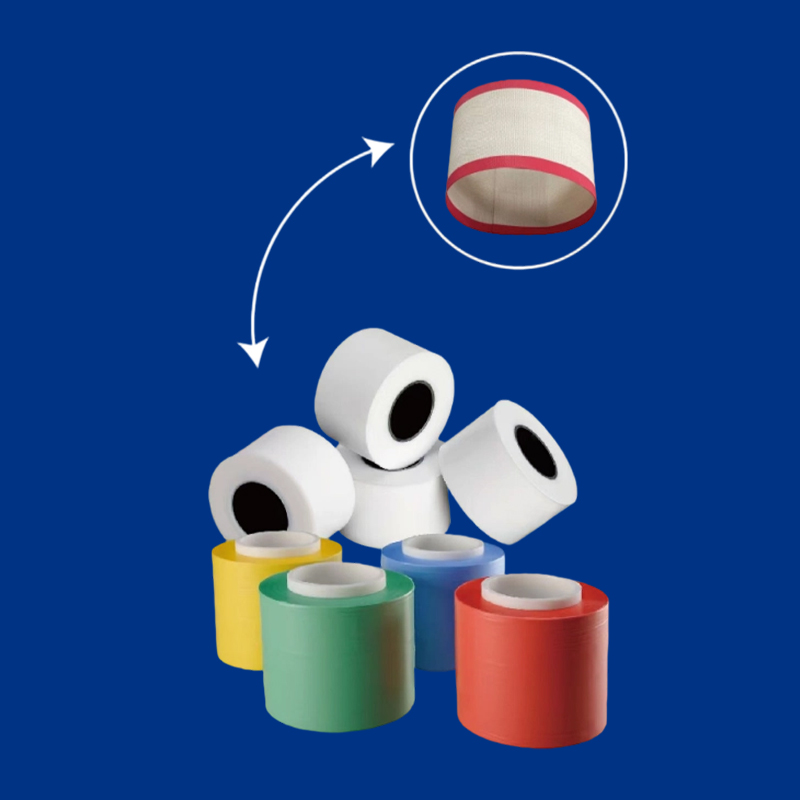
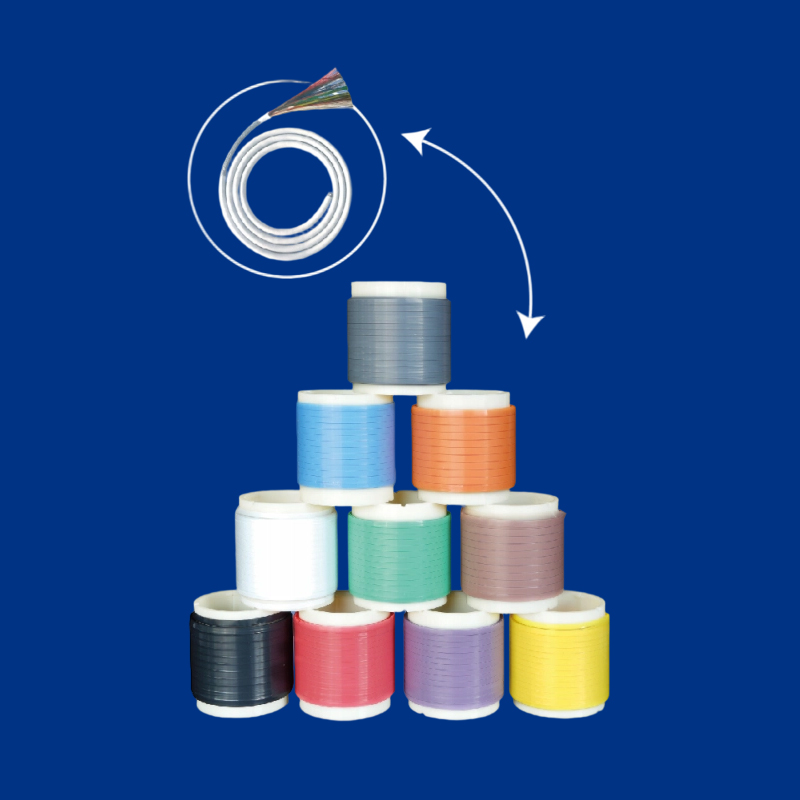
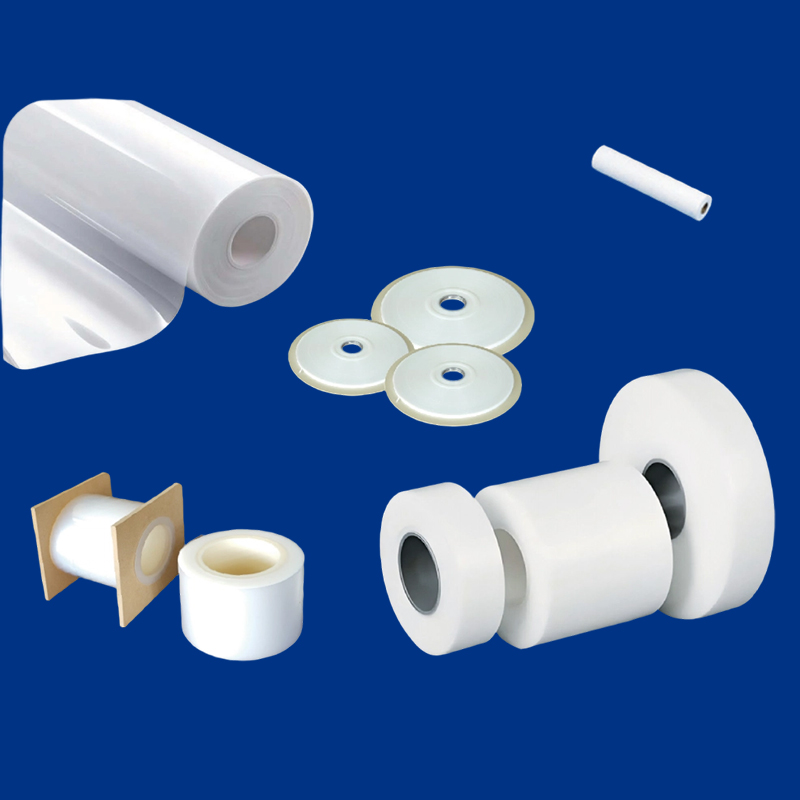



Gansu Juxiang Fluoroplastics Technology Co.,Ltd. is a fluoroplastic PTFE Film & Tape manufacturer working from Yumen City, Gansu Province, China. We produce skived polytetrafluoroethylene film from molded PTFE blank and convert it into rolls and slit tape in high-density, semi-density and common grades, with thicknesses starting at 0.015 mm and widths from 10 mm up to 1500 mm depending on grade. The family covers edge film, cable membrane and orientation film, plus adhesive-backed, self-lubricating, guide, thread seal and anticorrosive tapes.
Juxiang is a joint venture of Zhejiang Jiaxiang Fluoroplastics and Gansu Juhua New Materials (Juhua Group) and runs production bases in Zhejiang and Gansu. Film and tape sit inside a wider fluoroplastic programme that also covers PTFE, PFA, FEP, PCTFE, PI, PEEK and PVDF sheet, rod, tube and machined parts, so one project can draw a dielectric film, a cable wrap and a machined seal from a single material specification.
Related Products and Categories
Our portfolio also includes Products for applications with different operating ranges, interfaces or integration requirements.
The PTFE Film & Tape Range We Supply
Film starts as a molded or skived PTFE blank and is rolled to the density class the duty calls for. From that stock we supply three film types and a group of tapes that share the same base polymer but differ in how they are presented to the production line.
PTFE Edge Film
Thin-gauge film for edge wrapping, profile covering and small-format insulation, where a non-stick layer has to follow a tight radius without adding bulk.
PTFE Cable Membrane
Film for cable and wire wrapping. The low dielectric constant and low loss tangent keep signal losses predictable, while the chemical inertness of PTFE protects the conductor assembly against ageing and attack.
PTFE Orientation Film
Film with a defined orientation for dielectric and insulation duties that need consistent electrical behaviour along the full length of the roll.
The tape side of the range covers PTFE Adhesive Tape for wrapping, lining and masking where the tape must stay put without mechanical fixing; PTFE Thread Seal Tape for threaded pipe joints; self-lubricated and guide tapes for slides, chutes and guide rails; and PTFE Anticorrosive Tape for Cable and Pipe for buried and coated pipework. Standard PTFE Film is available in the same three density classes as the specialised films.
Density Grades and Electrical Behaviour
Density class is the first decision on any film enquiry because it sets the balance between dielectric strength and mechanical give. These are the working values we build and verify against.
| Property | High-density | Semi-density | Common |
|---|---|---|---|
| Tensile strength (MPa, at ≥0.01) | ≥30 | ≥30 | ≥10 |
| Elongation at break (%) | ≥30 | ≥60 | ≥100 |
| Dielectric loss tangent at 1 MHz | 2.5 × 10⁻⁴ | — | — |
| Dielectric constant at 1 MHz | 1.8–2.2 | — | — |
| DC breakdown voltage (kV/mm), average / minimum | 200 / 40 | 60 / 6 | 30 / — |
High-density film carries the highest breakdown voltage and the lowest elongation, which suits thin dielectric layers where puncture resistance matters more than conformability. Semi-density sits between the two. Common film stretches furthest and is the practical choice for wrapping, release and general insulation where electrical stress is modest.
Thickness, Width and Length Tolerances
| Grade | Thickness (mm) | Thickness allowance | Width (mm) | Width allowance | Length |
|---|---|---|---|---|---|
| High-density | 0.015, 0.020, 0.025, 0.030, 0.035, 0.040 | ±10% | 10–100 | ±0.3 | ≥50 cm |
| Semi-density | 0.030, 0.035, 0.05–0.10 | ±10% | 10–200 | ±0.3 | ≥100 cm |
| Common | 0.020–0.10, 0.15, 0.20, 0.30 | ±10% | 60–90 and 100–1500 | ±2.0 | ≥50 cm |
Narrow slit widths in the high-density and semi-density grades hold ±0.3 mm, while wide common-grade film runs up to 1500 mm with a ±2.0 mm allowance. Roll length, core size and winding direction are fixed per order so the roll mounts directly on slitting, wrapping or lamination equipment without re-work.
Where PTFE Film and Tape Fit
- Cable and wire wrapping. Cable membrane and anticorrosive tape wrap conductors and pipe where an inert, low-loss layer has to survive heat, moisture and ageing.
- PCB and instrument insulation. Film separates and insulates boards, connectors and instrument wiring; a 1 MHz dielectric constant of 1.8–2.2 keeps capacitive loading predictable.
- Capacitor dielectric. High-density film in 0.015–0.040 mm gauges, with loss tangent of 2.5 × 10⁻⁴ at 1 MHz.
- 5G stations and LED assemblies. Buffer and insulating layers where the film must stay electrically stable and not embrittle in service.
- Gaskets and lubricity. Film as a release or slip layer under gaskets, with self-lubricated and guide tapes for slides, chutes and guide rails.
- Threaded pipe joints. Thread seal tape for assembly and maintenance work on process lines.
Conversion and Line Integration
Most film leaves us converted rather than as a master roll. Slitting to width, trimming the edge, applying adhesive backing and winding to a fixed length are the four variables that decide whether the tape runs on your equipment without adjustment.
- Slit width, width tolerance and edge condition for automatic wrapping heads.
- Adhesive system and backing for adhesive tape, matched to the surface and the peel behaviour required.
- Roll length, core diameter and winding direction for the mandrel on your machine.
- Splice allowance per roll, where continuous run length matters more than roll integrity.
- Interleaving or liner choice where the film must release cleanly from itself.
Information We Use to Configure Your Solution
A workable film or tape quotation is built from the duty, not from a catalogue number. We configure against the following inputs.
- End use: dielectric layer, cable wrap, release surface, wear surface or thread sealing.
- Density grade and the electrical or mechanical property driving the choice.
- Thickness, thickness allowance and any gauge outside the standard list.
- Width, slit tolerance and whether the roll feeds a manual or automated station.
- Roll length, core, winding direction and splice allowance.
- Adhesive type and peel requirement for adhesive-backed tape.
- Service temperature, chemical exposure and indoor or outdoor installation.
- Release quantity, packaging, labelling and destination port.
- Drawing or sample where the format is non-standard.
Quality Checks, Documentation and Delivery
Film is checked against the grade table before dispatch: thickness and width against the stated allowance, tensile strength and elongation for the density class, and dielectric loss and breakdown voltage where the grade carries an electrical duty. Production parameters are monitored in process, and the documentation package released with an order covers the delivered grade, dimensions and handling guidance.
Rolls are packed to the agreed format and labelled by grade, thickness, width and length, so goods-in inspection can be matched to the purchase specification without unwinding the roll. Repeat orders are held against the same specification record, keeping grade, tolerance and roll format stable across shipments, and our technical team stays available for material matching and troubleshooting after delivery.
Frequently Asked Questions
Which thicknesses and widths can you supply?
High-density film runs from 0.015 mm to 0.040 mm in 10–100 mm widths; semi-density from 0.030 mm to 0.10 mm in 10–200 mm; common film from 0.020 mm to 0.30 mm in 60–90 mm and 100–1500 mm widths. Thickness allowance is ±10% across all three grades.
How do I choose between high-density, semi-density and common film?
Choose high-density where dielectric strength governs — average DC breakdown is 200 kV/mm against 60 kV/mm for semi-density and 30 kV/mm for common. Choose semi-density or common where the film has to conform, wrap or stretch, since elongation at break rises from ≥30% to ≥60% and ≥100% respectively.
Can you slit film to a narrow width and supply adhesive-backed rolls?
Yes. Slit widths down to 10 mm are standard in the high-density and semi-density grades with a ±0.3 mm allowance, and adhesive-backed material is supplied as PTFE Adhesive Tape with the adhesive system matched to the substrate and peel requirement.
What do you need to quote a film or tape order?
Send the end use, density grade, thickness and width with tolerances, roll length and core, adhesive requirement if any, service temperature and chemical exposure, quantity per release, and the destination. A drawing or sample covers non-standard formats, and we reply to enquiries within 12 working hours.